
By: Dennis Richmond, Jr.
Something is happening but it’s not in Yonkers. It’s in Mississippi, and America has every right to ask questions. On July 4, 2026, 18-year-old Nolan Xavier Wells went to Horn Island off the Mississippi Gulf Coast with friends. And he never came home. Two days later, the Black college student was found dead along the island’s shoreline. More than a month later, despite investigations and autopsies, fundamental questions surrounding exactly how Wells died remain unanswered. His family has continued pushing for answers while his death has attracted attention far beyond Mississippi.
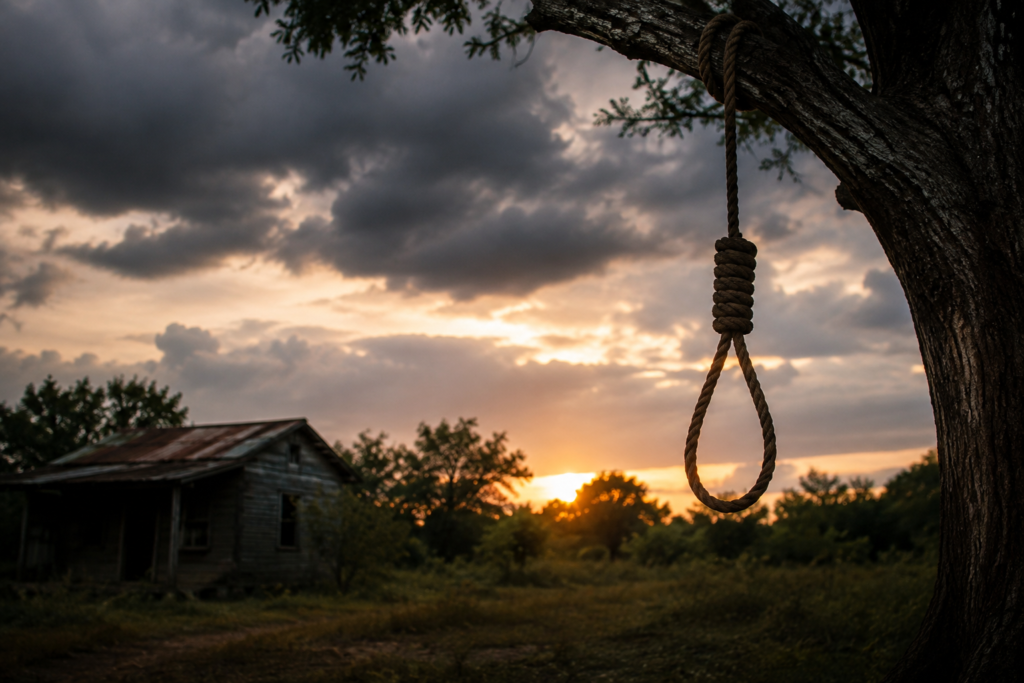
Then came Tasia Fortune. On August 3, 29-year-old Fortune, a Black woman, was discovered hanging from a tree behind a vacant home in Jackson, Mississippi. Yes, folks. Hanging from a tree! Authorities reportedly believe her body may have been there for several days. As of this writing, officials have not publicly determined whether Fortune died by suicide, homicide, or another manner, and an autopsy by the Mississippi State Medical Examiner is expected to help determine her cause and manner of death. That uncertainty is important because nobody should declare Fortune’s death a lynching without evidence, but nobody should pretend that the circumstances surrounding her death will not immediately raise painful questions either.
Some believe that Fortune took her own life. Maybe investigators will eventually determine there was no foul play. Maybe there was. But until investigators can establish what happened, people are going to ask questions, especially when a Black woman is found hanging from a tree. In freaking Mississippi. That image does not exist in a historical vacuum, and neither does the unexplained death of a young Black man whose family is publicly demanding answers. Mississippi carries one of the darkest legacies of racial terror in American history. That history is precisely why authorities should understand the enormous responsibility that comes with investigating deaths like these.
Nobody should manufacture a murder where the evidence does not establish one, and nobody should accuse innocent people of crimes based on rumors or social media speculation. At the same time, Black families should not be dismissed as conspiracy theorists simply because they want to know what happened to their loved ones. What does the physical evidence show? What do the autopsies reveal? What happened during the victims’ final hours? Who saw them last? What can investigators definitively rule out? Those questions are not irresponsible. They are exactly the questions that thorough investigations are supposed to answer, and transparency becomes even more important when history has given communities legitimate reasons to distrust institutions.
Nolan Wells deserves answers, Tasia Fortune deserves answers, and their families deserve answers. This is not Mississippi in 1826 or 1926. This is Mississippi in 2026, and when Black people are found dead under weird circumstances that leave families, communities, and sometimes investigators searching for explanations, America cannot simply scroll to the next story. Maybe the final answers will be suicide, an accident, or natural causes. Maybe investigators will uncover evidence of foul play. Whatever the truth is, investigate these deaths thoroughly, follow the evidence wherever it leads, and tell the public what happened because Mississippi has too much history for unanswered questions to be treated like they do not matter.
Like Nina Simone said, “Mississippi Goddam.”
Dennis Richmond, Jr. (@NewYorkStakz) is a journalist, historian, and educator from Yonkers, NY. He writes to uplift unheard voices, honor history, and inspire change.