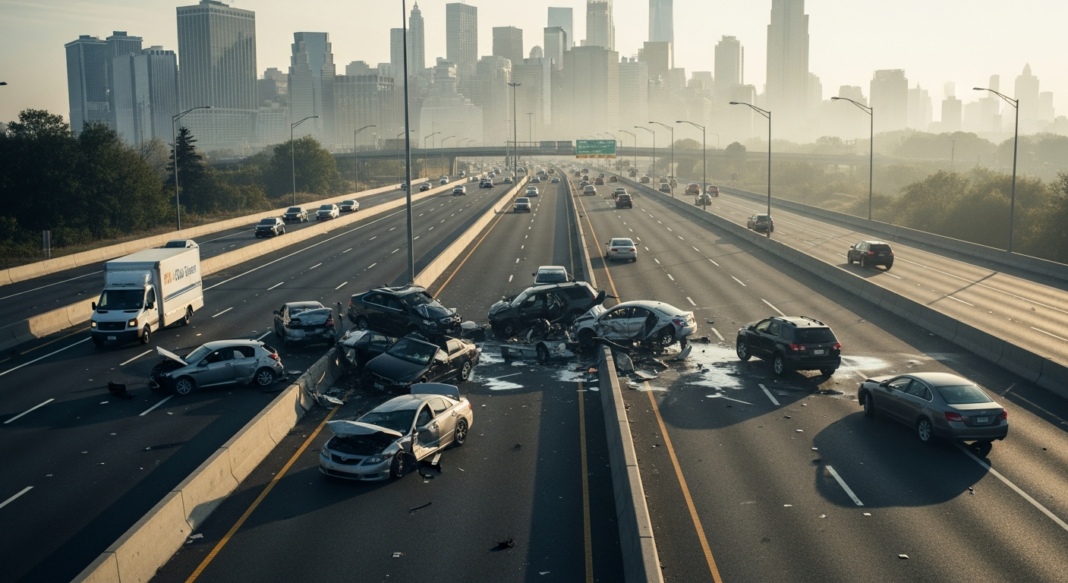

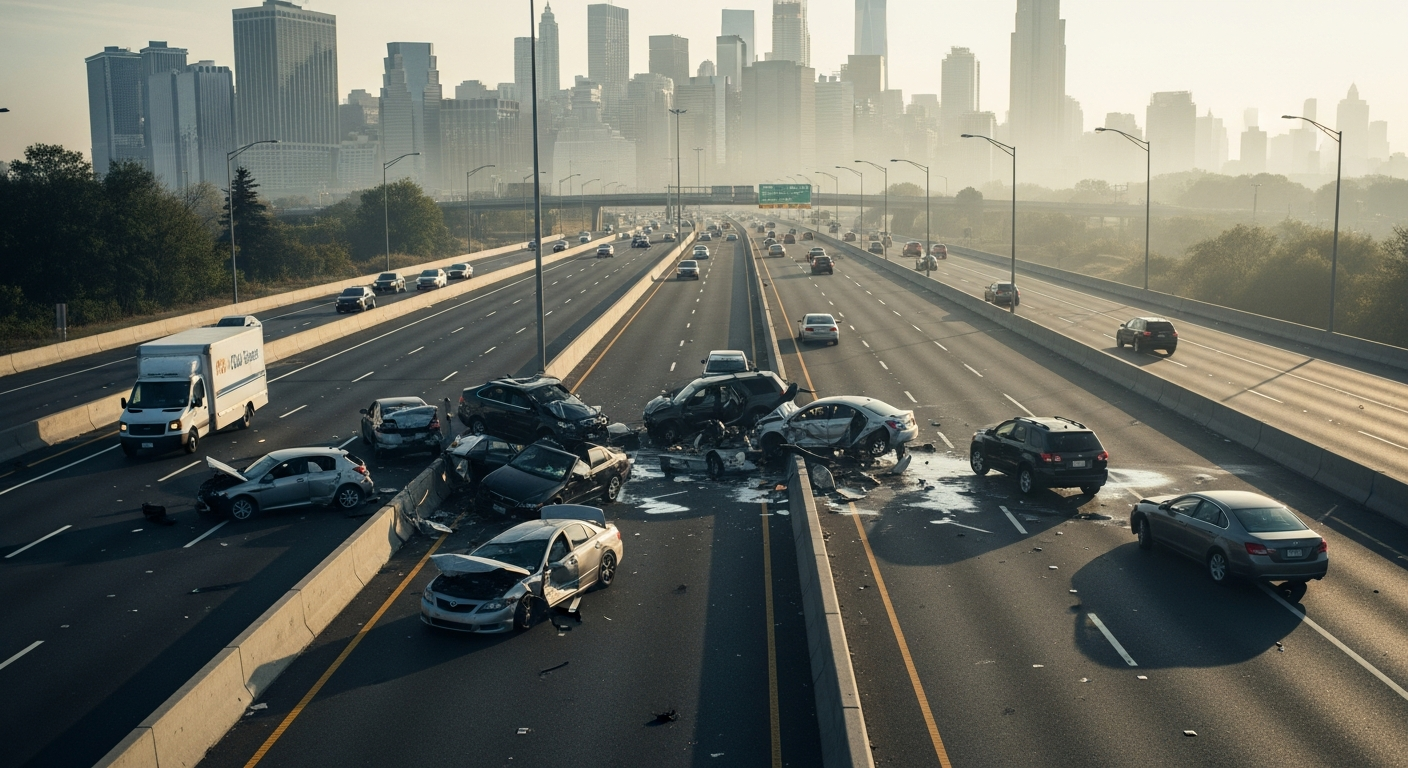
Image generated by Gemini
A major crash on the Long Island Expressway in Queens offered a stark reminder of how quickly a routine drive can turn into a regional traffic emergency. On the morning of February 27, 2026, a nine-vehicle pileup in the westbound lanes in Long Island City injured four people, including one person who was reported in critical condition. The crash forced lane closures during the heart of the morning commute and sent delays rippling across one of the New York metro area’s most important roadways.
According to local reports, the collision happened shortly before 9 a.m. on the westbound LIE in Long Island City. Video from the scene showed vehicles stacked on one another, underscoring how violent the impact was. Emergency crews responded quickly, and all four injured people were taken to Elmhurst Hospital. ABC7 reported that most westbound lanes were shut down while crews removed damaged vehicles, and CBS New York reported the roadway was cleared at about 11:30 a.m., though residual delays continued after lanes reopened.
Why One LIE Crash Can Disrupt the Entire Region
The Long Island Expressway is more than just another highway. It is one of the main east-west corridors connecting Queens, Long Island, and access points into Manhattan and Brooklyn. When a serious crash blocks multiple lanes there, congestion does not stay contained to one stretch of road. In this case, traffic backed up deep into Queens during the morning rush, with ABC7 reporting backups reaching Elmhurst by 10 a.m. That kind of gridlock can quickly spill onto feeder roads, local streets, and alternate parkways as drivers scramble to reroute.
For commuters, the lesson is familiar but important: major highway crashes create more than inconvenience. They affect work schedules, school drop-offs, deliveries, medical appointments, and emergency response times. A single pileup can reshape traffic patterns across multiple boroughs within minutes.
What Drivers Can Learn from This Crash
This Queens pileup is also a reminder that chain-reaction collisions are often the most chaotic crashes on the road. In dense traffic, one sudden stop or impact can trigger a sequence of secondary collisions before drivers farther back have time to react. That is why safe following distance, reduced speed in heavy traffic, and full attention behind the wheel matter so much on roads like the LIE.
When a major crash does happen, practical steps matter. Drivers usually benefit from checking live traffic updates before leaving, documenting what they can safely document after a collision, seeking prompt medical care, and preserving records tied to the crash and their injuries. Those early decisions can matter long after the roadway is cleared.
Why Multi-Vehicle Crashes Are Legally Complicated in Long Island
Pileups also create difficult fault questions. Unlike a simple two-car crash, a multi-vehicle collision may involve several different drivers, several insurers, and competing versions of how the sequence began. Investigators often need to sort out not just who made the first mistake, but whether later drivers had a chance to avoid the impact or contributed to the chain reaction.
The complexity of a car accident in Long Island sits on top of the state’s no-fault insurance system. Under New York Insurance Law § 5102(d), an injured person generally must show a legally defined “serious injury” to pursue certain claims beyond basic no-fault benefits. The New York Department of Financial Services explains that a person may sue an at-fault driver if the driver caused the crash and the injured person sustained a “serious injury” under that statute.
Comparing Accident Claims: Single Crash vs. Pileup
| Feature | Two-Car Accident | Multi-Vehicle Pileup |
|---|---|---|
| Determining Fault | Usually straightforward (one driver is primarily at fault). | Complex; may involve multiple at-fault parties and comparative negligence. |
| Insurance Claims | One claim is filed against the at-fault driver’s policy. | Multiple claims filed against several different insurance companies. |
| Evidence Needed | Police report, photos, and witness statements are key. | Requires extensive accident reconstruction, multiple witness interviews, and expert analysis. |
| Resolution Time | Can often be settled relatively quickly. | Can take significantly longer due to investigations and disputes between insurers. |
A Sobering Reminder for All New York Area Drivers
The February 27 LIE crash was not just another traffic alert. It was a serious multi-vehicle collision that left several people hurt, shut down major lanes during rush hour, and showed how vulnerable the region is to sudden roadway disruptions. For the people directly involved, the aftermath is likely to include medical treatment, insurance issues, missed work, and difficult questions about what happened and who bears responsibility.
For everyone else, the incident is a useful reminder: on high-volume roads like the Long Island Expressway, defensive driving and preparation are not optional. They are often the difference between a close call and a life-changing crash.