
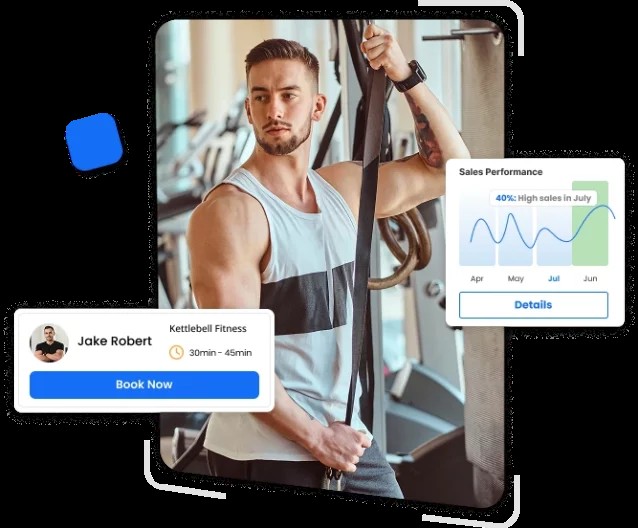
A fitness business may look simple from the outside. Members come in, trainers lead sessions, classes run on schedule, and payments are collected. Behind the scenes, however, there is usually much more happening. Memberships need to be updated. Classes have to be scheduled. Staff need access to the right information. Payments need to be tracked. New enquiries need follow-up, while existing members need reminders, updates, and support.
For a small gym, much of this work can start with spreadsheets, emails, paper forms, and separate booking tools. As the business grows, though, keeping everything connected becomes harder. This is where gym management software is changing the way fitness businesses operate. Instead of treating memberships, bookings, payments, leads, and member communication as separate tasks, modern software can bring them together in one system.
Why fitness businesses are moving away from disconnected systems
Many gym owners do not start a business because they enjoy administrative work. They start because they want to build a gym, coach members, run classes, or create a strong fitness community. The problem is that administration grows alongside the business. A gym with 50 members may be able to manage information manually. A business with several hundred members has a very different workload. There may be different membership plans, recurring payments, class schedules, personal training sessions, cancellations, waitlists, staff schedules, and new leads to manage.
Using separate tools for each task can create another problem: information becomes scattered. A booking may sit in one system while payment information is stored somewhere else. A lead may be written down by a staff member but never followed up. A member may contact the gym about a billing issue, and the employee answering the question may need to check several systems before finding the answer. Fitness management software addresses this problem by connecting these activities. The benefit is less about having a long list of features and more about having business information available in one place.
Membership management becomes less dependent on manual work
Memberships are at the center of most fitness businesses, but managing them can become surprisingly complicated. Members may pause their plans, change packages, upgrade services, cancel memberships, or move from one type of plan to another. Staff also need to know whether a membership is active and whether payments are up to date.
Modern gym membership management software can automate many of these processes. Instead of manually checking renewal dates or updating records, gym staff can use a centralized member profile to see relevant information. Membership status, payment history, bookings, forms, and other details can be connected to the same account.
Scheduling is becoming a business operation, not just a calendar
A gym schedule can quickly become difficult to manage when there are multiple instructors, different class types, limited spaces, and changing demand. A class with too many bookings creates one problem. A class with very few bookings creates another. This is why gym scheduling software has become an important part of modern fitness operations.
A connected scheduling system can allow staff to create recurring schedules, assign instructors, establish booking limits, manage cancellations, and monitor attendance. Members can also book sessions without needing to call or message the front desk every time. Waitlists are another useful example. If a popular class is full and someone cancels, staff do not necessarily need to contact members manually. A digital waitlist can help fill the open space and notify the next member. For fitness businesses, that means scheduling becomes less about constantly fixing small problems and more about managing capacity effectively.
Online gym booking gives members more control
Customer expectations have changed across many industries. People are increasingly comfortable making appointments, buying services, and managing accounts from their phones. Fitness businesses are experiencing the same shift. Gym booking software allows members to view available sessions and make bookings without waiting for staff assistance. Depending on the platform, they may also be able to cancel sessions, join waitlists, receive reminders, and make payments online.
This can make a noticeable difference to the front desk. For members, the benefit is convenience. They do not have to contact the gym during opening hours just to reserve a class. This does not mean personal interaction becomes less important. In many cases, technology removes routine tasks, so staff have more time for meaningful interactions.
Payments and billing can run alongside membership records
Billing is another area where disconnected systems can create unnecessary work. A fitness business may have recurring memberships, personal training packages, class passes, retail purchases, day passes, and other charges. Tracking these manually can make it difficult to maintain an accurate view of revenue. Modern gym software can connect billing with member accounts.
For example, a recurring membership payment can be associated with the member’s profile, while payment history and outstanding balances remain visible to authorized staff. Integrated payment systems can also help businesses handle failed transactions and automated reminders. When membership information, billing, and other operational data are connected, gym owners have a clearer picture of what is happening financially without having to combine information from several different systems.
Lead management is moving beyond a spreadsheet.
Getting a new enquiry is only the beginning. A prospective member may fill out a website form, send a message through social media, call the gym, or walk into the facility. If that enquiry is not followed up properly, the opportunity can easily disappear. This is where a gym CRM or integrated lead management system can make a difference. Staff can see where a prospect came from, what communication has already taken place, and what action should happen next. Automated communication can also be used for appropriate follow-ups, reminders, and appointment confirmations. The purpose is not to replace human sales conversations. It is to make sure those conversations are not lost because someone forgot to follow up. For smaller fitness businesses with limited staff, that distinction matters.
Member communication is becoming more consistent
Keeping members engaged requires more than sending occasional promotional emails. Members may need class reminders, schedule changes, payment notifications, membership updates, event information, or simple encouragement to stay involved. Modern systems can bring several communication channels together, including email, SMS, push notifications, and in some cases WhatsApp.
For example, a class cancellation can trigger an appropriate notification rather than requiring a staff member to contact every participant individually. The same system can also support broader engagement strategies, such as loyalty programs, milestone messages, referral campaigns, and member updates. A large number of automated messages can become noise. Good gym software should help businesses communicate at useful moments rather than simply increasing the number of messages members receive.
Access control is changing how 24-hour gyms operate
The growth of 24-hour and extended-hour fitness facilities has created another operational challenge: controlling who can enter the facility and when. Traditional staffed check-ins are not always practical for gyms that allow members to work out early in the morning, late at night, or around the clock. A modern gym access control system can connect facility entry with membership status.
Depending on the setup, members may use a QR code, mobile phone, access card, or another digital credential. The system can record entry while checking whether the member has an active account. It can also provide useful attendance information. Owners can see when the facility is busiest and how members are using the space.
Mobile apps are changing the member experience
The relationship between a gym and its members no longer exists only inside the facility. Members may want to book a class while commuting, check their schedule from home, receive a reminder before a session, or manage their membership without calling the front desk. A custom gym mobile app can bring these activities into one place.
For fitness businesses, this can also provide another direct communication channel. Members can receive notifications, access schedules, manage bookings, and interact with services through their phones. This is particularly relevant as gyms compete with home workouts, digital fitness platforms, and other ways of exercising outside a traditional facility. A mobile experience does not replace the gym community. It can make that community easier to access between visits.
Multi-location businesses need connected systems
The operational challenge becomes even greater when a fitness business has multiple locations. Without centralized software, each location can end up operating slightly differently. Membership records may be separated, reporting can take longer, and owners may struggle to get a clear picture of the business as a whole. Cloud-based gym management software can bring locations into a shared system. Owners and managers can access information across locations while still maintaining location-specific schedules, staff arrangements, memberships, and operations. Members can also benefit when the experience is consistent across facilities. This becomes increasingly important as independent gyms grow into regional or multi-location fitness brands.
What fitness businesses should look for in gym management software?
A platform that connects these areas can be easier to manage than several separate tools that require staff to move information manually from one system to another. There is no single software setup that works for every fitness business. A small personal training studio may have very different needs from a 24-hour gym or a multi-location health club. Before choosing a platform, operators should consider the processes that take the most staff time.
Important areas may include:
- Membership and package management
- Online class booking and scheduling
- Automated billing and payment processing
- Lead tracking and CRM
- Member communication
- Attendance tracking
- Access control
- Point-of-sale functionality
- Mobile apps
- Reporting and analytics
- Staff and payroll management
- Inventory management
- Multi-location support
What this means for the future of fitness businesses
The fitness industry is becoming more technology-driven, but the change is not simply about replacing people with software. For many businesses, the more realistic shift is that software handles repetitive operational tasks while employees concentrate on coaching, customer service, sales, and community building.
A member may not care which software a gym uses. They care whether they can book a class easily, whether their payment is handled correctly, whether staff know who they are, and whether the overall experience feels organized. Gym owners have similar concerns from the other side of the business. They need reliable information, manageable workloads, predictable billing, and systems that can grow as the business grows. That is why gym management software is becoming part of the wider operating infrastructure of fitness businesses. The technology itself is not the end goal. The real goal is a business where routine processes are easier to manage, information is connected, and staff have more time to focus on the people walking through the door. For independent gyms, studios, personal training businesses, and growing fitness brands, that can make the difference between spending each day keeping systems updated and actually having time to work on the business.