
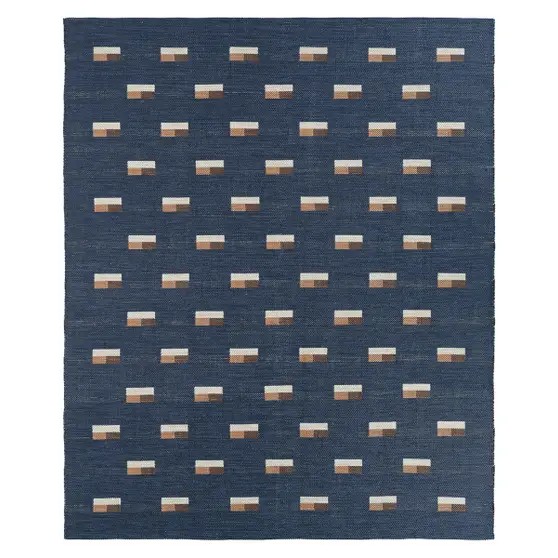
Washable rugs rarely die because of the washing itself. The fibers on top are usually polyester or cotton, and those have been going through washers for years without a problem. It’s the layer on the back that gives up, and it tends to do it quietly, with a few specks of rubber in the drum one week and a rug that slides around the floor the next.
What’s on the Back
Most washable rugs use one of these:
- Latex has a coating that locks the tufts in place and grips the floor.
- Rubber or PVC, which shows up on cheaper rugs and a lot of bath mats.
- TPR, short for thermoplastic rubber, which is made to handle cold wash after cold wash.
- A woven base of cotton or polyester that has no glue or rubber on it at all.
Latex causes the most trouble. It starts to break down the day the rug goes on the floor, the same way a rubber band falls apart after years in a drawer, and every trip through the washer speeds that up. You’ll usually see bubbles or a lifting edge first. TPR lasts much longer because it resists cracking and peeling, and a woven base has nothing to crumble.
Heat Is the Real Problem
Warm water softens rubber and latex. The spin cycle twists the layers against each other. The dryer finishes the job started by the spin cycle, so a backing that got through the wash can crack or melt after a short tumble on high. Without the grip, the rug starts sliding around.
A washable rug with a rubber underside only has so many washes in it. One hot dryer cycle can use up a good share of them, even if the top still looks perfect.
Reading the Rug Before You Buy It
Look for the care label and words like machine wash. Spot clean labels don’t trust the backing in the washer, so skip it. The fiber matters too. Polyester, polypropylene, and cotton do fine in a washer. Wool, jute, and sisal, on the other hand, don’t, and shag rugs tangle and mat badly.
Size is the thing people forget. Most home machines top out around a 4 by 6 foot rug, and anything bigger needs a laundromat with a commercial washer, which is worth knowing before you order an 8 by 10. If you get a choice, take TPR or a woven base over latex or PVC. The price difference is small next to buying a new rug after a year.
Washing and Drying It
Take the rug outside and shake it out first. Loose grit in the drain is a pain. Use cold water and a mild detergent. Make sure it’s a gentle cycle and put a couple of towels in with it so the drum stays balanced when it spins. A low spin speed is easier on the backing, so pick it if your machine lets you.
Drying is where most people slip up. Hang the rug in the shade or lay it flat, and only use the dryer if the label says it’s fine, since a few minutes of heat can ruin a backing that survived the wash. A washable rug lasts a lot longer when it stays out of the dryer altogether.
What It Does to the Floor
Even a backing that survives the machine can hurt the floor underneath. Rubber and PVC contain plasticizers that can yellow or stain vinyl over time. It’s faster with sunlight and heat. Machine washable and floor safe are two different things, and the label only covers the first one.
Some rugs get around this with a two-part setup, where a thin cover goes in the washer and a separate non-slip pad stays on the floor. The pad shouldn’t go in the machine, and it has to dry completely before the cover goes back on top of it. If the rug you like doesn’t come that way, a felt or EVA pad under it is the safer pick on vinyl and laminate, since it grips the floor without pressing rubber against the surface.