
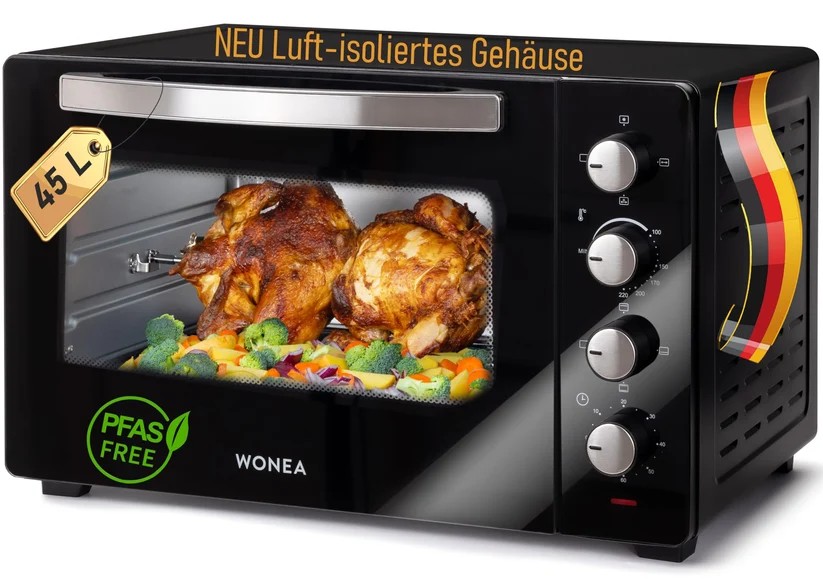
For baking, static heat (natural convection) works best for cakes that need to rise gently, such as sponge cakes, loaf cakes, or soufflés, while fan heat is ideal for baking several trays of cookies, choux pastry, or macarons evenly. An oven that combines both modes offers the most flexibility. When choosing one, you should also look at thermostat accuracy, heat distribution, cavity volume, ease of cleaning, and energy consumption. A good oven doesn’t replace technique, but it makes results far more consistent.
In baking, the recipe matters. So does the oven.
Why the Oven Matters So Much in Baking
In savory cooking, you can often correct things along the way: add a little more time, lower the heat, cover a piece of meat. In baking, the margin for error is much narrower. A few degrees too many, uneven heat, or opening the door too early can make a cake collapse, burn the bottom of a tart, or dry out a sponge.
That’s why amateur and professional bakers alike pay so much attention to the cooking mode and the reliability of their oven.
Static Heat: Gentle and Steady
In static mode, heat comes from elements at the top and bottom of the oven, with no fan. Hot air circulates naturally, creating a gentler, more gradual bake.
This mode is especially well suited to:
- Sponge cakes and Swiss rolls, which need to rise without forming a crust too quickly
- Loaf cakes and pound cakes, for an even bake all the way through
- Soufflés, which are sensitive to air movement
- Cheesecakes, which need slow baking
- Bread, especially with a tray of water for steam
On the other hand, static heat is less effective when baking several trays at once, because the temperature varies more between the top and bottom of the oven.
Fan Heat: Fast and Even
With fan heat, a fan at the back of the oven circulates hot air throughout the cavity. Heat is distributed more evenly, and baking is often faster.
This mode excels for:
- Cookies and shortbread, baked on several trays at once
- Choux pastry, which puffs up and dries out well
- Macarons, provided you have good control of the temperature
- Puff pastry, for crisp, flaky layers
- Meringues, baked at low temperature
A handy rule: with fan heat, you generally lower the temperature by 15 to 20 °C compared to a recipe written for static heat.
Comparing the Two Modes
| Criterion | Static heat | Fan heat |
| Heat distribution | Stronger at top and bottom | Even throughout the cavity |
| Baking speed | Slower | Faster |
| Baking on multiple levels | Not well suited | Very well suited |
| Cakes that need to rise | Excellent | Sometimes too intense |
| Cookies and choux | Fair | Excellent |
| Risk of drying out | Lower | Higher if poorly set |
Other Features to Check
The cooking mode is only part of the decision. Whether you’re comparing oven models online or in store, several other factors matter for baking:
- Thermostat accuracy, ideally with a digital display
- Interior volume, to fit large trays or several tins
- Lighting and glass door, so you can check without opening the door
- Rack levels, to adjust the position of what you’re baking
- Cleaning, whether pyrolytic, catalytic, or easy-care enamel
- Bottom heat function, useful for properly baking tart bases
A standalone oven thermometer remains an excellent investment, since the display doesn’t always match the actual temperature.
Consider Energy Consumption
Ovens often run for a long time in baking, especially for meringues or slow bakes. Choosing a model with a good energy label rating helps keep your bill down. ADEME publishes advice on reducing the energy consumption of household appliances, such as avoiding opening the door too often and making use of residual heat at the end of baking.
Where to Find the Right Equipment
To compare models, it helps to browse shops that offer a wide range of household appliances. Readers in French-speaking Switzerland, for example, can explore the cooking appliances at pandaloo.ch, which brings together ovens, hobs, and other equipment for cooking and baking. Before buying, it’s worth checking the built-in dimensions, the available electrical power, and the cooking modes offered.
Using Your Oven Well Every Day
Even the best oven will give better results with a few good habits:
- Preheat fully before putting anything in.
- Place the rack at the right level, usually in the middle for cakes.
- Avoid opening the door during the first few minutes of baking.
- Rotate trays halfway through if the heat is uneven.
- Let some cakes cool in the oven with the door ajar to keep them from sinking.
Common Mistakes
Many home bakers run into problems because they:
- Use fan heat without adjusting the temperature
- Overload the oven with too many trays
- Trust the display without checking the actual temperature
- Use unsuitable tins that are too thin or too dark
- Open the door too early, causing the bake to collapse
The Right Oven for the Right Recipe
There’s no perfect cooking mode for every type of bake. Static heat brings gentleness and consistency to delicate cakes, while fan heat offers speed and evenness for cookies and choux.
An oven that combines both, paired with an accurate thermostat and a few good habits, lets you succeed with a moist sponge cake just as easily as a batch of golden shortbread.