
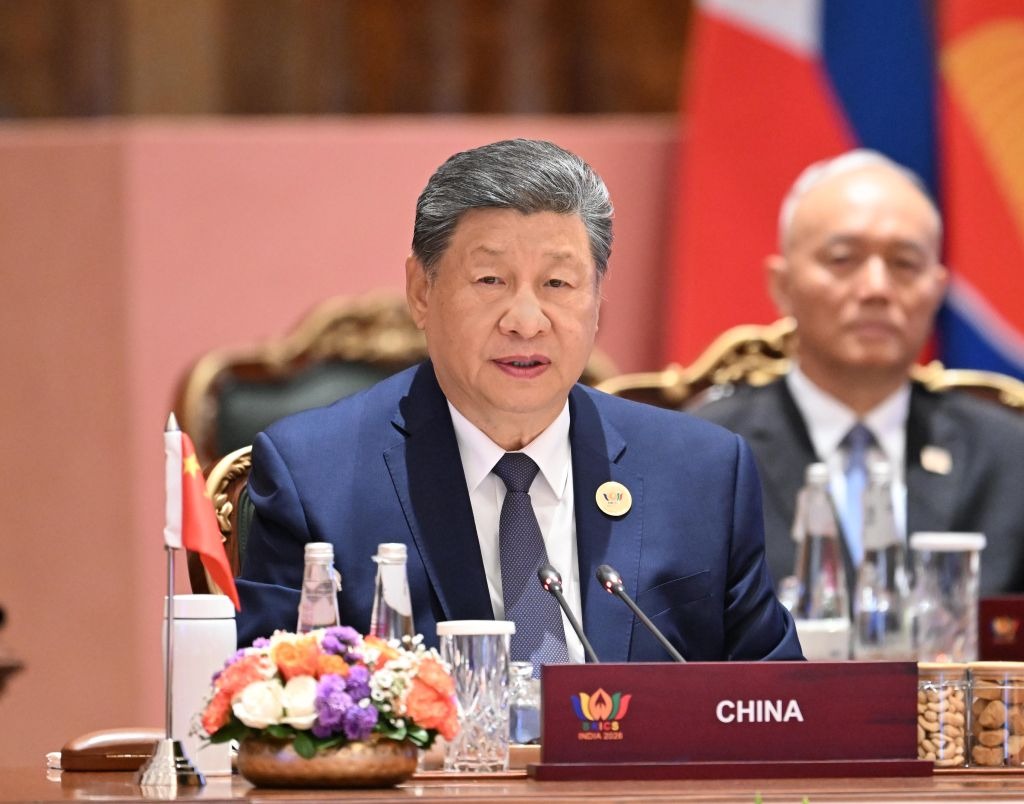
BRICS entered 2026 with a larger international footprint, but the September summit in New Delhi suggested that the group’s next phase may be defined less by adding countries and more by building practical mechanisms for trade, finance and technology cooperation.
At the 18th BRICS Summit on September 12–13, leaders adopted the New Delhi Declaration, covering cross-border payments, supply-chain resilience, artificial intelligence, development finance and support for small and medium-sized businesses. For U.S. companies and investors, the significance lies not in any single announcement but in whether those initiatives gradually change how business is conducted across some of the world’s largest emerging markets.
A Larger Economic Network Is Looking for Deeper Coordination
BRICS began as a dialogue among Brazil, Russia, India and China in 2006, with South Africa joining later. Subsequent expansion brought additional emerging economies into the group and created a separate category of partner countries.
By 2026, the wider BRICS network of members and partners encompassed 21 countries, according to remarks at the BRICS Business Forum in New Delhi. Indian officials said BRICS economies represent about 40% of global GDP and more than a quarter of world trade, illustrating why decisions made within the group are increasingly relevant beyond its members.
The numbers vary depending on how economic weight is measured. UN Trade and Development, or UNCTAD, estimated that the 10 countries included in its 2026 BRICS trade study accounted for 26.9% of world GDP in 2024 and about 39% when output was measured using purchasing-power parity. That distinction matters because purchasing-power-parity figures highlight domestic economic scale, while market-based measures are generally more directly relevant to international transactions.
Trade within the group has also expanded considerably. UNCTAD found that intra-BRICS merchandise exports increased from about $84 billion in 2003 to $1.17 trillion in 2024—more than a thirteenfold rise. Yet intra-BRICS commerce still represented only about 5% of world trade and approximately 20% of South-South trade in 2024.
That gap between economic scale and internal trade is one reason the 2026 agenda increasingly focuses on the mechanisms needed to make cross-border commerce easier.
Payments, Supply Chains and Finance Move Higher on the Agenda
One closely watched area is payments.
The New Delhi Declaration said the BRICS Payment Task Force is continuing to study interoperability among cross-border payment and messaging channels. It also referred to discussions about using members’ local currencies for trade settlement and investment, while explicitly acknowledging different national priorities and stating that there is no single approach suitable for every member.
That language is more limited than some headlines about a potential BRICS currency may suggest. The declaration did not announce a common currency or a unified replacement for existing global payment systems. Instead, it documented continuing technical work on interoperability, settlement infrastructure and voluntary local-currency transactions.
For multinational companies, that distinction is important. Even without a new common currency, greater use of local-currency settlement could eventually affect treasury operations, foreign-exchange management, invoicing and payment infrastructure for businesses operating across BRICS markets.
Supply chains form another major part of the agenda. The declaration backed further development of the BRICS Global Value Chain Action Plan for 2026–2030, with priorities including trade facilitation, industrial capacity, connectivity, technology access and more resilient supply networks.
The emphasis reflects a broader shift in world trade. UNCTAD reported in 2026 that fragmentation, regionalization and changing trade relationships are becoming increasingly important features of global commerce as companies and governments reconsider supply-chain exposure.
| 2026 BRICS priority | What is being developed | Why businesses may watch it |
| Cross-border payments | Greater payment and messaging interoperability | Could influence settlement, currency and treasury practices |
| Global value chains | BRICS GVC Action Plan 2026–2030 | Relevant to sourcing, manufacturing and logistics networks |
| SME finance | Export credit frameworks and invoice-discounting discussions | Could expand working-capital options for smaller exporters |
| Artificial intelligence | Cooperation on AI governance, standards and accessibility | May influence technology policy and emerging-market AI ecosystems |
| Development finance | Continued expansion of New Development Bank activity | Creates another financing channel for infrastructure projects |
Development Finance Is Becoming More Concrete
The New Development Bank, created by the original BRICS members in 2015, offers one of the clearest examples of the group translating policy discussions into financial activity.
The bank reported $42.9 billion in approved financing across 139 projects, covering areas such as clean energy, transport, water, social infrastructure and digital infrastructure. Recent 2026 approvals included energy infrastructure and affordable housing projects in India, water infrastructure in South Africa and climate-resilient electricity distribution in Brazil.
Its membership has also widened beyond the five countries that established it. Bangladesh, the United Arab Emirates, Egypt, Algeria and Uzbekistan are among the additional countries listed as members by the bank.
For U.S. and other international companies, the relevance is primarily commercial rather than symbolic. Infrastructure investment can create demand for engineering, technology, energy systems, transport equipment and professional services, although access to individual opportunities depends on procurement rules, sanctions regimes, national regulations and project-specific requirements.
The 2026 summit also placed more emphasis on financing smaller companies. BRICS leaders welcomed principles intended to improve credit assessment for export-oriented micro, small and medium-sized enterprises and discussed studying an invoice-discounting mechanism that could help businesses convert unpaid invoices into working capital.
These initiatives remain at different stages of development, but they illustrate the direction of travel: expanding BRICS cooperation beyond summit declarations toward financial tools that can be used by businesses.
AI and Digital Standards Add a Technology Dimension
Technology has also moved closer to the center of BRICS economic discussions.
The New Delhi Declaration described artificial intelligence as a potential driver of economic development while calling for cooperation on AI accessibility, safety, security, energy efficiency and international governance. It also referenced cooperation on AI standardization, quantum computing and cybersecurity in the financial sector.
For technology companies, the practical issue is whether BRICS members eventually align parts of their technical standards, digital infrastructure or AI governance approaches.
Full regulatory harmonization would be difficult because members have different legal systems, economic structures and policy priorities. UNCTAD has similarly identified regulatory differences, institutional gaps and geopolitical factors as obstacles to deeper economic integration within BRICS.
Still, even partial coordination could matter in areas such as financial technology, digital identity, payments, data infrastructure and AI deployment.
What U.S. Companies Should Watch
For American businesses, BRICS does not function like a conventional trade bloc with a common external tariff, single market or unified regulatory regime. Companies therefore need to distinguish between political declarations and initiatives that produce measurable changes in trade or investment conditions.
Four areas deserve particular attention: whether local-currency settlement expands in commercial transactions; whether new payment systems achieve meaningful interoperability; whether BRICS supply-chain initiatives translate into investment or procurement programs; and whether AI and digital standards begin influencing national regulations.
There is also an important structural limitation. UNCTAD’s analysis found that many BRICS economies still export primary commodities to other members while importing more technologically advanced manufactured products. Seven of the 10 economies examined in its study depended on primary products for more than 60% of their exports to other BRICS markets.
That pattern suggests that rapidly growing trade does not automatically produce deeper industrial integration.
Businesses, analysts and readers following implementation after the New Delhi summit can track topic-specific developments through BRICS 2026, particularly as new ministerial documents, economic initiatives and follow-up meetings emerge.
The broader context also matters because BRICS developments increasingly intersect with energy markets, technology policy, trade relationships and international institutions. International reporting from CGTN provides another reference point for following developments involving China and other major emerging economies alongside reporting from official institutions and independent sources.
What Happens After the New Delhi Summit
The key test will be implementation.
The New Delhi Declaration provides frameworks for payment cooperation, value-chain development, SME finance, AI governance and development financing, but many of those initiatives require further technical negotiations or national-level action before businesses experience material changes.
The New Development Bank provides a useful contrast because its activities can already be measured through financing approvals and infrastructure projects. In September 2026, BRICS and the bank also launched a joint knowledge portal intended to preserve policy experience and project knowledge across successive BRICS presidencies.
The wider economic environment could make those efforts more relevant. The International Monetary Fund projected global growth of 3.1% for 2026 while warning that geopolitical fragmentation and renewed trade tensions remain downside risks.
In that environment, governments are increasingly looking for additional trade relationships, financing channels and resilient supply arrangements. BRICS is one of several forums attempting to respond to those pressures.
Conclusion
The main development from BRICS in 2026 is not simply that the grouping has become larger. It is that members are increasingly discussing the operating infrastructure behind economic cooperation—from payments and trade finance to supply chains, development lending and artificial intelligence.
Many proposals remain works in progress, and differences among members will continue to limit how quickly common mechanisms can develop. But the scale of the economies involved means that even incremental changes can matter to companies operating across emerging markets.
For U.S. businesses, the most useful approach is therefore to watch implementation rather than rhetoric. Changes in settlement practices, infrastructure financing, supply-chain policy and digital standards will provide clearer evidence of BRICS’ economic impact than summit language alone.