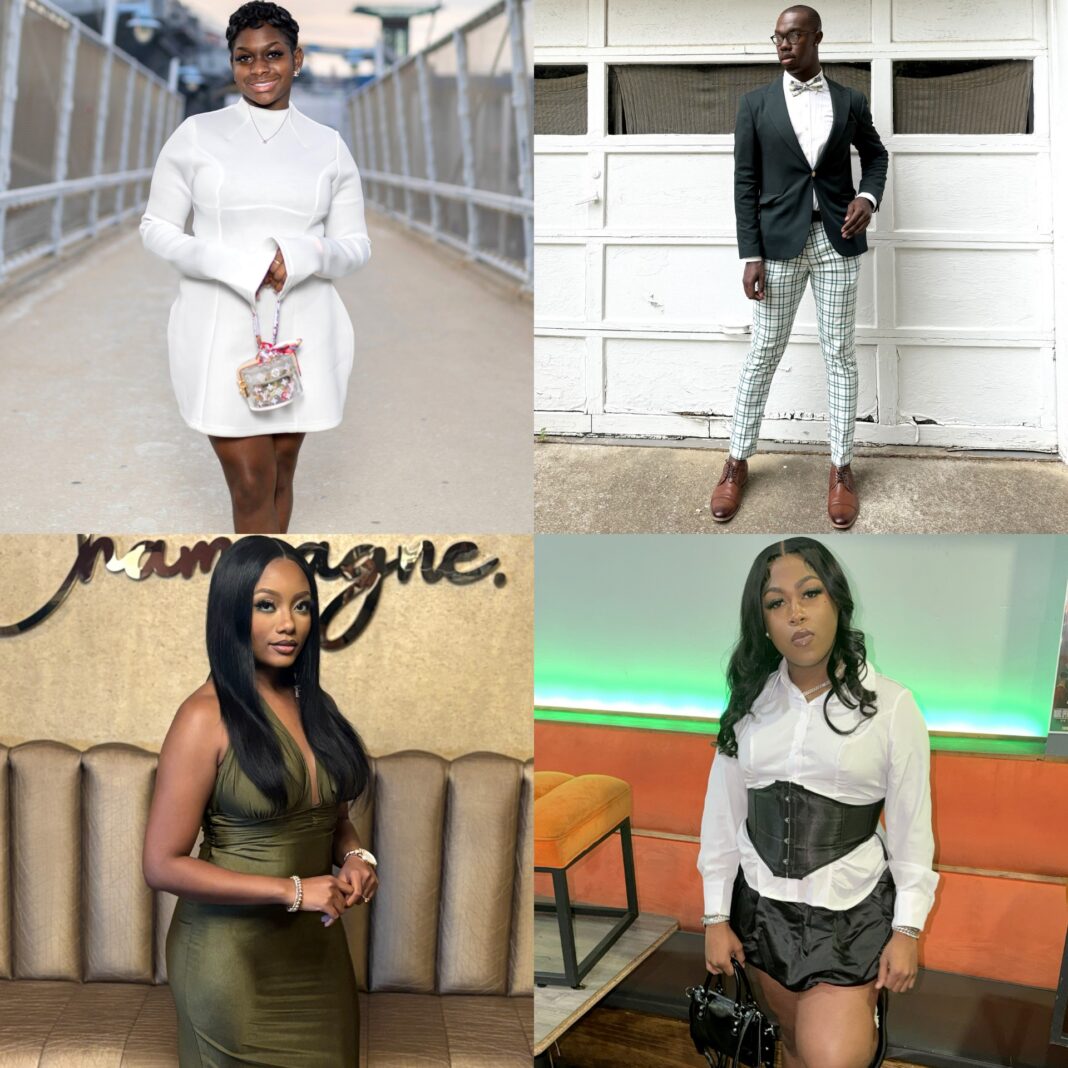


Clockwise from top left: Dr. Infinite “Dr. Finny” Henry, Christian Simpson, Cardier Underwood, and Dr. Kierra Oliver
By: Dennis Richmond, Jr.
Black American fashion has never just been about clothes—it has always been about identity, resistance, creativity, and power. From the tailored suits of the Harlem Renaissance to today’s streetwear and luxury brands, this Black History Month reminds us how Black style has consistently shaped what the world sees as “cool,” even when Black creators were not always given credit. Dr. Infinite “Dr. Finny” Henry, a 27-year-old Yonkers native and Lincoln High School graduate, explains, “Fashion, to me, is a reflection of how I feel and who I am on any given day. When you look good, you feel good, and I believe every outfit is a carefully selected puzzle of pieces that come together to tell a story.”
In the 1920s and 1930s, during the Harlem Renaissance, fashion became a statement of pride and dignity for Black Americans. Men wore sharp suits, polished shoes, and fedoras, while women embraced elegant dresses, fur coats, and bold accessories. This was more than style—it was a response to racism and stereotypes. Dressing well was a way of saying, “We are more than what society says we are.” In cities like New York, Chicago, and Detroit, fashion reflected a new era of Black confidence, art, and intellectual life.
As time moved into the 1970s, Black fashion began to shift alongside music and culture. The rise of new music genres brought a completely different aesthetic. Bell-bottom pants, afros, large-collared shirts, floral designs, and bold accessories became symbols of identity and expression. By the 1980s, brands like Adidas and Puma gained popularity—not because of advertisements, but because of their connection to the streets and to Black youth culture. As 23-year-old Cardier Underwood of New Jersey shares, “Fashion is a way of exercising what control I can have over how I feel about myself and how I want other people to perceive me. It lets people know who I am as a person.”
By the 1990s and early 2000s, streetwear exploded into mainstream culture. Oversized clothing, jerseys, Timberland boots, sweatbands, wristbands, and fitted caps became staples, heavily influenced by rappers and athletes. Black designers and entrepreneurs also began creating their own brands, such as FUBU, Sean John, Rocawear, and Phat Farm. These brands were important because they represented ownership—Black people creating for themselves, not just influencing others. As Christian Simpson, 27, from Mississippi, explains, “Fashion means dressing in a way that represents an aesthetic you feel comfortable with.”
Today, Black fashion continues to lead global trends, especially through streetwear and luxury collaborations. Designers such as Telfar Clemens have created highly sought-after lines of clothing and accessories, while Virgil Abloh, who led Louis Vuitton’s menswear division, helped bridge the gap between street style and high fashion. Sneakers, hoodies, and everyday wear have become part of luxury fashion, showing how styles once labeled “urban” are now celebrated on runways around the world. As Dr. Kierra Oliver, 30, of South Carolina, reflects, “Fashion smiles for you when you don’t feel like doing so yourself.”
However, the story of Black fashion is also about recognition. For decades, Black culture has been copied without credit or respect. Today, more people are calling this out and demanding that Black designers, stylists, and creators receive the acknowledgment they deserve.
From New York to hip-hop to high fashion, Black style has always been more than just clothing—it is a powerful form of expression that continues to shape culture across the globe.
Dennis Richmond, Jr. (@NewYorkStakz) is a journalist, historian, and educator from Yonkers, NY. He writes to uplift unheard voices, honor history, and inspire change.