
Compare the best golf simulator enclosures of 2026, from tool-free aluminum kits to budget steel frames, with sizes, room needs, and who each kit suits best.
Golf season around Westchester ends sooner than most players would like. By November the courses thin out, the range mats get cold, and swings that felt dialed in during September start to drift. A home simulator fixes that, but the launch monitor is only half the setup. The enclosure decides whether you can swing freely, whether mishits stay contained, and whether the picture on the screen actually looks like a fairway. Here are the six golf simulator enclosures that earn their price this year, plus what to measure before you buy one.
Why the Enclosure Matters More Than Most Buyers Think
Indoor golf is no longer a niche hobby. The National Golf Foundation’s 2025 research on the simulator market put total U.S. participation at a record 47.2 million people in 2024, once off-course formats are counted, and it found that about half of simulator users had not played a round on an actual course in the previous year. That is a lot of people swinging real clubs at real balls inside homes that were never designed for it.
An enclosure does three jobs at once:
- Safety: It catches shanks, tops and thin shots before they hit drywall, windows, light fixtures or the family car.
- Image quality: It frames the impact screen and blocks side light so the projected course looks sharp instead of washed out.
- Durability: A good screen absorbs ball speeds well above what most amateurs produce, with less bounce-back towards the hitter.
Cheap nets can handle the first job. The kits below handle all three.
How These Enclosures Were Judged
Every kit on this list was weighed against the same questions a buyer in a Yonkers garage or a Westchester basement would ask:
- How many sizes are offered, and will one fit an 8-foot ceiling?
- What is the frame made of, and does it need tools or a trip to the hardware store?
- How durable is the impact screen, and what ball speed is it rated for?
- What is included in the box, and what is sold as an add-on?
- How easy is it to take down if the room has to go back to being a garage or a guest
| Enclosure | Sizes | Frame | Assembly | Best For |
| GolfBays SimBox | 7 standard sizes, plus custom | Aluminum, click-together | Tool-free, under an hour | Most home setups |
| SIG10 by The Indoor Golf Shop | 3 (SIG8, SIG10, SIG12) | Push-pin poles | Moderate | Full edge-to-edge image |
| Carl’s Place C-Series DIY | 6 standard sizes, plus custom | 1″ EMT pipe (sold separately) | Hands-on DIY | Builders who want options |
| Rain or Shine SwingBay | 10’5″ x 8′ | 1.5″ aluminum push-button | Moderate | Shallow rooms |
| GoSports Golf Simulator Enclosure | 10×8, 12×9, 14×8 ft | Steel | Moderate | Tighter budgets |
| HomeCourse Retractable Screen | Several widths | Wall or ceiling mount | Install once | Multi-use rooms |
1. GolfBays SimBox Enclosure
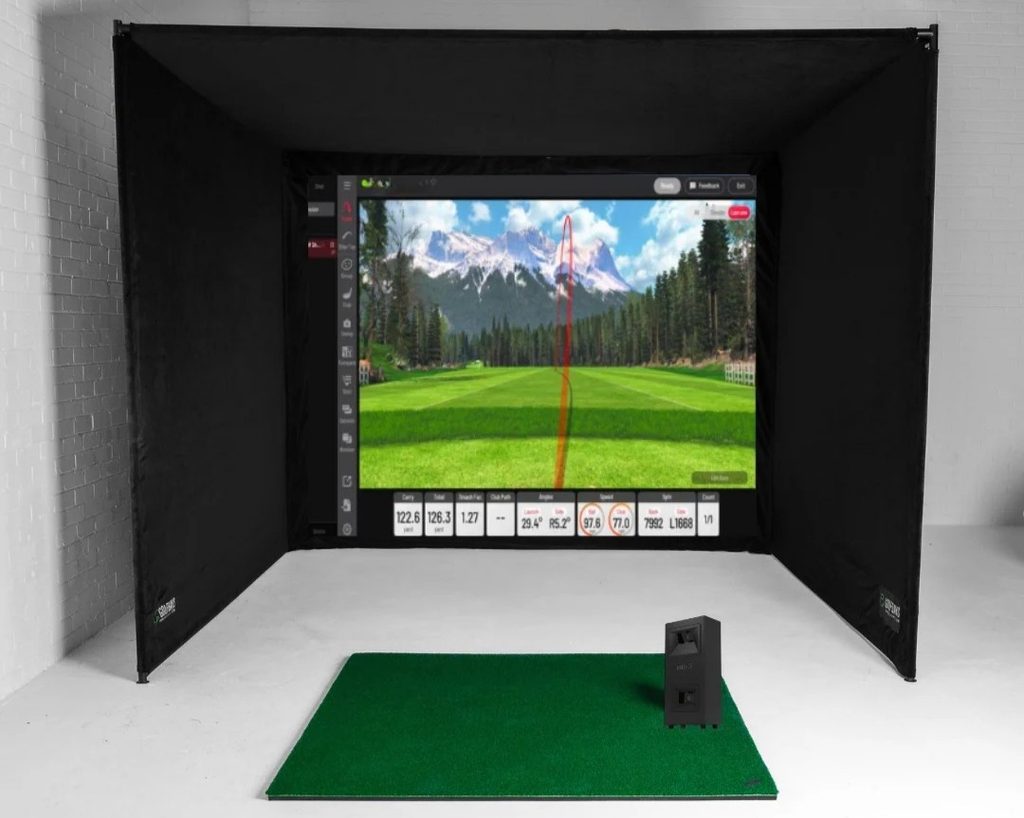
The SimBox gets the top spot because it solves the problem most home buyers run into first, which is fit. It comes in seven standard sizes, starting at 8’6″ wide by 8’2″ tall for tight rooms and going up to 13’2″ wide by 9’10” tall and 9’10” deep for anyone with a dedicated golf room. That range covers single-car garages, finished basements and spare bedrooms without forcing a custom order, though custom sizes are available too.
The frame is made of aluminum poles that click together without screws or tools, and GolfBays puts assembly under an hour. A black velvet surround keeps the eye on the screen and cuts reflected light from the sides. The current package includes the triple-layer PRO+ impact screen and side barriers, and the screen and enclosure are rated for ball speeds above 200 mph, which comfortably covers even a fast driver swing.
Aluminum also won’t rust, which matters in basements, although the screen fabric still lasts longer when humidity stays below 60 percent. For buyers comparing sizes, the GolfBays SimBox Enclosure product page lists each footprint along with GolfBays’ recommended room dimensions: a ceiling of at least 9.2 feet, a width of 9.8 feet, and a depth of around 13 feet for camera-based launch monitors or 16.4 feet for radar units
Key Features:
- Seven standard sizes cover most rooms
- Tool-free aluminum frame folds down for storage
- Works with all major launch monitors
- Optional enclosure-mounted projector arm, foam pelmet and blackout add-ons
2. SIG10 Golf Simulator Enclosure
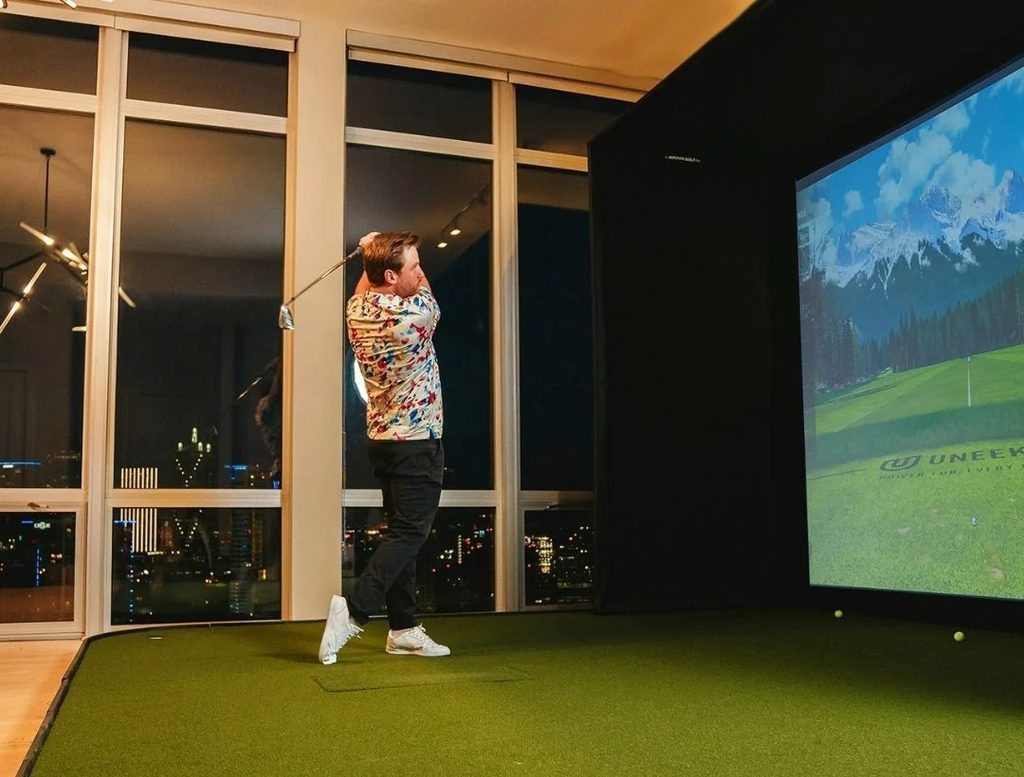
The Indoor Golf Shop designed the SIG10 Golf Simulator Enclosure around one specific complaint: projected images that leave empty strips at the top and bottom of the screen. The SIG10 lets the image fill the entire screen, which gives the setup a cleaner, more commercial look.
It measures roughly 8 feet by 10.5 feet and pairs the company’s SIGPRO Premium screen with push-pin poles, protective foam padding around the screen edges, a vinyl surround and ball bungees. The screen is rated for strikes up to 250 mph. If the SIG10 is too wide or too narrow, the SIG8 (8 by 8 feet) and SIG12 (9 by 12 feet) use the same design.
Key Features:
- Image fills 100 percent of the screen
- Foam padding protects the frame from errant shots
- Three sizes in the same family
3. Carl’s Place C-Series DIY Enclosure
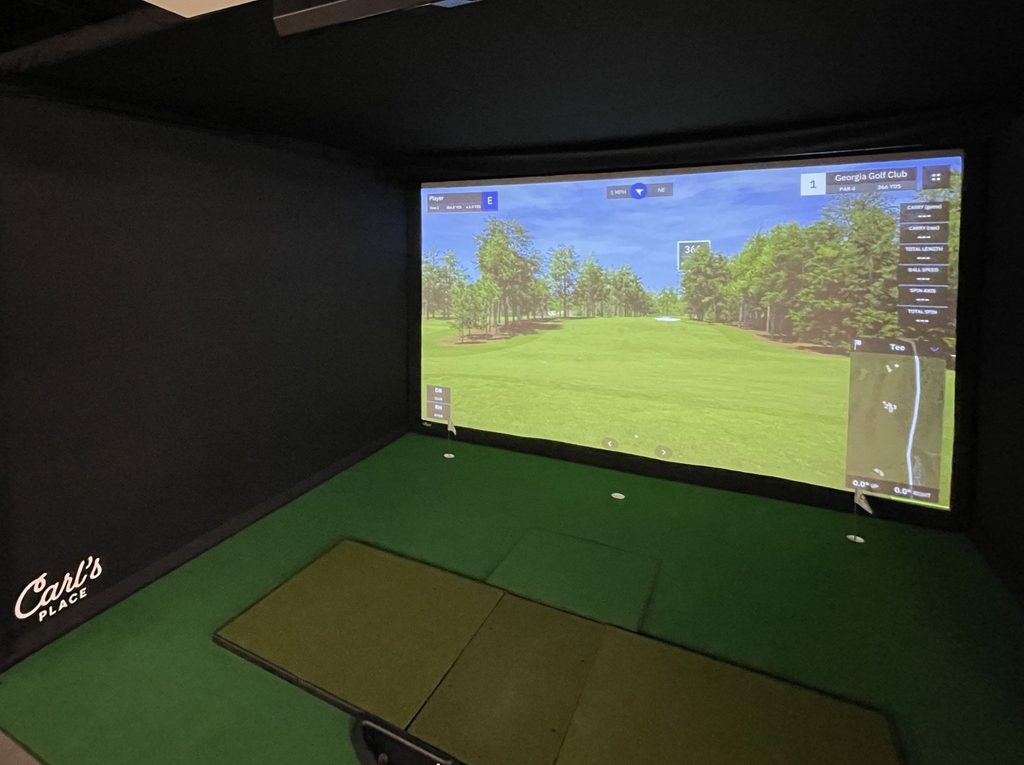
Carl’s Place is a trusted name for home builders who want to control every detail. The C-Series DIY kit comes in six standard sizes with a choice of three impact screen materials, so you can trade price against image quality and durability. The kit includes steel corner fittings, zip ties and ball bungees, and the screen is cabled to remove the bottom border between the mat and the screen.
The catch is the frame. The C-Series uses 1-inch EMT conduit that is not included, so you either buy it locally and cut it yourself or add the pre-cut pipe framing kit. EMT is also not meant to carry a projector or launch monitor, so plan on a ceiling mount. For anyone who wants net wall extensions, foam inserts, safety baffles or a back cover kit, the full lineup of Carl’s Place enclosure kits lets you add each piece separately. This makes it easy to customize the enclosure to fit your setup.
Key Features:
- Six sizes and three screen grades
- Custom sizing for odd-shaped rooms
- Deep accessory catalog
4. Rain or Shine SwingBay
Rain or Shine Golf built the SwingBay after collecting feedback from its own simulator customers, and its standout feature is depth. The enclosure measures 10’5″ wide by 8′ tall but only 4’2″ deep, leaving more room for the hitting area and launch monitor.
The frame is 1.5-inch aluminum with push-button connections, the screen is a ballistics-grade woven polyester, and the curtains are blackout ripstop nylon with 10-foot side netting. Rain or Shine rates the screen for ball speeds up to 250 mph and backs SwingBay products with a one-year warranty. The company lists a minimum room size of 8’6″ high, 10.5′ wide and 18′ deep.
Key Features:
- Shallow 4’2″ footprint
- Sturdy 1.5-inch aluminum frame
- Side netting included
5. GoSports Golf Simulator Enclosure
GoSports is the name most first-time buyers see when they start shopping, and for good reason. Its enclosure comes in 10×8, 12×9 and 14×8-foot sizes with a steel frame, HD impact screen and side and top netting in one box. The 10×8 version measures about 10’7″ wide, 8′ high and 6′ deep, while the 14×8 gives a wider image for anyone with the room.
It is not as refined as the premium kits above, and the screen will wear faster under heavy use. GoSports sells replacement screens sized to each enclosure, which keeps the long-term cost reasonable.
Key Features:
- Most affordable kit on this list
- Three sizes, including a wide 14-foot option
- Replacement screens readily available
6. HomeCourse Retractable Screen
Not every household can give up a room to golf. The HomeCourse retractable screen mounts to a wall or ceiling and rolls up when you are done, returning a living room, office or garage to normal use in seconds. It works best for golfers who play a few sessions a week and want the space back the rest of the time.
The tradeoff is containment. A retractable screen does not offer the full side and top coverage of a freestanding enclosure, so side netting or wall padding is worth adding if the room has windows or fragile fixtures.
Key Features:
- Disappears when not in use
- No floor footprint
How to Measure Your Space Before You Buy
Most buying mistakes are due to incorrect measurements. Before ordering, check these four numbers:
- Ceiling height: Take a slow, full swing with your driver. If the club gets close to the ceiling, you need a taller room or a shorter enclosure, and you may want to keep the driver out of the rotation.
- Width: Allow enough room on both sides to swing without clipping a wall, and leave space for left-handed players if anyone in the house swings that way.
- Depth: Camera-based launch monitors sit besides the ball, while radar units sit behind the hitter and need more depth.
- Distance to screen: Most manufacturers recommend at least 8 to 10 feet between the ball and the screen so bounce-back has time to slow down.
Making a Garage or Basement Work Year-Round
Garages are the most common home for simulators in this area, and they come with two problems: cold and moisture. Insulating the garage door and sealing drafts, the same practical steps covered in this guide to cutting winter energy bills at home, keep the space usable in January and protect projectors and launch monitors from condensation. Basements stay warmer but often run damp, so a dehumidifier is a smart purchase alongside any enclosure.
Rubber flooring or a landing pad in front of the screen also helps. It protects the concrete, softens the sound of bouncing balls and makes the bay look finished.
Who Actually Needs a Home Simulator
Interest in indoor golf keeps climbing. The National Golf Course Owners Association notes that simulator and screen-golf participation has more than doubled since 2019, and much of that growth comes from people who want to practice on their own schedule.
A home setup makes the most sense for golfers who:
- Want to keep their swing sharp through the winter
- Have young kids or long workdays that make tee times hard to book
- Work from home and want a way to move between meetings, especially given the health cost of sitting all day
- Are already paying for bay rentals and want to put that money towards their own equipment
Frequently Asked Questions
What is the best golf simulator enclosure for a garage?
The GolfBays SimBox is the most flexible option for garages because it comes in seven sizes and folds down when you need the space back. The GoSports enclosure is a solid budget alternative. Measure the ceiling height and width first, since those decide which size will work.
How much space do I need for a golf simulator enclosure?
Most setups need a ceiling of about 9 to 10 feet, a width of about 10 feet and a depth of 13 to 18 feet. Radar launch monitors need more depth than camera-based units. Always test a full driver swing in the room before buying.
Can I use a golf simulator enclosure with an 8-foot ceiling?
Yes, but you may need to limit your driver or choose a shorter enclosure. Some kits, like the smallest SimBox size, stand just over 8 feet tall. Shorter players and those with flatter swings have an easier time in low rooms.
How long does an impact screen last?
A quality impact screen typically lasts several years of regular use. Clean balls and clubs help, since dirt wears the fabric faster. Most brands sell replacement screens, so you do not need to replace the whole enclosure.
Do golf simulator enclosures come with a launch monitor?
No, enclosures are sold separately from launch monitors in most cases. Some retailers offer bundles that combine the enclosure, launch monitor, mat and projector. Check that any enclosure you choose is compatible with your monitor’s placement needs.
Is a DIY enclosure cheaper than a complete kit?
A DIY kit may be cheaper at first, but framing, padding, and accessories can increase the total cost. Kits like the Carl’s Place C-Series require you to buy conduit separately. A complete, tool-free kit often ends up costing about the same once everything is included.
What ball speed can an impact screen handle?
Premium screens are typically rated for 200 to 250 mph. That covers nearly every amateur golfer, since most drivers produce ball speeds well below that range. Budget screens may wear faster under repeated high-speed strikes.
Can I put a golf simulator enclosure outdoors?
Some enclosures, including the SimBox, can be used outdoors, but long-term exposure to sun and rain shortens the life of the screen and netting. A covered patio or garden building is a better choice than an open yard. Take the screen down during storms.
Do I need a projector for a golf simulator enclosure?
You need a projector if you want to see the course on the impact screen. Short-throw projectors are popular because they can be mounted close to the screen without casting a shadow from the hitter. Without one, you can still use the enclosure as a practice net with data on a tablet or TV.
How long does it take to set up a golf simulator enclosure?
Tool-free kits like the SimBox take under an hour. DIY kits that use conduit framing can take an afternoon or longer. Plan extra time for mounting a projector and positioning the launch monitor.
Final Thoughts
The right golf simulator enclosure depends less on brand loyalty and more on the room you have. The GolfBays SimBox covers the widest range of spaces with the least effort, while the SIG10, Carl’s Place, SwingBay, GoSports and HomeCourse options each serve a specific need, from full-screen images to tight budgets. Measure carefully, plan for cold and moisture, and pick the enclosure that fits the way you actually play. Your swing will be in much better shape when golf season starts again.