
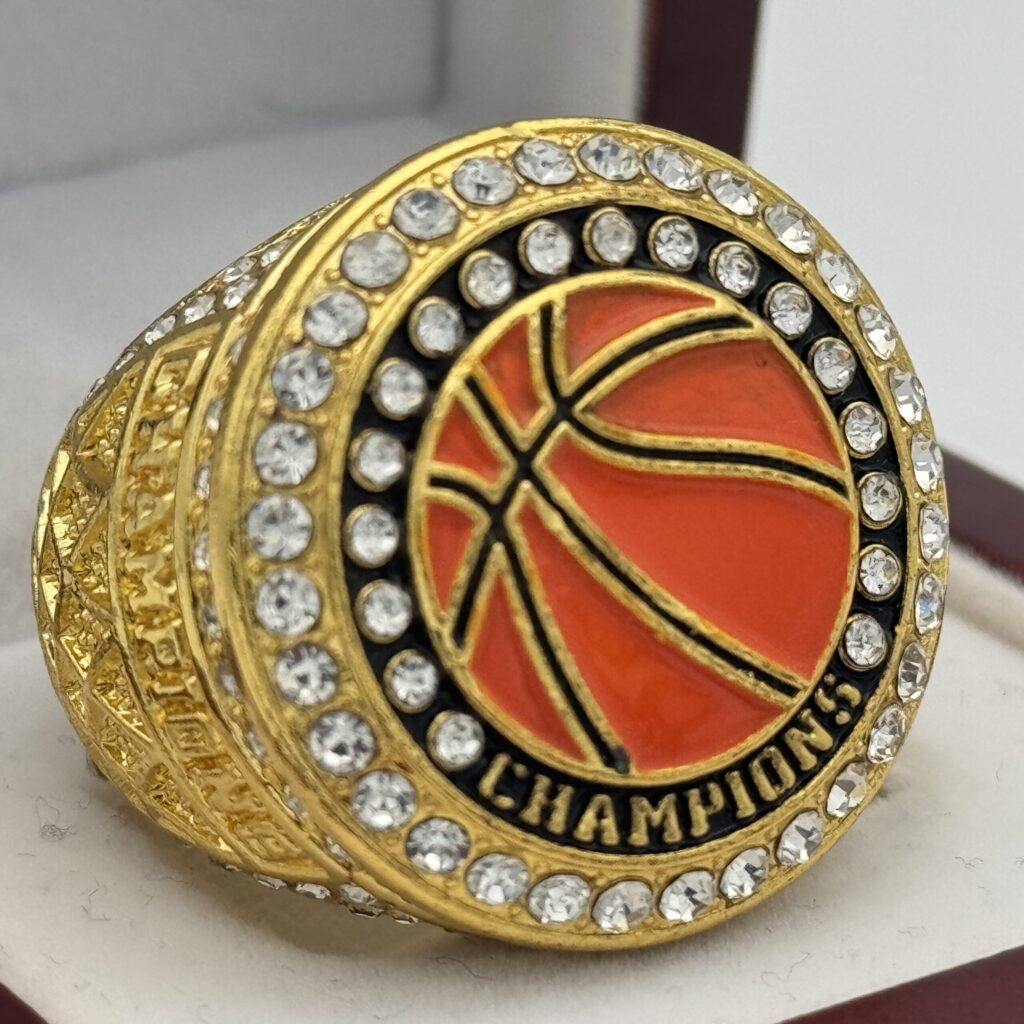
Running a basketball league means juggling schedules, referees, gym rentals, and registration, all while trying to give players a season they will remember. The final piece of that puzzle is deciding how to honor the teams that make it to the top.
Basketball championship rings have become a favorite choice for leagues of every size, from rec programs to elite travel circuits. This guide walks league directors through the decisions that matter most, so you can order with confidence and avoid the common pitfalls.
Why League Directors Are Choosing Rings
For years, the standard championship award was a trophy or a medal. Both still have their place, but directors are increasingly looking for something with more lasting impact. A ring connects players to the traditions of professional and collegiate basketball, and it feels like a true milestone.
Rings are also practical. They are small, easy to ship, simple to store, and far more likely to be kept by players for years. A trophy may end up in a closet, but a ring tends to be worn, shown off, and treasured.
Reasons directors give for making the switch:
- Rings feel more prestigious than standard awards.
- Players and families keep them for years.
- They are compact and easy to distribute at events.
- They can be fully customized to each team and season.
- They strengthen the identity and reputation of the league.
Understanding What Goes Into a Ring
Before you request quotes, it helps to understand the basic components of a ring. Knowing the terminology makes it easier to compare providers and communicate your vision.
Most rings have a top face, which holds the main design, along with a band, side panels, and an inner ring. Each area offers room for different details.
Key parts of a championship ring:
- Top face. The primary design area, often featuring a logo, mascot, or basketball graphic.
- Side panels. Space for player names, numbers, team names, or season details.
- Band. The part that wraps around the finger, which affects comfort and fit.
- Inner band. A hidden area perfect for a personal message or engraved date.
- Stones. Crystals or synthetic gems that add color and sparkle.
Setting Your Budget
Budget should be settled early, before you fall in love with a design that does not fit. Start by deciding how much you can spend per ring, then build in room for extras like display boxes or rush fees.
Count carefully. Include every player on each championship roster, plus coaches, assistants, and any team managers you want to recognize. A missed name after the order is placed can be costly to fix.
Factors that affect pricing:
- The metal or alloy used for the band
- The number, size, and type of stones
- The complexity of the design and any custom molds
- Engraving and personalization options
- The total quantity ordered
- Production speed and shipping method
If your budget is tight, simpler designs can still look impressive. Many directors also fund ring programs through sponsorships, registration fees, concession proceeds, or fundraisers.
Choosing Materials and Finishes
The material you choose shapes the look, weight, durability, and price of the ring. Since players will likely wear these rings regularly, it is worth asking how each option holds up over time.
Common material options:
- Stainless steel. Strong, tarnish-resistant, and a popular pick for durability.
- Brass and alloy metals. Affordable and versatile, typically plated for shine.
- Sterling silver. A classic bright look, though it may need extra care.
- Gold tone or gold plated finishes. A traditional championship appearance at a moderate cost.
For stones, most amateur rings use crystals or synthetic gems. They provide excellent sparkle and color variety without a steep price. Ask your provider how the plating and stone settings hold up to daily wear, and what care instructions you should share with players.
Designing Basketball Championship Rings That Stand Out
Design is where a ring becomes more than a generic award. The best basketball championship rings reflect a specific team in a specific season, using imagery and details that players recognize instantly.
Start with a clear focal point on the top face. A team logo, a basketball with raised texture, or a bold league name all work well. Avoid crowding the design with too many elements, since small details can get lost on a compact surface.
Design elements to consider:
- Team or league logo on the top face
- A basketball graphic with raised lines
- A hoop and net motif
- Jersey numbers and player names on the sides
- Season year and division or tournament title
- Team colors in the stones or enamel
- A motto or rallying phrase inside the band
Contrast and readability matter. Choose two or three main colors, keep text large enough to read, and ask for a proof that shows the design as accurately as possible.
Getting Sizing Right
Sizing mistakes are among the most common problems in ring orders, and they can be frustrating to correct. Players vary widely in hand size, and younger athletes are still growing.
The best approach is to request a sizing kit from your provider. Have each player try on sample rings, record the results on a chart, and double-check every entry before submitting your order.
Sizing tips for directors:
- Assign one person to manage and verify all sizing information.
- Measure at the end of the day, when fingers are slightly larger.
- Choose a fit that slides over the knuckle with slight resistance.
- Consider going a bit larger for growing players.
- Ask about resizing or exchange policies.
- Keep a record of sizes for future orders.
Planning Your Timeline
Custom rings take time, and rushing the process often leads to errors or extra fees. Design approval, production, and shipping all add up, so it pays to start early.
Plan to begin at least six to eight weeks before you need the rings in hand. If your championship games fall at the end of the season, consider starting the design process while play is still underway, then finalizing names and sizes once the winners are known.
A simple timeline for directors:
- Eight weeks out: Set your budget and choose a provider.
- Seven weeks out: Finalize the design and request a proof.
- Six weeks out: Approve the proof and gather sizing details.
- Two to four weeks out: Track production and shipping updates.
- One week out: Confirm delivery and inspect the rings.
Building in a buffer protects you from delays, which are more common during busy seasons.
Structuring Your Ring Program
Not every league awards rings the same way. The right structure depends on your size, budget, and philosophy about recognition. Decide early, and communicate the plan clearly so families know what to expect.
Common program structures:
- Champions only. Rings go to the winning team in each division.
- Tiered awards. Champions receive rings, while runners-up receive medals or pendants.
- Tournament-based. Rings are awarded for specific events or playoffs.
- Individual honors. Special rings recognize MVPs or all-league players.
- All participants. Every player receives a ring, often a simpler design.
Clear communication prevents confusion and keeps the focus on celebration rather than comparison.
Choosing the Right Provider
The provider you select will shape your entire experience. Take time to compare several options, and do not hesitate to ask questions before committing.
What to look for in a provider:
- A clear proof process before production begins
- Transparent pricing with no hidden fees
- Responsive and helpful customer service
- Reasonable production and shipping timelines
- Positive reviews or references from other leagues
- A fair policy on errors, remakes, and returns
Ask to see examples of past work, and find out how the company handles mistakes. If other directors in your area have ordered rings, their feedback can be especially valuable.
Making the Presentation Memorable
How you present the rings matters almost as much as the rings themselves. A thoughtful ceremony turns a simple handout into a moment players and families will remember.
Ideas for a memorable presentation:
- Present each ring in a display box with the team or league logo.
- Call players up individually and share a highlight from their season.
- Show a short video of the best moments from the playoffs.
- Invite families to gather for photos afterward.
- Ask a local coach, alum, or community figure to help hand out the rings.
Recognizing each player individually helps everyone feel valued, from the leading scorer to the teammate who cheered loudest from the bench.
Frequently Asked Questions
How much do basketball championship rings cost?
Prices vary based on materials, stones, and design complexity. Simple designs are affordable, while detailed rings cost more. Ordering in bulk usually lowers the price per ring.
How long does it take to receive custom rings?
Most orders take several weeks from proof approval to delivery. Plan for six to eight weeks to be safe.
Can each ring include a player’s name and number?
Yes. Most providers offer engraving for names, jersey numbers, and short messages, which makes each ring unique.
Who should receive a ring?
Most leagues give one to every rostered player on the championship team, plus coaches and assistants. Some also recognize team managers.
What materials are best for durability?
Stainless steel is a popular choice for strength and tarnish resistance. Ask your provider how each finish holds up to everyday wear.
How do we get accurate sizing?
Request a sizing kit and have players try on samples. Record sizes carefully, and consider going slightly larger for growing athletes.
Are rings appropriate for youth leagues?
In most cases, yes, as long as they are sized properly and comfortable. Pendants or adjustable styles work well for very young players.
Can rings replace trophies?
They can, though some leagues pair rings with a team trophy or banner for display at the gym. The right choice depends on your goals and budget.
Final Thoughts
Choosing how to honor your champions is one of the most rewarding decisions a league director can make. A ring gives players something personal, durable, and meaningful to hold onto long after the final buzzer.
By setting a clear budget, designing with care, getting sizing right, and planning ahead, you can make the process smooth and stress-free. For directors who want to recognize their best teams in a lasting way, basketball championship rings are a memorable investment that players will be proud to wear for years to come.