
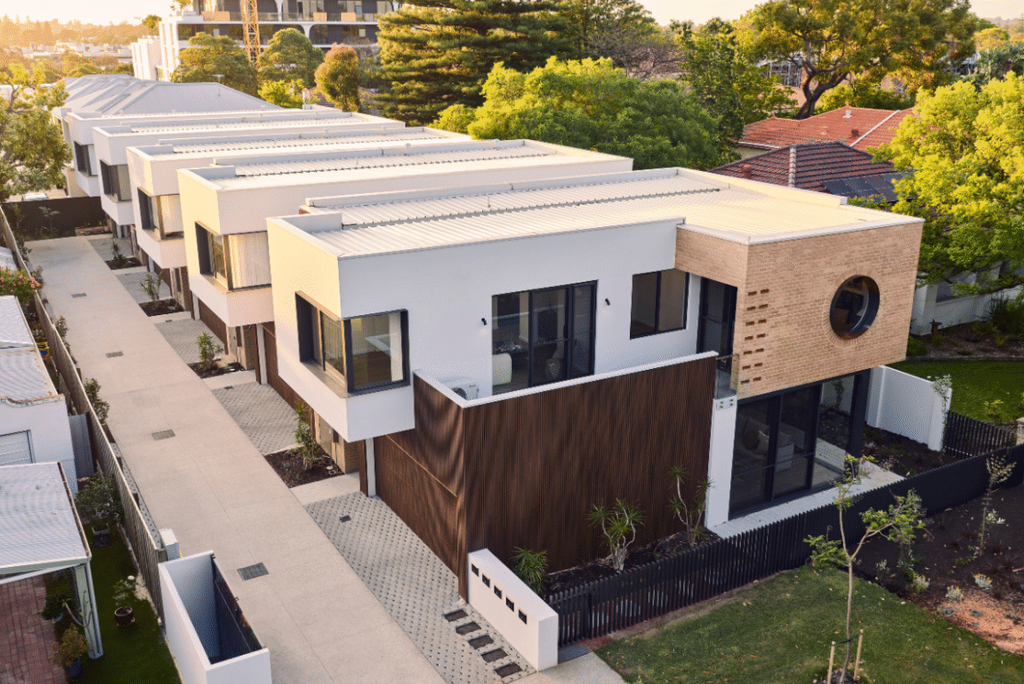
It is easy to begin a new-home brief with a favourite facade or a list of rooms. The block deserves a place in that conversation just as early. Its orientation, neighbouring buildings, access and outlook will help shape where those rooms belong. Before becoming attached to one arrangement, spend time understanding the setting. That gives the design team a stronger basis for exploring a home that belongs on the site and supports your everyday routines.
Observe the site at different times
Visit when you expect to use the home most, where access is available. Note which parts receive direct light in the morning and afternoon, where shade falls and which views attract your attention. Record what you can actually observe rather than deciding immediately where every room should go.
Photographs taken from several positions can help explain these observations at a design meeting. Label the direction and time so the images remain useful later. If you have only seen the site once, identify the questions still to investigate instead of treating that visit as a complete picture.
Consider the neighbours alongside the outlook
A desirable view and a comfortable level of privacy do not always come from the same window position. Look at nearby windows, outdoor seating areas and the routes people use around adjoining homes. Explain which rooms you want to feel open and which you would prefer to make more private.
Ask the designer to consider those relationships in three dimensions. A window that looks convenient on a floor plan may feel different once the height of a neighbouring building is taken into account. Screening, room placement and the direction a space faces are matters to explore together.
Trace the journeys into and through the home
Think about arriving with shopping, bringing in a bicycle, meeting visitors and taking bins outside. These ordinary movements can reveal useful connections between parking, entry, kitchen, storage and service areas. A convenient route may matter more to you than the size of any one room along it.
Discuss outdoor living at the same time. Consider how food reaches the table, where guests gather and how the outdoor area relates to neighbouring properties. Leave enough attention for paths and garden access, rather than treating the space left around the house as a separate project to solve later.
Let the brief guide the response to the site
List the rooms or activities that would benefit most from a particular outlook or connection. A household that spends weekends gardening may value direct access from shared living areas. Someone working from home may prefer a study positioned away from the busiest parts of the property. There is no single arrangement that suits both briefs automatically.
For homeowners considering a Perth custom home builder, Trendsetter Homes presents its service around individually developed homes. Take your site observations and household priorities to an initial discussion, then ask how the proposed layout would respond to both.
Resolve unknowns before fixing the design
Ask the project team what site information is needed to develop the concept. Existing drawings and casual measurements may leave important gaps. Have the appropriate professionals confirm the information they need about boundaries, levels, services and other site conditions before relying on an assumption.
Keep a record of issues that may affect the available layout or proposed work. Ask who will investigate each one and when it needs to be resolved. Early concepts are useful for exploring possibilities, but they should be reviewed as confirmed site information becomes available.
Review the whole arrangement
When a concept arrives, walk through it as a sequence of daily activities. Look beyond the room labels to the position of doors, furniture, windows and outdoor spaces. Ask what you would see from a seat, where a visitor would wait and how a busy morning would work.
Return to the site observations that started the brief. Check how the design uses the outlook you value, addresses privacy and connects the home to its surroundings. A thoughtful response to the block comes from considering these relationships together, then refining them as the details become clearer.