
Somewhere in the third trimester, an insurance portal hands you a menu of breast pumps and asks you to pick one. The menu is long. The specs use units you’ve never had to think about. And you’re supposed to make this choice before you’ve ever pumped, for a baby who hasn’t arrived yet, based on a routine that doesn’t exist.
This guide narrows the choice from overwhelming to workable.
What Insurance Actually Covers
The Affordable Care Act requires most health insurance plans to cover a breast pump. Coverage typically includes a personal-use pump, either during pregnancy or after delivery depending on the plan.
What varies between plans is which pumps are on the covered list, timing (some plans release the benefit at 27 weeks, others wait until 36), whether the benefit covers rental or purchase, and whether upgrade paths exist. Every plan works with specific durable medical equipment suppliers, and each supplier stocks a different set of pumps. The same insurance may offer different menus depending on which supplier you order through.
The first call to make isn’t about which pump. It’s to your insurance to confirm the coverage terms, the timing window, and which suppliers they work with. That call takes ten minutes and prevents the most common problem: finding the pump you want on one supplier’s list and discovering your plan uses a different one.
Portable, Wearable, or Plug-In?
Every pump on every menu falls into one of three categories, and the category matters more than the brand.
- Plug-in pumps are the traditional design: a motor unit that sits on a counter, tubing that runs to flanges, and an AC power cord. They’re strong performers on suction and cycles; they’re the most affordable at the base tier, and they’re the least portable. If you’ll pump mostly at home or at a desk with reliable outlets, a plug-in is the workhorse choice.
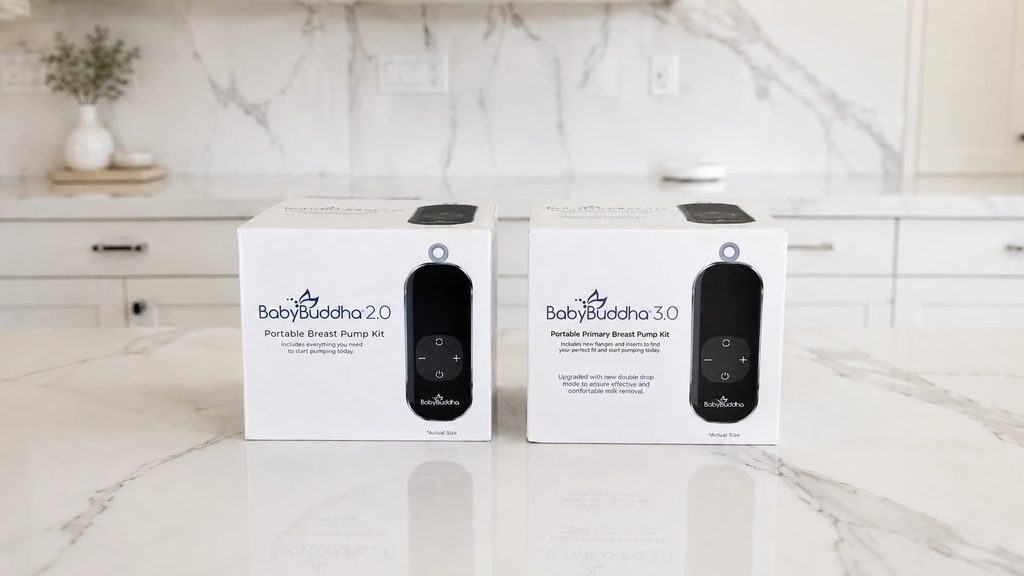
- Portable pumps are motorized units that run on rechargeable batteries and are small enough to carry or clip to a waistband. Suction and cycle performance on the better models matches plug-in units. The tradeoff is price (most portables sit in the upgrade tier) and battery life if you’re pumping many times a day.
- Wearable pumps fit entirely inside a nursing bra, with motor, flange, and collection cup as one integrated unit. Wearables are the newest category and the most convenient for pumping while moving around, but they typically trade some suction strength for the form factor.
If you’re leaning portable, checking whether you can get a Free Breast Pump Through Insurance before paying out of pocket is worth ten minutes of paperwork. Most plans cover more than the plug-in default at the base tier, and the upgrade fee to a portable is often lower than buying one retail.
Specs That Matter (and Ones That Don’t)
Pump listings are heavy on numbers. Some predict how well the pump will work for you. Others are decorative.
Worth paying attention to:
- Suction strength (mmHg). Hospital-strength pumps land around 300 to 350 mmHg. Weaker pumps in the 200 range often struggle for exclusive pumpers. Higher isn’t always better, but a low ceiling limits your options.
- Cycle speed. Faster cycles mimic a baby’s initial letdown; slower cycles mimic active feeding. Pumps with a range across both are more adaptable.
- Number of modes. Distinct stimulation and expression modes, plus variations, give you room to find what works.
- Closed vs. open system. Closed systems have a barrier preventing milk from entering the tubing or motor. This matters for hygiene.
Not worth fixating on: extra flange sizes in the box (you’ll likely need a different size anyway, and a proper kit like the EasyFit Flange Kit with two 24mm flanges, ten inserts sized 13 to 21mm, and a nipple-sizing ruler covers a full range of 13 to 24mm), promotional bundles, app connectivity, or weight if the pump will live on a nightstand.
When to Order
The lead time from order to delivery averages two to four weeks. Order in the third trimester, ideally between 30 and 34 weeks. That gives you delivery before baby arrives without ordering so early that you second-guess the choice.
The risk of ordering too early: you learn something in a birth class or from a lactation consultant that would have changed your pick, and you’re locked in. The risk of ordering too late: baby arrives early, and you spend the first week without your own equipment.
If you’re past 34 weeks and haven’t ordered, order this week.
If You Don’t Love It
The pump you choose at 32 weeks is a best guess.
Check the warranty. Manufacturer warranties on personal pumps typically run one to three years and cover the motor. A pump that stops working in month four should be repaired or replaced at no cost.
Some insurance plans allow a second pump within the coverage window under specific conditions: a supply diagnosis, a switch to exclusive pumping, a return-to-work event. Ask before assuming you’re locked in.
And if the pump on your menu isn’t the right long-term fit, a portable or wearable as a paid upgrade to your insurance pump gives you two-pump flexibility for less than buying either at full retail. A plug-in at home, a portable in the bag. That combination is what a lot of experienced pumpers land on eventually.
The Best Answer You Can Give Right Now
The pump you pick before baby arrives is a decision made without the information you’ll have a month in. Pick well enough to start (right category for your life, reasonable specs, timing that lands before baby does) and let the actual routine tell you the rest. The parents who love their pumps aren’t the ones who researched hardest before ordering. They’re the ones who picked something reasonable, started pumping, and adjusted from there.