
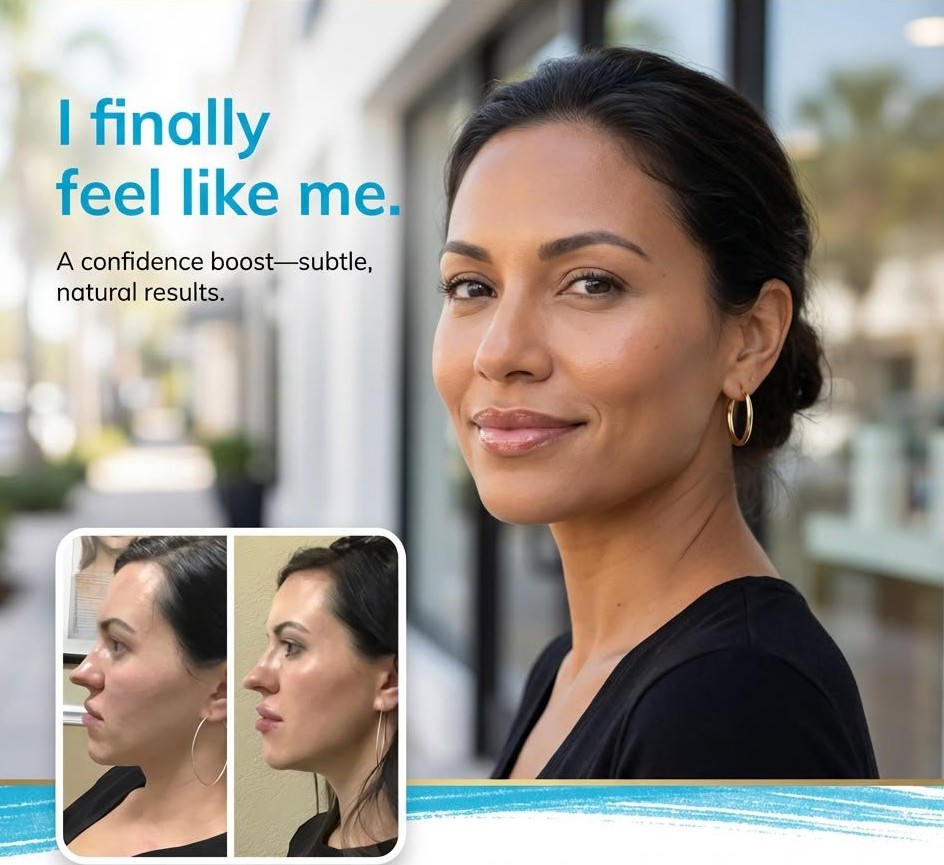
The Neck: An Often Overlooked Sign of Aging
Many people put time and care into their facial skin care routine, only to realize one day that their neck tells a different story. Vertical cords running from the jawline down toward the collarbone, commonly called neck bands, can make the neck look older, tense, or strained even when the face looks fresh and rested. These bands can also soften the definition of the jawline, which affects the overall profile of the lower face. If you have noticed these vertical lines and wondered whether there is a nonsurgical solution, BOTOX® may be the answer. In this article, we explain what causes neck bands, how BOTOX works to soften them, who makes a good candidate, and what to expect if you are considering BOTOX for neck bands in Longwood, FL.
What Are Neck Bands and What Causes Them?
Neck bands, also known as platysmal bands, are visible vertical cords that form along the front of the neck. They are created by the platysma, a thin, sheet-like muscle that extends from the lower face and jawline down over the neck to the upper chest. The platysma helps pull the corners of the mouth down and tenses the skin of the neck, which is why the bands often become more pronounced when you grimace, speak, or clench your jaw.
In youth, the platysma lies smoothly beneath firm, elastic skin. Over time, several changes allow its edges to separate and become visible as distinct bands. Common contributing factors include:
- Natural aging. Collagen and elastin production decline with age, so the skin covering the neck becomes thinner and less able to disguise the muscle beneath it.
- Muscle overactivity. Some people naturally use the platysma more than others, and repetitive tension can make the bands more prominent.
- Genetics. Your inherited anatomy plays a role in how early and how strongly bands appear.
- Weight loss. Losing fat in the neck area can reveal muscle bands that were previously hidden.
- Sun damage. Ultraviolet exposure breaks down collagen and accelerates skin laxity, and the neck is frequently left out of daily sunscreen routines.
- Habits and posture. Frequent jaw clenching, straining during exercise, and looking down at phones and screens can all add tension to the area.
Because muscle activity is a major factor behind visible bands, a muscle-relaxing treatment like BOTOX can be an effective way to soften them.
How BOTOX Reduces Neck Bands
BOTOX Cosmetic is a purified neuromodulator that temporarily blocks the nerve signals that tell a muscle to contract. When it is injected into the platysma, the muscle relaxes, and the vertical bands become less prominent. In 2024, the U.S. Food and Drug Administration approved BOTOX Cosmetic for the temporary improvement of moderate to severe platysma bands in adults, making it the first neuromodulator approved for this purpose.
During treatment, your injector places small amounts of BOTOX along each visible band at several points. As the muscle relaxes, it no longer pulls into tight cords, and the skin of the neck lies smoother.
The benefits of this approach can include:
- Softer, less visible bands at rest and during movement
- A smoother, more youthful neck without incisions
- Improved jawline definition, since the platysma also pulls the lower face downward
- A more balanced appearance between a rejuvenated face and the neck
The jawline benefit deserves special attention. Because the platysma tugs downward on the lower face, relaxing it can allow the jawline to appear slightly more defined. Some injectors pair neck treatment with injections along the jawline, a technique sometimes called the Nefertiti lift, to enhance this effect.
Are You a Good Candidate?
BOTOX works best when neck bands are driven mainly by muscle activity rather than by significant loose skin or excess fat. A consultation is the best way to know for sure, but you may be a strong candidate if you:
- Have visible vertical bands that become more noticeable when you tense your neck or grimace
- Have mild to moderate skin laxity with reasonably good skin elasticity
- Want a nonsurgical option with little to no downtime
- Are in good overall health and have realistic expectations
- Are looking for a way to maintain results after a previous neck lift
BOTOX may not be the right choice, or may need to be combined with other treatments, if you have:
- Significant loose or sagging skin on the neck
- Fullness under the chin caused primarily by fat
- Horizontal neck lines, sometimes called necklace lines, as your main concern
- Certain neuromuscular conditions, or if you are pregnant or breastfeeding
For concerns that BOTOX cannot address on its own, your provider may suggest complementary options such as skin tightening treatments, dermal fillers or skin boosters for horizontal lines, fat reduction under the chin, or a surgical neck lift for more advanced laxity.
What to Expect During Your Treatment
BOTOX for neck bands is a quick, in-office procedure. Most appointments take about 15 to 30 minutes, and there is no true downtime.
A typical visit includes these steps:
- Consultation and assessment. Your injector will examine your neck at rest and while you tense it, often asking you to grimace or clench your teeth so the bands stand out clearly. This helps map exactly where the platysma is most active.
- Treatment planning. Your provider determines how many injection points each band needs and how many units to use. Photos may be taken to track your progress.
- Preparation. The skin is cleansed. Ice or a topical numbing cream may be offered for comfort, although most patients find the injections very tolerable.
- Injections. Using a very fine needle, your provider places small amounts of BOTOX along each band. The injections are shallow and take only a few minutes in total.
- Aftercare instructions. You will leave with simple guidelines to help the product stay where it was placed.
Common aftercare recommendations include:
- Stay upright for about four hours after treatment
- Avoid rubbing, massaging, or applying pressure to the neck for the rest of the day
- Skip strenuous exercise, saunas, and hot tubs for 24 hours
- Avoid tight collars, scarves, or necklaces that press on the treated area for a day
Most people return to work and their normal activities right away. Any small bumps at the injection sites typically fade within an hour.
When Will You See Results, and How Long Do They Last?
BOTOX takes effect gradually. Many patients begin to notice softer neck bands within a few days, with full results typically visible at around two weeks. Your provider may recommend a follow-up visit at that point to evaluate the outcome and make small adjustments if needed.
Results generally last three to four months. Several factors can influence how long your results last, including:
- The strength and size of your platysma muscle
- Your metabolism and activity level
- The number of units used
- How consistently you schedule maintenance treatments
As the effects wear off, the bands will slowly return to their previous appearance. Regular treatments help maintain a smooth neck, and many patients find that consistent maintenance keeps their results looking steady over time.
Side Effects and Why Your Injector Matters
When performed by a qualified professional, BOTOX for neck bands is considered safe and well tolerated. Most side effects are mild and temporary, such as:
- Redness or small bumps at the injection sites
- Minor bruising or swelling
- Tenderness in the treated area
- A mild headache
Because the neck contains muscles involved in swallowing, speaking, and holding up the head, precise technique is especially important in this area. Less commonly, BOTOX can affect nearby muscles and cause difficulty swallowing, changes in voice, dry mouth, or a feeling of neck weakness. These effects are uncommon and temporary, but any trouble swallowing, speaking, or breathing should be reported to your provider or a medical professional right away.
To reduce your risk and get the most natural results, look for an injector who offers:
- Medical credentials, such as a physician, nurse practitioner, physician assistant, or registered nurse with advanced aesthetic training
- A thorough understanding of neck and lower face anatomy
- Specific experience treating platysma bands
- Before and after photos of neck treatments
- An honest assessment of whether BOTOX alone will meet your goals
Be sure to share your complete medical history, including medications and any neuromuscular conditions, during your consultation.
Frequently Asked Questions
Is BOTOX FDA approved for neck bands?
Yes. In 2024, the FDA approved BOTOX Cosmetic for the temporary improvement of moderate to severe platysma bands in adults.
Does BOTOX for neck bands hurt?
Most patients feel only a quick pinch with each injection. Ice or numbing cream can be used if you are sensitive.
How many units are needed for neck bands?
The dose depends on how many bands you have and how strong the platysma muscle is. Your provider will customize the number of units during your consultation.
Will BOTOX get rid of horizontal neck lines?
BOTOX is designed to relax the vertical bands. Horizontal necklace lines are usually better addressed with fillers, skin boosters, or skin tightening treatments.
Can BOTOX tighten loose neck skin?
No. BOTOX relaxes muscle but does not tighten skin. Significant laxity may require skin tightening treatments or a surgical neck lift.
Is there any downtime?
No. You can return to most normal activities immediately, though you should avoid strenuous exercise and pressure on the neck for about 24 hours.
Can I treat my neck and face in the same appointment?
Yes. Many patients combine neck treatment with BOTOX for forehead lines, crow’s feet, or the jawline for a coordinated, natural result.
How often will I need treatment?
Most people schedule maintenance appointments every three to four months to keep their neck looking smooth.
Smooth Your Neck With BOTOX for Neck Bands in Longwood, FL
So, can BOTOX help reduce neck bands? For many people, the answer is yes. By relaxing the platysma muscle, BOTOX can soften vertical cords, smooth the appearance of the neck, and even enhance jawline definition, all without surgery or downtime. The best results come from a personalized treatment plan and an experienced injector who understands the anatomy of the neck.
If you are ready to bring your neck into harmony with your face, we invite you to schedule a consultation with our experienced team. We will evaluate your concerns, explain your options honestly, and design a plan that delivers natural, refreshed results. Contact us today to learn more about BOTOX for neck bands in Longwood, FL, and take the first step toward a smoother, more youthful neckline.