
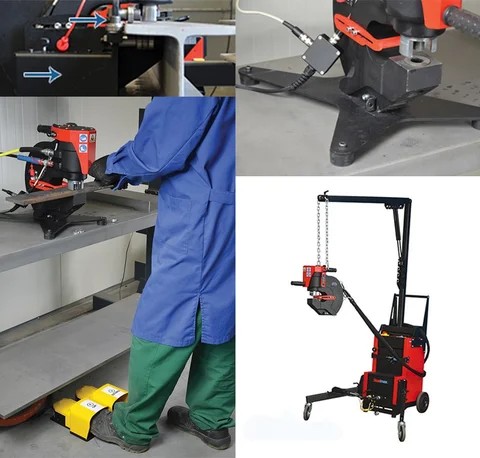
Fabrication shops often reach a point where manual drilling, torch cutting, or outsourced holes begin to limit profitable work. A hydraulic punch can create clean openings with repeatable force, less heat, and faster setup. Yet the purchase makes sense only when daily production, material demands, and labor costs support it.
For shops comparing hole-making options, an industrial hydraulic punching machine deserves attention when throughput depends on repeated openings in flat bar, angle, channel, or plate. The process applies concentrated force through a die, producing a hole without the broad heat-affected area created by flame work. That difference can reduce cleanup, preserve nearby finishes, and make dimensions easier to repeat across a production run.
The following signs help shop managers judge whether current methods are creating avoidable delays, quality problems, safety concerns, or lost opportunities.
1. Hole Production Consumes Too Much Time
Manual drilling often requires layout, center punching, pilot holes, bit changes, and repeated repositioning. Torch cutting also adds grinding and edge cleanup to it. If workers spend more time preparing and correcting holes than assembling parts, the process is limiting output. A hydraulic punch completes many openings in a short cycle, helping crews move material from layout to fabrication with fewer interruptions.
2. Outsourced Work Creates Scheduling Delays
Sending punched components elsewhere ends up adding transportation, purchase orders, handling, and uncertain lead times. Those delays become costly when a customer changes dimensions or requests a rush order. An in-house unit gives the shop greater control over production timing. It also reduces dependence on another facility’s workload, staffing, and material-handling schedule.
3. Hole Quality Varies Between Operators
Inconsistent diameter, location, burr size, or edge condition can lead to fit-up problems during welding and assembly. Variation often increases inspection time and rework. Hydraulic equipment uses controlled pressure and matched tooling, which supports repeatable results. Consistent openings are especially valuable for connection plates, structural brackets, guard components, and parts produced in batches.
4. Heat Distortion Causes Rework
Flame-cut openings can transfer heat into surrounding steel, causing discoloration, distortion, or changes in edge condition. Grinding may correct some defects, but it consumes labor and can alter the finished profile. Punching uses mechanical force instead of thermal energy. A cooler hole-making method could be useful for shops that work with coated, finished, or dimension-sensitive materials.
5. Drilling Costs Keep Rising
Drills, bits, cutting fluid, replacement motors, and maintenance create recurring expenses. Harder steel can accelerate wear and increase cycle times. While hydraulic punches also need to have their tooling maintained, they may have a lower operating cost when it comes to high-volume jobs. Managers should track labor minutes, consumables, repairs, and rework before comparing equipment costs.
6. Employees Face Strain or Safety Risks
Large plates and long sections can make drilling awkward. Workers may manage heavy tools, secure shifting stock, or operate near hot chips and sharp edges. Better fixturing and guarded hydraulic equipment can reduce exposure to those hazards. Prior to making a machine selection, a risk assessment should be conducted to assess the following: lifting, clamping, hand placement, noise, and housekeeping.
7. New Jobs Require Larger Openings
Jobs requiring oversized holes, bolt patterns that are repeated, or openings in thick sections may start trickling into a shop. Drilling such parts can require large equipment, multiple passes, or extensive setup. Hydraulic punching capacity is measured by force, throat depth, tooling range, and maximum material thickness. Matching those specifications to upcoming work prevents underpowered purchases.
8. Production Volume Has Outgrown Existing Tools
A few occasional holes may not justify dedicated equipment. Hundreds of openings each week present a different calculation. Rising order volume, added shifts, and growing overtime can reveal a clear capacity gap. If current tools cannot meet delivery dates without extra labor, a hydraulic punch may improve scheduling, labor allocation, and overall shop capacity.
What to Measure Before Buying
Managers should record monthly hole counts, average cycle time, material thickness, rework hours, tooling expenses, and outsourced charges. The review should include future orders, available floor space, electrical or hydraulic requirements, and operator training. A simple comparison of present costs against expected machine use can show whether the investment supports practical payback.
Conclusion
A hydraulic punch becomes worth serious consideration when slow hole production, uneven results, heat damage, rising costs, safety concerns, or expanding orders affect daily performance. The right choice depends on material thickness, opening size, production volume, tooling needs, and available workspace.
By measuring current losses before reviewing equipment, fabrication managers can identify the clearest need and select capacity that supports dependable output without adding unnecessary expense.