
By: Dennis Richmond, Jr.
For millions of Americans, retirement was supposed to be simple.
You worked. You paid your bills. Maybe you bought a house. You raised your children, put a little money away and waited for the day when you could finally stop punching the clock.
But for many Americans over 45, that dream is beginning to look very different.
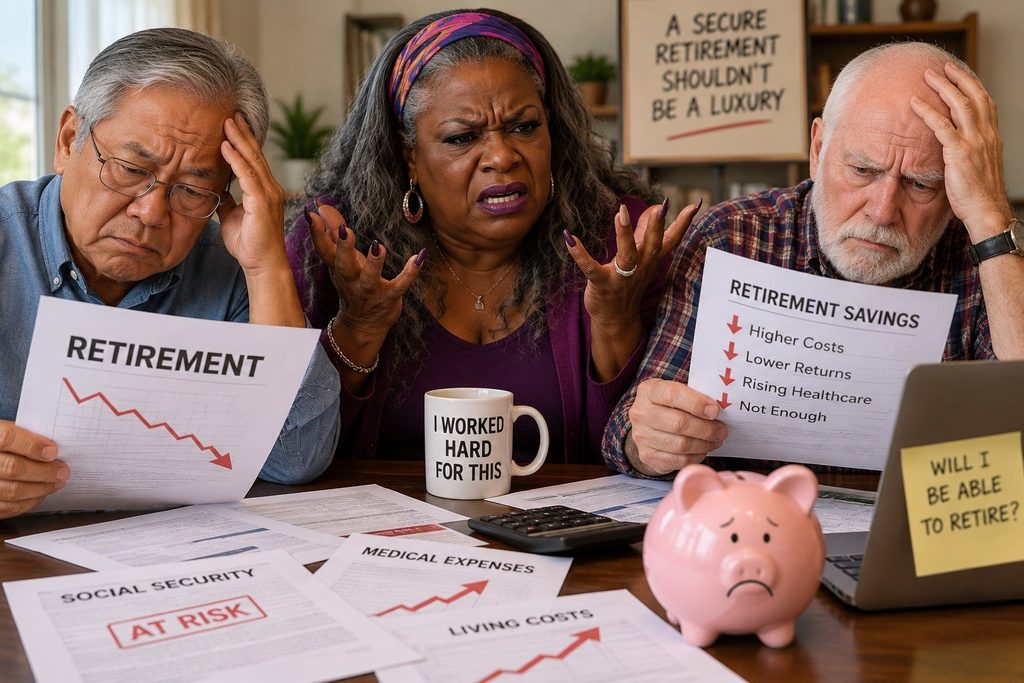
AARP reported this year that 60 percent of Americans 50 and older are worried they will not have enough money to last through retirement. Among those who have not retired, 42 percent have less than $50,000 saved for retirement.
Think about that. After decades in the workforce, millions of Americans are approaching retirement without knowing whether they can actually afford to retire.
The problem is not simply how much people saved. Everything around them became more expensive. Groceries cost more. Housing costs more. Insurance can take another bite out of the monthly budget. Property taxes do not disappear because someone turns 65. Neither do electric bills, car payments or unexpected repairs.
Then there is health care. For older New Yorkers who eventually need long-term care, the numbers can be staggering. AARP reported that the median cost of a private nursing home room in New York has climbed to $186,698 a year. The median annual cost of a home health aide is more than $53,000.
Meanwhile, the average Social Security retirement benefit nationally is only around $2,000 a month. That math can be frightening. It is also changing what retirement looks like.
For some Americans, retiring at 62 or 65 may mean finding another job. Others are staying in the workforce longer, taking part-time positions or delaying retirement altogether.
And people in their late 40s and 50s face a particularly difficult squeeze. Some are still helping their children financially. Others are caring for aging parents. Many are trying to pay down mortgages and credit cards while simultaneously being told they need to save more for their own retirement.
There is also less time to recover when something goes wrong. Losing a job at 28 is frightening, but there may be decades to rebuild. Losing one at 58 can destroy a retirement plan that took 30 years to create.
None of this means retirement is impossible. Millions of Americans have pensions, retirement accounts, home equity and other resources that can provide financial security.
But the anxiety is real. AARP found that 69 percent of Americans 50 and older believe prices are rising faster than their incomes.
That may explain why conversations about retirement increasingly sound less like conversations about vacations and more like conversations about survival.
For generations, Americans were told that if they worked hard enough and long enough, eventually they could rest. Now millions are asking a different question: Can I afford to stop working?
Dennis Richmond, Jr. (@NewYorkStakz) is a journalist, historian, and educator from Yonkers, NY. He writes to uplift unheard voices, honor history, and inspire change.