
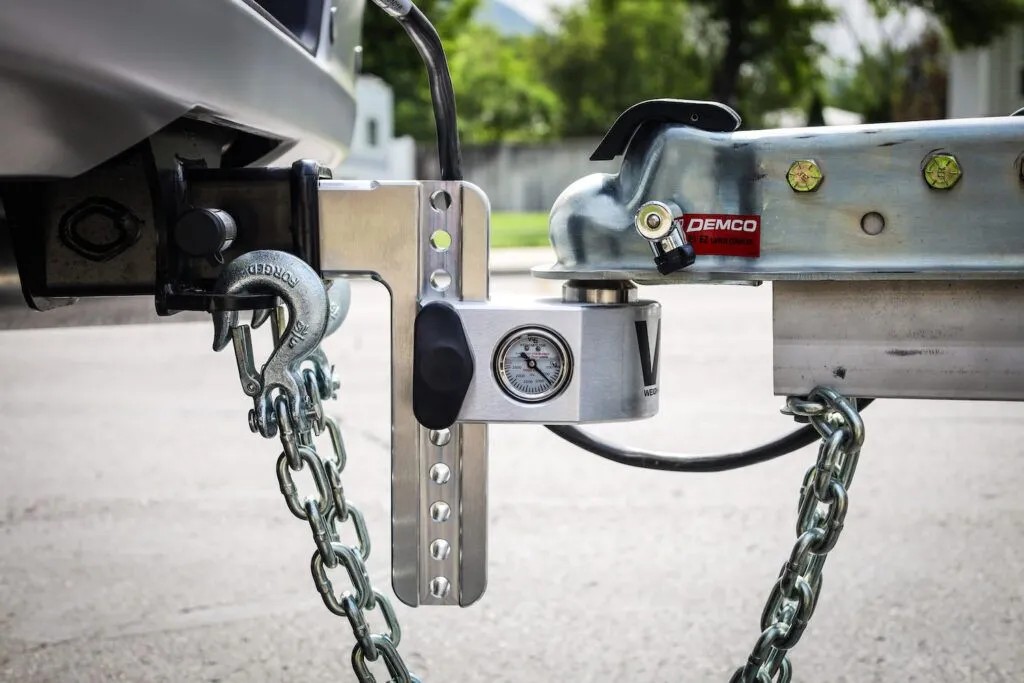
Most people buy a hitch the same way they buy a garden hose: grab whatever fits and assume it works. That logic gets trailers swaying at 65 mph on the highway. The hitch connecting your truck to whatever you’re towing is not a commodity accessory. It’s a load-bearing safety component, and getting it wrong by even a few inches or a few hundred pounds of tongue weight can cost you control of the whole rig. This guide covers how to actually match a hitch to your truck and trailer, what the different hitch types are built to do, and where most buyers go wrong before they ever leave the driveway.
Why Hitch Selection Matters More Than You Think
Towing is genuinely popular, and the numbers back that up. 8.1 million U.S. households own an RV, according to the Recreation Vehicle Industry Association (RVIA), and the vast majority of those are towables pulled by a truck or SUV. Add boats, utility trailers, and horse trailers to that figure, and you’re looking at tens of millions of Americans hitching up on any given weekend.
But towing volume comes with real risk. The majority of severe towing crashes involve preventable mechanical and operational failures, including trailer sway and improper loading, according to a 2025 analysis of NHTSA’s Crash Report Sampling System data. The hitch is the first line of defense against every one of those failure modes. If it’s the wrong height, the wrong class, or missing a tongue weight gauge, you’ve already started losing.
Hitch Classes: The Foundation You Can’t Skip
Before you touch drop measurement or ball size, you need to get the hitch class right. Hitch class is a rating system based on the receiver tube size and the maximum gross trailer weight the hitch can handle.
| Hitch Class | Receiver Size | Max Gross Trailer Weight | Common Use |
| Class I | 1-1/4″ | 2,000 lb | Small cargo carriers, bike racks |
| Class II | 1-1/4″ | 3,500 lb | Light utility trailers, small boats |
| Class III | 2″ | 6,000–8,000 lb | Most travel trailers, mid-size boats |
| Class IV | 2″ | 10,000–12,000 lb | Heavy trailers, large RVs |
| Class V | 2-1/2″ | Up to 20,000 lb | Heavy-duty trucks, gooseneck setups |
Never buy down. If your trailer is 5,800 pounds, you need a Class III minimum, not a Class II that “almost” gets there. The ratings are maximums, not suggestions.
The Drop Problem: Getting Your Hitch Height Right
Here’s the thing most first-time towers skip entirely: hitch height. Your truck’s receiver sits at a certain height from the ground. Your trailer’s coupler sits at a different height. If those two heights don’t match, your trailer runs nose-up or nose-down, which throws off tongue weight distribution and makes the whole rig harder to control.
The goal is a level trailer. That means calculating the drop or rise you need before you order anything.
The Drop-Rise-Match Method (a simple three-step field check):
- Park your truck on flat ground, unhitched, with your normal cargo load if you typically haul gear before towing.
- Measure from the ground to the center of your receiver opening. Write it down.
- Measure from the ground to the center of your trailer’s coupler when the trailer is sitting level on its jack. The difference between these two numbers is your required drop or rise.
A lifted F-250 sitting at 18 inches at the receiver and a travel trailer coupler sitting at 14 inches needs a 4-inch drop. That same truck towing a taller fifth-wheel coupler at 22 inches needs a 4-inch rise. Getting this number wrong by 2 to 3 inches is enough to create chronic trailer sway at highway speeds, especially in crosswind conditions. This is where a quality drop hitch earns its place in the setup. Adjustable options let you dial in the exact drop measurement instead of hunting for a fixed ball mount that happens to match your rig.
Ball Size and Tongue Weight: The Two Numbers People Ignore
Ball diameter is not interchangeable. The three common sizes are 1-7/8″, 2″, and 2-5/16″. Your trailer coupler is stamped with the size it accepts. Using the wrong ball is not a minor error; it’s a disconnect waiting to happen. Check the coupler stamp before you order anything.
Tongue weight is the other number most people guess at instead of measuring. It’s the downward force the trailer puts on the hitch ball, and the general target is 10 to 15 percent of the trailer’s total loaded weight. Too little tongue weight and the trailer fishtails. Too much and your truck’s rear axle carries more than it’s rated for, which softens steering and braking response at the front wheels.
“Improper tongue weight is one of the most consistent factors in trailer sway incidents. Drivers rarely know their actual tongue weight because measuring it on the road is difficult without the right equipment.” A widely cited point in roadway safety engineering literature, reflected in towing guidelines from the National Highway Traffic Safety Administration’s traffic safety communications. A hitch with a built-in tongue weight gauge removes the guesswork entirely. You see the actual load on the ball before you pull out of the driveway, not after something goes sideways.
Fixed Ball Mount vs. Adjustable: Which One to Buy
A fixed ball mount is cheaper up front and solid for someone who always tows the same trailer behind the same truck, no changes, no variables. If that’s you, a fixed mount is fine. But most people own more than one thing they tow. A boat trailer sits lower than a utility trailer. Your buddy’s camper sits at a different height than your own. Seasons, payloads, and truck modifications change the geometry. An adjustable mount handles all of it without buying a different ball mount every time something changes.
My honest take: if you tow more than once or twice a year and your setup is likely to vary at all, buy adjustable. The fixed option is a false economy when you’re hunting down the right fixed-drop mount for every trailer configuration change.
Receiver Size and Shaft Compatibility: Don’t Assume
Your truck’s receiver opening determines what shaft size your ball mount can use. Standard sizes are 2″, 2-1/2″, and 3″. A 2″ shaft in a 2-1/2″ receiver rattles and creates slop in the connection, which translates to noise, wear, and reduced stability. Use an anti-rattle clamp or, better, buy a ball mount sized to your actual receiver.
Check your truck’s owner manual for the receiver size before purchasing. Don’t measure the outside of the tube; measure the inside opening. The difference between 2″ and 2-1/2″ is hard to eyeball and easy to get wrong at the hardware store.
A Quick Pre-Tow Checklist
- Confirm hitch class meets or exceeds trailer gross weight rating
- Verify receiver shaft size matches ball mount shaft size exactly
- Calculate required drop or rise using the three-step field check above
- Confirm ball diameter matches coupler stamp on the trailer
- Check tongue weight against your truck’s published tongue weight rating
- Install a locking hitch pin to prevent the ball mount from working loose
- Inspect safety chains and electrical connections before every trip
None of these steps takes more than ten minutes total. Skipping them can take a lot more than that.
The Bottom Line
Picking a trailer hitch is a geometry and ratings problem, not a shopping preference. Get the class right, measure the drop, confirm the ball size, and know your tongue weight before you move. Every one of those variables compounds when you get it wrong, and the consequences show up at speed on the highway, not in the parking lot where you can catch them easily.
The good news is none of this is complicated once you do it once. Measure the first time carefully, write the numbers down, and your future self will thank you every time you hook up a different trailer. What’s the most expensive towing mistake you’ve ever made or nearly made?