
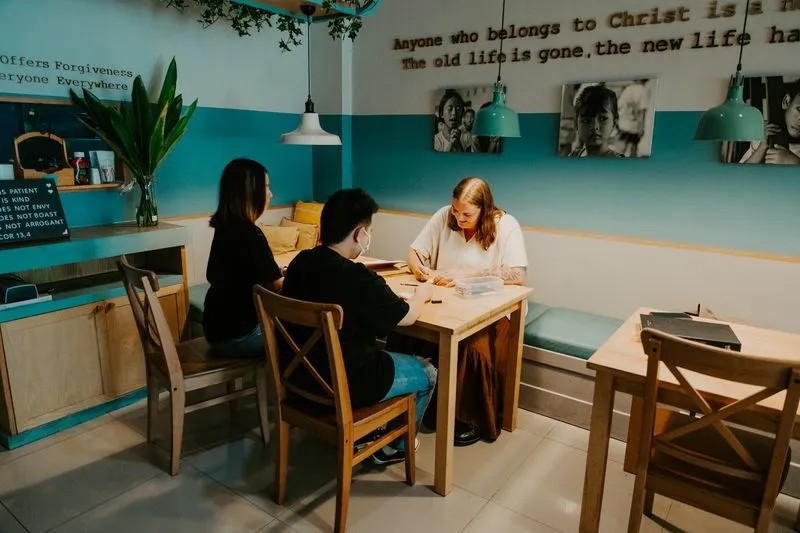
From faith groups to civic clubs, discover how local organizations are quietly reweaving the social fabric of American cities—and why it matters for your neighborhood.
Forty percent of Americans say they don’t feel strongly connected to their community. That number, from a Pew Research study cited by University of Missouri Extension researchers, should hit harder than it does. Because behind it sits something concrete: fewer people showing up, fewer tables getting set, and entire neighborhoods running on a social infrastructure that’s quietly fraying at the edges.
But there’s a counter-story happening at the same time. And it’s worth paying attention to, especially if you live in a city like Yonkers, where the texture of daily life still runs through block associations, church basements, community boards, and the kind of organizations that don’t make headlines unless something goes wrong.
The Numbers Behind the Comeback
Volunteering and civic participation took a serious hit during the pandemic years. Formal volunteering rates dropped by seven percentage points at the height of COVID-19, the steepest single decline on record. What happened next is something you’d want to share with a skeptic.
According to AmeriCorps, the share of Americans volunteering through an organization rebounded sharply, with the national formal volunteering rate climbing five percentage points between 2021 and 2023. More than 28 percent of Americans, totaling over 75.7 million people, formally volunteered for an organization during that period, collectively logging an estimated 4.99 billion hours with an economic value of $167.2 billion, according to AmeriCorps’ 2024 Volunteering and Civic Life in America research.
That’s not a rounding error. That’s cities being held together by people who chose to show up.
The bigger question isn’t whether communities are bouncing back. They are. The real question is: what kinds of organizations are actually doing that work, and why do some succeed where others stall?
Where the Volunteer Hours Actually Go
Most people assume volunteers cluster around food banks or hospital auxiliaries. The data tells a different story. According to the U.S. Bureau of Labor Statistics’ “Volunteering in the United States” news release, religious organizations lead all categories, accounting for 33.1 percent of all volunteers’ primary organizational affiliation, followed by educational and youth service organizations at 25.2 percent.
That’s a consistent pattern across more than two decades of BLS data, not a blip. Faith-based organizations, neighborhood associations, civic clubs, and local nonprofits absorb the bulk of the country’s volunteer energy. The implication is simple: when those organizations are healthy, neighborhoods are healthier. When they’re struggling, the cracks show up fast.
Think about what that means for a city block in southwest Yonkers, or a dense corridor in the Bronx just across the bridge. The organizations that actually hold those streets together are rarely the ones with the biggest budgets. They’re the ones with the deepest roots and the most consistent presence.
The Three-Layer Model Worth Borrowing
The most effective community organizations, across faith traditions, civic life, and nonprofit work, tend to operate on three simultaneous levels. Call it the Three-Layer Model, because it’s a useful frame for thinking about what separates durable community impact from well-intentioned programs that fade after the grant cycle ends.
Layer one is relational presence. This is the ground-level work: knowing people’s names, showing up to the same block consistently, and building trust through contact rather than campaigns. No flyer replaces this. No app substitutes for it.
Layer two is skills transfer. Organizations that stick around long enough to train local leaders create something that outlasts any individual program. The difference between a community that has people and a community that has capacity is usually one well-run training pipeline.
Layer three is network coordination. The organizations that genuinely move the needle don’t work in isolation. They share knowledge with adjacent groups, refer across sectors, and avoid duplicating effort. This is harder than it sounds, because institutional turf instincts run deep.
The Three-Layer Model isn’t a formal academic framework. It’s a pattern that shows up repeatedly when you look at what works: in neighborhood development research, in global service organizations, and in the quiet, unglamorous work of local nonprofits. Church missions programs operating internationally, for instance, have spent decades refining this approach to community development, and the best examples, like the partnership model described by Church missions organization Mesa Global, prioritize long-term relational investment over short-term project delivery.
The same logic applies to a neighborhood watch that actually works, or a youth mentorship program that retains its volunteers year after year.
What Makes Local Organizations Fail
If the Three-Layer Model describes what works, it also implies what doesn’t. And the failure patterns are consistent enough to be worth naming directly.
Organizations that skip Layer one and jump straight to programs tend to serve their own reporting metrics rather than the people they say they’re for. They generate outputs, not trust. And without trust, nothing else sticks.
Organizations that skip Layer two build dependency rather than capacity. They become the answer to every question, which sounds like success until a key staffer leaves or funding dries up, and the community is left exactly where it started.
And organizations that skip Layer three duplicate effort in ways that exhaust volunteers, confuse residents, and waste the goodwill that took years to build. A neighborhood can sustain only so many separate food drives and coat collections before people start tuning them all out.
“Volunteers are the lifeblood of our schools and shelters, hospitals and hotlines, food banks, and civic, nonprofit, tribal, and faith-based organizations across the country.”
— AmeriCorps, Volunteering and Civic Life in America, 2024
That framing matters. It puts volunteers at the center of community infrastructure, not as a supplement to it. Which means the real risk facing cities like Yonkers isn’t a shortage of need. It’s a shortage of organizations capable of channeling the people who want to help into something that lasts.
A Practical Checklist for Any Organization Trying to Do This Right
Whether you’re running a neighborhood association, a youth program, or a faith-based initiative, here’s a short checklist worth running through before the next planning meeting:
- Do your volunteers know at least five people by name who are not other volunteers?
- Has anyone you’ve served moved into a leadership role inside your organization in the last two years?
- Can you name three other organizations in your area doing adjacent work, and have you actually talked to them this year?
- If your top two staff members left tomorrow, would the work continue?
- Does your community know you’re there when you’re not actively running a program?
Five no-answers means you have a project. Three or more yes-answers means you have an organization. The distinction matters more than most people realize until it’s too late to rebuild what was lost.
Why This Matters for Cities Right Now
The data on volunteering rates is encouraging. But rates aren’t infrastructure. Millions of people volunteering in isolated, poorly coordinated, or relationship-shallow programs doesn’t automatically translate into neighborhoods that are more connected, more resilient, or more capable of handling the next disruption.
What cities need is organizations that understand all three layers, invest in them deliberately, and stay patient enough to let trust compound. That’s not a funding formula. It’s a philosophy. And right now, the cities that figure it out are going to look very different in ten years from the ones that keep treating community work as an event rather than a relationship.
The social fabric doesn’t rebuild itself. Someone has to show up with a needle and thread, again and again, until the weave holds. The question worth sitting with: is your organization doing that, or just talking about it?