
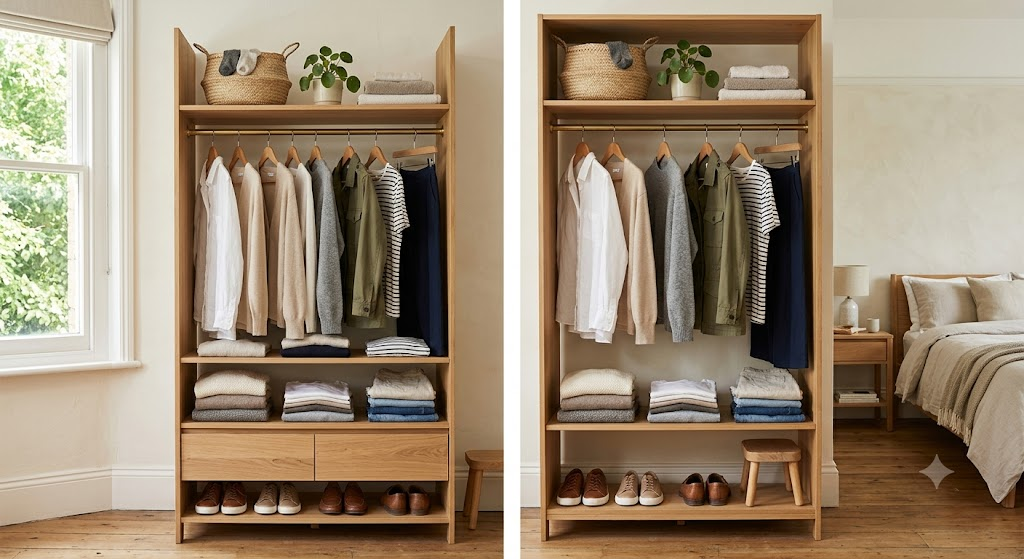
Most people have no idea how many clothes they actually need, so they end up with fifteen tops and two pairs of trousers, wearing the same third of their wardrobe on repeat. The imbalance is the real problem, not the total. Owning the right number of each item, matched to how you actually live, makes getting dressed easier and stops both overbuying and running short. Working it out isn’t complicated once you think in terms of use rather than quantity. A few quality pieces like a good cole buxton hoodie worn often beats a pile worn rarely. Let’s work out your numbers.
Why the Right Number Matters
The point of figuring out quantities isn’t minimalism for its own sake, it’s function, since the right number of each item makes your wardrobe work while the wrong numbers create daily friction. Too much of something means clutter, wasted money, and pieces that never get worn, while too little means running short, doing laundry too often, and wearing things out fast through overuse. Both extremes cause problems, and most people have both at once in different categories. So the goal is balance across categories, matched to your actual laundry cycle and lifestyle, rather than a single target number. That balance is what removes the friction. My honest opinion? The imbalance is the real issue for most people, not the overall amount, since a wardrobe with fifteen tops and two bottoms produces far fewer outfits than one with a balanced spread of fewer total pieces. So fixing the ratios matters more than cutting the total. The right numbers depend on your life, your laundry frequency, and your climate, so there’s no universal answer, but there is a way to work out yours. Once you have roughly the right quantity of each thing, you stop overbuying categories you already have plenty of and stop running short on the ones you actually use, which makes the whole wardrobe function smoothly.
Start With Your Laundry Cycle
The single biggest factor in how many of something you need is how often you do laundry, which most people never consider. The math is simple, since you need enough of each item to last between wash cycles plus a small buffer. So if you do laundry weekly, you need roughly enough everyday items to cover a week or slightly more, while if you wash every two weeks you need double. That one factor sets your baseline for high-turnover items. Items worn directly against skin, like socks, underwear, and base layers, need the most since they’re washed after every wear, so these should comfortably cover your full laundry cycle with a buffer for the days you can’t wash on schedule. Outer layers need far fewer, since hoodies, jackets, and trousers can be worn multiple times between washes, so you need only enough to rotate, not one per day. Here’s the hands-on detail worth knowing: the buffer matters more than people think, since life disrupts laundry schedules constantly, so having a couple extra of your daily essentials beyond the strict cycle count prevents the scramble when washing gets delayed. One honest limitation: your ideal numbers shift with seasons and life changes, so these aren’t permanent figures but a current working estimate you adjust as your situation changes.
Working Out Your Numbers by Category
Here’s a rough framework for thinking through quantities, in order of how many you typically need:
- Socks and underwear, the most numerous, covering your full laundry cycle plus a comfortable buffer
- Everyday tops and tees, a moderate number since they’re worn close to skin and washed often
- Bottoms, fewer than tops since they’re worn multiple times between washes and pair with many tops
- Layers like hoodies and sweaters, a small number since they rotate and aren’t washed after each wear
- Outerwear and specialty items, the fewest, often just one or two of each for their specific purpose
The ordering reflects wash frequency, since items worn against skin and washed constantly need the highest numbers, while outer layers washed rarely need the fewest. So socks and underwear top the list and outerwear sits at the bottom. Bottoms deserve a note, since people often own too few, and having fewer bottoms than tops is normal but owning only two while owning fifteen tops creates the imbalance that limits outfits. Layers are where people frequently overbuy, since a couple of good hoodies cover most needs but people accumulate many, so this is a category to be honest about. Use this framework to spot where you’re over and under, then adjust toward balance.
Where People Get the Numbers Wrong
Certain imbalances are extremely common, and recognizing them helps you correct yours. Too many tops is the classic, since tops are the most visible and most bought item, so people accumulate far more than they need while neglecting other categories. That excess is usually where the clutter lives. Too few bottoms is the matching error, since people underbuy trousers and jeans, ending up with lots of tops and nothing to pair them with, which limits outfits badly despite a full-looking wardrobe. Duplicate favorites are another, since people buy multiples of a piece that works rather than filling gaps, so they end up with five similar black hoodies and no variety, which adds nothing. Occasion-item overload happens too, where people own multiple formal or specialty pieces for events they rarely attend, tying up money and space in things worn twice a year. Here’s the point worth remembering: most people’s wardrobes are simultaneously overstuffed in some categories and underequipped in others, so the fix is rarely just buying more or just cutting, it’s rebalancing. A single well-chosen Hellstar hoodie piece in a category you’re short on does more than another duplicate in one you’re already heavy in. My preference is auditing category by category rather than looking at the wardrobe as a whole, since the imbalances only show up when you count each type separately.
Building a Balanced Set
Certain principles help you reach the right numbers across categories:
- Enough skin-contact items to cover your laundry cycle with a buffer, since these are washed most
- A balanced tops-to-bottoms ratio, avoiding the common trap of many tops and too few bottoms
- A small number of quality layers rather than many mediocre ones, since a few good ones cover most needs
- One or two of each specialty item, matched to how often you actually need them
- Overlapping neutral pieces that combine freely, multiplying outfits without multiplying items
The tops-to-bottoms ratio is worth getting right since it directly determines how many outfits you can build, and balancing it often means buying bottoms rather than the tops people instinctively reach for. So resist the top-buying instinct and fill the bottoms gap. The overlapping-neutrals principle matters because it means you need fewer total pieces, since neutral items that all combine produce far more outfits per item than clashing ones, so a balanced neutral wardrobe achieves more with less. Quality over quantity applies throughout, since a few well-made pieces worn often beat many cheap ones, and this is especially true for layers where people overbuy. My preference is a deliberately small, balanced set of quality pieces that all combine, since it produces more outfits than a large imbalanced wardrobe while being far easier to manage. Fewer, better, balanced is the formula.
Right-Sizing Your Existing Wardrobe
Once you know roughly the right numbers, you can right-size what you already own rather than starting over. Do a category-by-category count, actually tallying how many of each type you own, since the imbalances only become clear when you count separately rather than eyeballing the whole. Most people are surprised by how many tops they have and how few bottoms. Then compare against your rough targets, identifying which categories you’re over in and which you’re short on. Clear the excess in overstuffed categories, selling or donating the pieces you don’t wear, which frees space and often funds the gaps. Fill the genuine gaps deliberately, buying the bottoms or layers you’re actually short on rather than more of what you have plenty of. Here’s a useful approach: track what you wear for a few weeks before making big changes, since your actual wear patterns reveal your real needs better than any guess, often showing you own far more than you use in some categories. Then adjust toward balance gradually rather than all at once. Also, adopt one in, one out afterward to maintain the balance, since without it the overstuffed categories rebuild. Over time your wardrobe settles into the right numbers for your life, where you have enough of everything you use and no excess of anything you don’t, which is exactly when getting dressed becomes easy and buying becomes deliberate.
Final Words
The right number of clothes isn’t about minimalism, it’s about balance matched to your actual life and laundry cycle. Skin-contact items like socks need the most, covering your wash cycle with a buffer, while outer layers need the fewest since they’re worn many times between washes. Most people own too many tops and too few bottoms, plus duplicate favorites and rarely-worn specialty pieces. So count category by category, clear the excess, fill the genuine gaps, and adopt one in, one out. Get the numbers right and your wardrobe works, with enough of what you use and no clutter of what you don’t.
FAQ BLOCK
Q: How do I work out how many clothes I need?
A: Start with your laundry cycle. You need enough of each item to last between washes plus a buffer. Skin-contact items like socks need the most, while outer layers worn multiple times between washes need the fewest.
Q: What’s the most common wardrobe imbalance?
A: Too many tops and too few bottoms. Tops are the most visible and most bought item, so people accumulate them while neglecting trousers, which limits outfits badly despite a full-looking wardrobe.
Q: How many hoodies or layers do I actually need?
A: Just a few. Layers are worn multiple times between washes and rotate, so a couple of good ones cover most needs. This is a category people frequently overbuy, so be honest about it.
Q: How do I right-size my current wardrobe?
A: Count category by category, since imbalances only show when you tally each type separately. Compare against rough targets, clear the excess in overstuffed categories, and fill the genuine gaps you’re short on.
Q: How do I keep the balance once I’ve fixed it?
A: Adopt one in, one out, so every new piece means an old one leaves. Without it, the overstuffed categories rebuild. Tracking what you actually wear for a few weeks also reveals your real needs.