
Photo from Shutterstock
A professional hearing test is a comprehensive evaluation designed to measure how well you hear and identify possible problems within the auditory system. Unlike an online quiz or a basic hearing screening, a complete evaluation examines your ability to hear different pitches, recognize speech, and process sounds at various volume levels. It may also assess the condition of your ear canals, eardrums, and middle ears. The results give your hearing care professional detailed information about whether hearing loss is present and, when possible, what type of hearing loss may be involved. Understanding what happens during the appointment can make the experience feel comfortable, predictable, and productive.
Why Someone May Need a Hearing Evaluation
Many people schedule a hearing evaluation after noticing that conversations have become harder to follow. You might hear people speaking but feel as though their words are unclear, especially in restaurants, meetings, or other places with background noise. Family members may also notice that you turn up the television, ask others to repeat themselves, or respond incorrectly to questions. Ringing in the ears, known as tinnitus, can be another reason to have your hearing evaluated. A professional assessment may also be recommended after significant noise exposure, an ear injury, recurring infections, or the use of certain medications.
Common signs that it may be time to schedule an evaluation include:
- Difficulty understanding speech in crowded environments
- Frequently asking people to repeat themselves
- Increasing the television or phone volume
- Feeling that other people mumble
- Ringing, buzzing, or other sounds in the ears
- Trouble hearing higher-pitched voices or sounds
- A noticeable difference between the ears
- Sudden or rapidly changing hearing
Sudden hearing loss, particularly when it affects one ear, requires prompt medical attention rather than waiting for a routine appointment. The National Institute on Deafness and Other Communication Disorders explains that sudden hearing loss needs timely evaluation, including testing that can distinguish sensorineural hearing loss from problems caused by an obstruction, such as wax or fluid.
Your Hearing and Health History
The appointment usually begins with a conversation about your hearing concerns, general health, and listening needs. The hearing care professional may ask when you first noticed a change and whether the problem developed gradually or suddenly. You may discuss noise exposure from work, military service, recreational activities, concerts, power tools, or firearms. The provider may also ask about ear infections, dizziness, tinnitus, previous ear surgeries, medications, and family history. These questions help place the test results in context and identify symptoms that may require evaluation by a physician or an ear, nose, and throat specialist.
You may also be asked how hearing difficulties affect your daily routine. For example, you might have trouble participating in meetings, speaking on the phone, hearing customers, enjoying television, or communicating with family members. This information matters because two people with similar audiograms may have very different communication needs. One person may spend most of the day in quiet surroundings, while another regularly works in large groups or noisy environments. A thorough evaluation, therefore, considers both your hearing thresholds and the real-world situations in which you need help.
A Physical Examination of the Ears
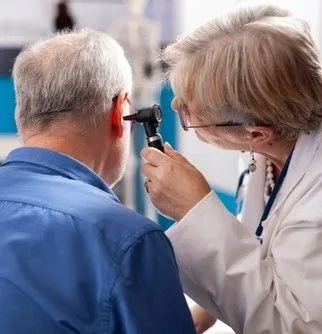
Before the listening tests begin, the provider will usually examine the outer ears and ear canals with an otoscope. This handheld instrument provides a lighted view of the ear canal and eardrum. The examination may reveal excessive earwax, irritation, drainage, signs of infection, a damaged eardrum, or another physical condition that could affect hearing. Mayo Clinic notes that a physical examination can identify possible causes of hearing difficulty, including earwax and infection.
The visual examination is generally quick and should not be painful. You may feel the provider gently pull the outer ear to obtain a clearer view, but the instrument is not intended to touch the eardrum. If a significant blockage is present, testing may need to be postponed until the ear canal is safely cleared. The provider may remove the blockage when qualified to do so or refer you to another medical professional. Identifying these conditions first helps ensure that the hearing test produces accurate and useful results.
Testing Middle Ear Function
Some appointments include tympanometry, a test that evaluates how the eardrum and middle ear respond to changes in air pressure. A soft probe is placed at the entrance of the ear canal, creating a temporary seal. You may feel mild pressure similar to the sensation experienced during an airplane flight, but you do not need to respond during the test. The equipment measures the movement of the eardrum and records the results. Tympanometry can help identify middle ear fluid, pressure problems, eardrum stiffness, or other conditions that may interfere with sound transmission.
Acoustic reflex testing may also be completed during this portion of the appointment. This test measures the response of tiny muscles in the middle ear when sound is presented. The findings can provide additional information about the auditory pathway and help the provider determine whether further assessment is appropriate. Not every patient requires every middle ear test, so the exact evaluation may vary. Your symptoms, medical history, age, and initial results will influence which procedures are selected.
Listening for Tones in a Sound-Treated Room
Pure-tone testing is one of the most familiar parts of a professional hearing test. You will usually sit in a sound-treated room or booth while wearing headphones, insert earphones, or another specialized listening device. The provider presents a series of beeps at different pitches and volume levels. You respond by pressing a button, raising your hand, or saying that you heard the sound. Even when a tone is extremely faint, you are encouraged to respond whenever you think you hear it.
The purpose is to identify the softest sound you can detect at each tested frequency. These measurements are called hearing thresholds and are recorded separately for the right and left ears. Formal audiometric testing provides frequency-specific information that can be displayed on an audiogram. The test is not something you can pass or fail, and guessing does not create a problem. The provider may repeat tones or vary the timing to obtain the most reliable responses possible.
Air-Conduction and Bone-Conduction Testing
Most pure-tone evaluations include air-conduction testing, which measures how sound travels through the outer, middle, and inner portions of the ear. Sounds are presented through headphones or small foam inserts placed in the ear canals. If the results suggest reduced hearing, the provider may perform bone-conduction testing as well. A small vibrating device is positioned behind the ear or on the forehead. It sends sound vibrations through the bones of the skull, allowing the inner ear to be assessed more directly.
Comparing air-conduction and bone-conduction results helps the provider identify the possible type of hearing loss. Conductive hearing loss involves difficulty transmitting sound through the outer or middle ear. Sensorineural hearing loss is associated with the inner ear or auditory nerve pathways. Mixed hearing loss includes both conductive and sensorineural components. These categories can guide recommendations, although a hearing evaluation alone may not identify the exact medical cause of every change.
Speech and Word Recognition Testing
Hearing clearly involves more than detecting beeps, so speech testing is another important part of the evaluation. You may be asked to repeat familiar words presented through headphones at different volume levels. One test identifies the softest level at which you can recognize speech, while another measures how accurately you understand words at a comfortable listening volume. These results show whether speech sounds clear when it is made loud enough. They can also help explain why a person hears voices but struggles to understand what is being said.
Some clinics perform speech-in-noise testing to evaluate listening ability when competing sound is present. This can be especially helpful for people who function well in quiet rooms but have difficulty in restaurants, social gatherings, or workplaces. Audiometry can assess hearing across different pitches and volumes while also measuring the ability to distinguish spoken words. Because everyday listening environments are rarely silent, speech-in-noise results can reveal challenges that basic tone testing may not fully capture.
Reviewing Your Audiogram and Results
After the testing is complete, the provider will review an audiogram that displays the softest sounds you heard at different frequencies. Lower-pitched sounds appear on one side of the chart, while higher-pitched sounds appear on the other. The chart also indicates the volume level required for you to detect each sound. Separate symbols represent the right and left ears, allowing the provider to compare them. You do not need to understand the chart before the appointment because the results should be explained in clear, everyday language.
The discussion may cover the degree, configuration, and type of hearing loss found. The provider may describe your hearing as being within an expected range or showing mild, moderate, severe, or more advanced changes at certain frequencies. You will also learn how the results relate to speech understanding and the communication problems you have noticed. When additional medical evaluation is appropriate, the provider may recommend contacting a physician or an ear, nose, and throat specialist. Diagnostic hearing evaluations are intended to help professionals understand hearing concerns and recommend suitable next steps.
What Happens After the Hearing Test?
Your next steps will depend on the findings and your individual needs. If your hearing is within an expected range, the provider may recommend periodic monitoring, especially if you work around noise or have other risk factors. If a temporary or medically treatable issue is suspected, you may receive a referral for further examination. When permanent hearing loss is identified, the discussion may include hearing aids, assistive listening technology, communication strategies, hearing protection, or other rehabilitation options. No single solution is appropriate for every person, so recommendations should account for your hearing, lifestyle, preferences, and goals.
You may receive a copy of your audiogram and a written explanation of the results. Keep these records because they provide a useful baseline for future testing. A later evaluation can show whether your hearing has remained stable or changed over time. You should also have an opportunity to ask questions before making decisions about treatment or hearing technology. A professional evaluation is ultimately intended to provide information, not pressure you into selecting a particular product.
How to Prepare for Your Appointment
A professional hearing test requires very little preparation, but a few simple steps can make the visit more useful. Write down the listening situations that cause the most difficulty so you can provide specific examples. Bring a list of medications, relevant medical conditions, previous ear procedures, and significant noise exposure. You may also bring a trusted family member or friend who can describe communication changes and help remember the provider’s recommendations. Avoid exposing yourself to unusually loud noise immediately before the appointment when possible.
Consider bringing the following information:
- A list of hearing concerns and when they began
- Details about tinnitus, dizziness, pressure, or ear pain
- A current medication list
- Records from previous hearing evaluations
- Information about workplace or recreational noise exposure
- Questions about testing, treatment, or follow-up care
- Any hearing aids or assistive devices you currently use
Be honest about what you hear during the evaluation rather than trying to anticipate the correct response. The tones may become extremely soft because the provider is looking for the point at which you can barely detect them. It is normal to feel uncertain about some responses. The equipment and testing procedures are designed to check consistency and help the provider obtain reliable results.
Frequently Asked Questions About Professional Hearing Tests
Does a professional hearing test hurt?
No. Hearing evaluations are noninvasive and generally painless. Some middle ear tests may create a brief sensation of pressure, but they should not cause significant discomfort.
How long does a hearing test take?
A complete adult evaluation commonly takes approximately 30 to 60 minutes. The appointment may take longer when additional testing, counseling, or hearing technology discussions are needed.
Do I need a referral?
Requirements vary by clinic, healthcare plan, and reason for testing. Contact the hearing clinic before your appointment to ask whether a referral or medical documentation is required.
Can I have hearing loss even if I hear some sounds normally?
Yes. Hearing loss may affect only certain pitches, one ear, or specific listening situations. A person may hear low-pitched sounds well while having difficulty with higher-frequency speech sounds.
What is the difference between a hearing screening and a hearing test?
A screening is a brief check designed to identify people who may need further evaluation. A comprehensive test measures hearing in greater detail and helps determine the degree, pattern, and possible type of hearing loss.
Will I need hearing aids if the test shows hearing loss?
Not necessarily. Recommendations depend on the type and degree of hearing loss, its effect on communication, and whether a medical condition may be contributing to the problem.
Can earwax affect the results?
Yes. A significant earwax blockage can reduce sound transmission and interfere with accurate testing. The provider will usually inspect the ear canals before beginning the evaluation.
How often should hearing be tested?
The appropriate schedule depends on your age, symptoms, health history, noise exposure, and previous results. Your hearing care professional can recommend a monitoring schedule based on your individual risk factors.
Take the Next Step Toward Better Hearing
A professional hearing test provides a detailed picture of how your ears detect sound and how well you understand speech. The appointment typically combines a health history, physical ear examination, tone testing, speech testing, and, when appropriate, middle ear measurements. Each part of the evaluation contributes different information, helping the provider understand your hearing abilities and recommend appropriate next steps. Even when the results do not show significant hearing loss, the test creates a valuable baseline for future comparison. Scheduling an evaluation can replace uncertainty with clear information and help you make informed decisions about your hearing health.