
Heavy-duty worksites are not ideal environments to carry out work. Many tasks require the movement of large quantities of bulky materials, often in close proximity to other equipment, in a fast changing environment. Add to this weather, space, uneven surfaces, wear and tear on plant and equipment and poor communication and it is easy to see that there are many potential problems that can arise to make everyday tasks a challenge.
Challenges cannot be removed but they can be managed in smarter ways.
While it is true that some of the jobs that are typically classified as heavy-duty can benefit from the use of the latest technology and a large team of workers, it is not always the case. A smarter worksite is one that runs smoothly in terms of its planning, use of the proper pieces of equipment for the jobs at hand, and safe operation by the workers. The simple implementation of a few effective systems can bring about very impressive results with respect to increased safety and productivity.
Begin With a Clear Understanding of the Task
A heavy-duty task should be well planned before it is started. The task must be clearly understood by the supervisors and the crew. For example, the weight, size and type of the material to be moved must be known. The task also includes the destination of the material, and how often it is to be moved. Also, all the obstacles along the route to the destination should be known.
When planning to move loads of material, it’s always good to take into consideration the weight and size of the loads, the type of material, and the locations to which they are to be delivered. Consider how often the material will be moved and identify any possible barriers or other site features that may need to be worked around in order to complete the move efficiently. What is easy to move around on a flat warehouse floor can prove to be quite difficult to move around on uneven, rocky, muddy, or sloped outdoor surfaces.
Timing is everything. Materials will move much more safely and productively if they are moved when other machinery is not operating in the surrounding area. Sometimes it is only necessary to change the order in which items are completed. For example, moving very large amounts of material early in the shift can save a great deal of time and make a worksite much safer. Additionally, removing debris from a travel path before large pieces of equipment arrive will prevent damage to that equipment and ensure that it has a safe area in which to operate. Also, a task that typically requires a day or more of work to complete can be safely and productively completed in a few hours by dividing the task into smaller sections of work.
You don’t have to develop a complex plan. Your plan simply needs to address the specific situation at your work site.
Match Equipment to the Work Environment
Using equipment that is able to do a job is not the same as using the best equipment for the job. More than just looking at the capacity of the piece of equipment to lift or move loads, consideration must also be given to how stable the machine is, how easily it can be maneuvered and how much visibility the operator has. Also, consideration must be given to the work environment in which the equipment will be used, including ground conditions and the type of attachments that can be used. Finally, consideration must be given to how easy the equipment is for the operator to control.
One would think that larger equipment would be able to lift and move more material in less time, however in some cases this may not be the best option. Even though the equipment is rated to lift and move larger loads, that does not mean that it can do so in all work environments. There are times when smaller equipment is better suited for a job, as it provides more control and stability than its larger counterparts. In these cases, the only downfall is the fact that more trips will be needed to move the same amount of material, however this is a risk worth taking in order to prevent accidents.
Attachments are as important as the machine itself. Buckets, forks, material handling devices, carts, and containers should all be matched to the material being moved. In addition, the material should be loaded into the attachment in the best manner possible. Improvising a tool or method can cause more problems than they are worth. A good quality, properly matched attachment can make a big difference in the operation of a heavy-duty task.
Improve Material Flow Across the Site
One of the largest contributors to inefficiency at a work site is poor material flow. All to often, people spend a lot of time waiting for equipment to arrive, for a spot to clear to move around obstacles in the work area, for a blocked up route to be cleared, or to be able to handle the same material over and over again. By creating a simple flow of material from where it enters the site through to where it is used, stored, recycled or discarded at the work site, you can greatly reduce the amount of time spent on less productive tasks.
The simple goal is to create a clear path from where the materials are brought into the site to where they are being used, stored, being recycled or disposed of. Every extra movement through the site of the materials causes delays and the chance of accidents, such as spills, collisions and physical overexertion.
Provide ample and organized storage for supplies. Mark clearly designated storage areas close to where items will be used. Supplies that are used frequently should be kept close at hand. Include designated collection points for waste and scrap material to prevent having it wander throughout the worksite.
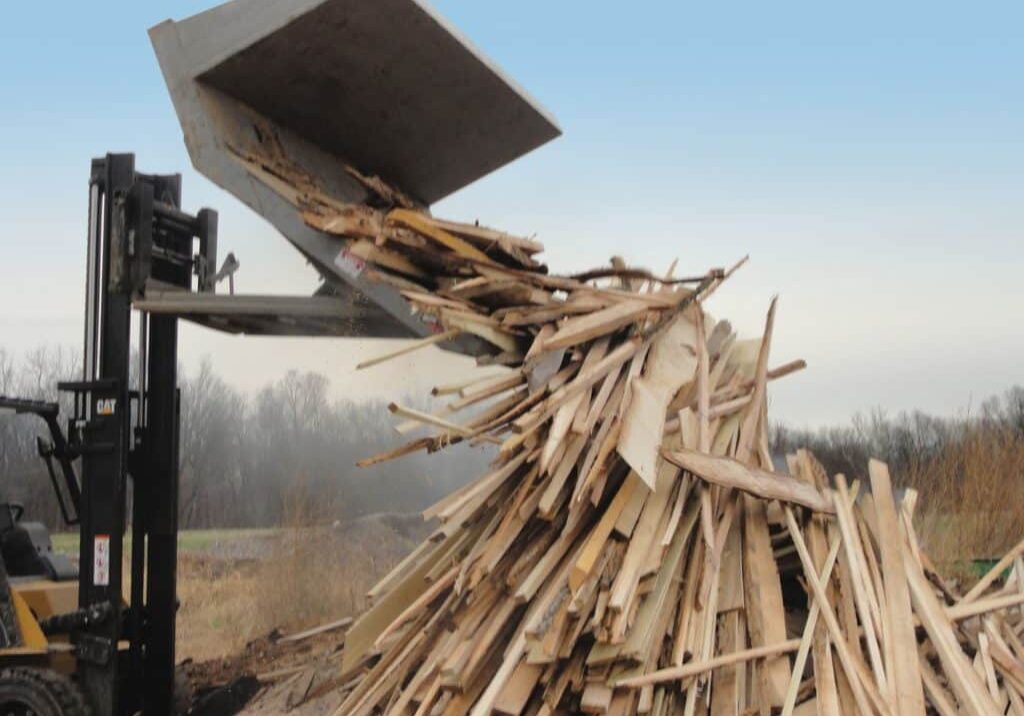
Using tools such as self-dumping hoppers, or large containers to hold your bulk materials, can help keep your work site clean and also decrease the manual handling of materials. Many materials can be collected, transported, and even dumped using a single container and a simple movement of the equipment. Using these types of containers near the point where materials are entered into your work site can decrease the amount of time spent moving around the site to pick up materials, thus decreasing the amount of manual handling required to complete a task.
Reduce Unnecessary Manual Handling
It is an error to equate to assume that all construction sites are highly mechanized. Therefore, it is anticipated that employees shall lift, pull, push, or even carry various items throughout the day. All loads must be evaluated to identify whether they create any repetitive physical stress or could become unstable and fall, resulting in injury. Also, some items may be slippery and difficult to grasp. This type of task could result in ergonomic injury such as muscle, bone or joint stress or injury. If an item must be moved, determine whether that item can be moved by using a cart, lift table, hoist, conveyor belt or even powered vehicle to name a few.
Identify the number of manual handling tasks that are being done on the job. If a tool or piece of equipment is needed to move an item, use it should be used to avoid unnecessary physical activity. The item should be reduced in size to make it easier to maneuver if possible. Also, the worker should have sufficient space to perform the task safely without having to reach, stretch or perform the task in an awkward position. The worker should have sufficient room to position themselves safely and have a clear view of the area where the item will be placed.
The operator and other workers should also have enough space to maneuver around loads that need to be manually moved. Loads should be reduced in size as much as possible and positioned so that workers can perform lifts with their feet close to their body, have their back straight, and be able to see where they are placing the load. Team lifts may be required for some very heavy or large objects but should not be substituted for proper mechanical assistance.
As mentioned before, the Occupational Safety and Health Administration requires that employers evaluate their workplace tasks to reduce any ergonomic related risk for potential work-related injuries and/or strains to workers’ muscles and joints or other parts of their bodies, commonly referred to as musculoskeletal disorders or musculoskeletal injuries (MSD’s & WMSD’s).
Build Improvement Into Daily Operations
There will always be pressure, demands, and unexpected changes when performing heavy-duty work. The key is to manage each situation with the most effective plans and better operating systems and strategies. The end result will be a safer and more efficient operation when equipment is selected and used properly to perform tasks efficiently through well-designed material flow patterns, adequate and on-time maintenance, and good communication between workers.
Make better work with better equipment. Move materials along the best routes to your jobs with the fewest handling steps possible. Fix things before they fail. Use all of the signals and work together to communicate on the jobsite. Analyze problems and implement operational fixes as necessary. As time and money are invested to improve the work, the focus should be on safely completing work of high quality in a productive manner. This can be done without great expense. Instead, improve your work by focusing on how you are currently completing your work.
The smartest worksites are ones that are continuing to learn and can make changes as necessary, sometimes just changing a process or two in order to operate more safely and to be more productive. It helps if the site treats safety and productivity as two aspects of the same goal rather than two conflicting objectives.