
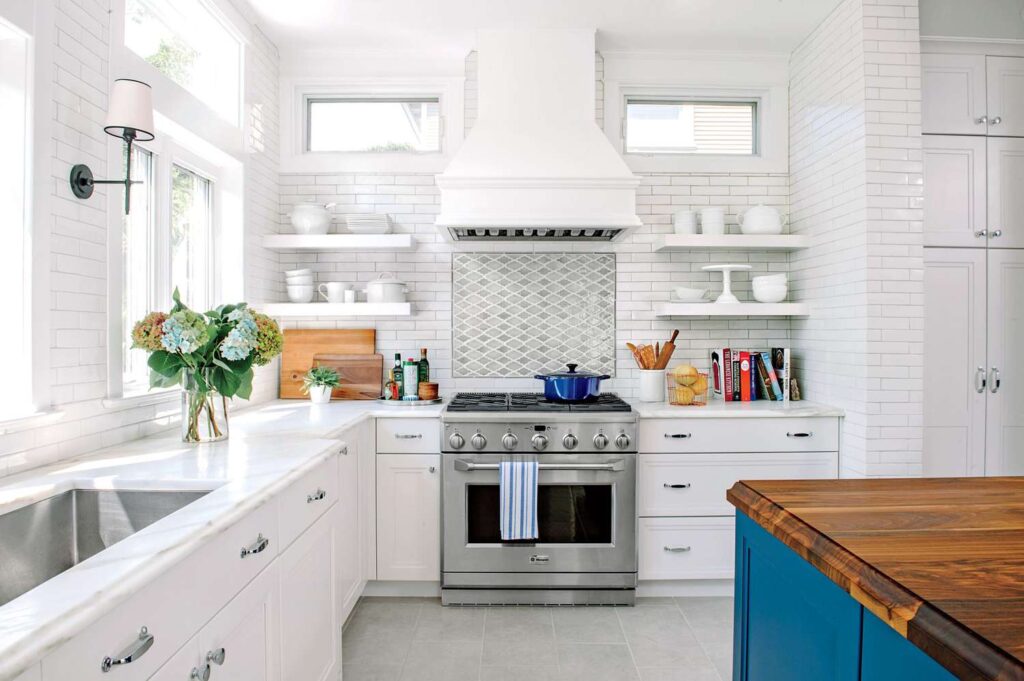
Discover why white walls and hygienic PVC cladding are the top choices for commercial kitchens, improving food safety, visibility, and EHO compliance
Commercial kitchens operate under intense pressure, where speed and hygiene have to coexist. While design trends come and go in front-of-house spaces, the choice of wall covering in the back remains remarkably consistent.
White is one of the most common wall colours in professional food prep areas because it serves a practical purpose, even though UK regulations don’t actually mandate any specific colour. Let’s take a closer look at why this simple colour choice has stuck.
Why Environmental Health Officers Prefer White Walls
Environmental Health Officers (EHOs) need to assess the cleanliness of a food business quickly and accurately during Food Hygiene Rating Scheme inspections. White surfaces make this job much easier because they offer zero concealment for grease, grime, or splashes. When dirt has nowhere to hide, staff can see exactly where they need to scrub during their shift.
Alongside stainless steel, many UK commercial kitchens now line their walls with hygienic PVC panels, with white satin cladding being one of the most popular finishes as it’s smooth, bright and easy to wipe down. The lack of grout lines removes the cracks where bacteria usually multiply, which is a big part of why so many operators have moved away from tiles.
How Light Reflection Improves Kitchen Safety
Commercial kitchens need excellent visibility so staff can prep ingredients safely and handle sharp tools. White walls reflect light around the room, which boosts the effectiveness of overhead fixtures. This bright environment reduces shadows in critical work zones, making it easier to spot defects in fresh produce or trace amounts of debris on worktops.
This high visibility also changes how staff behave during service. When the walls reflect every splash of sauce or drop of oil, employees tend to clean up messes immediately. Over time this tends to nudge staff into a clean-as-you-go habit rather than leaving messes for the end of service, which is exactly the approach the FSA recommends.
Practical Advantages Over Traditional Ceramic Tiles
For decades, ceramic tiles were the standard choice for commercial kitchen walls. But tiles bring several long-term maintenance issues that hygienic PVC alternatives avoid. Grout lines are porous, meaning they absorb moisture, grease, and cleaning chemicals over time, which often leads to discolouration and deep-seated mould growth.
When kitchen walls take a knock, tiles crack or chip, creating sharp edges and crevices that trap food particles. Smooth PVC sheets can withstand impacts from pots, pans, and mobile trolleys without shattering. If a section does need attention, maintenance teams can replace or repair the surface without the extensive downtime of re-grouting.
It’s worth saying that stainless steel cladding is still the benchmark in many UK kitchens, particularly behind cooking lines. Hygienic PVC sheeting is usually the more affordable route for the rest of the room.
How to Meet Food Safety Regulations with the Right Materials
Under Regulation (EC) 852/2004, which still applies in the UK, wall surfaces in food prep areas must be smooth, impervious, non-absorbent, washable and made from non-toxic materials. Stainless steel, hygienic PVC cladding and ceramic tiles with epoxy grout are all accepted by the Food Standards Agency and local authorities. Picking a material that meets these criteria helps businesses move through EHO inspections without unexpected compliance costs.
Choosing a finish that resists heavy chemical cleaners matters just as much. Commercial kitchens use strong degreasers and sanitisers daily to break down bacteria and fat buildup. Good-quality hygienic PVC linings don’t degrade, peel, or lose their colour when exposed to these substances, so the kitchen keeps looking pristine for years.
A Simple Foundation for Professional Kitchen Hygiene
Picking the right wall finish is a fundamental step in setting up a functional commercial kitchen. While aesthetic trends drive customer areas, the kitchen runs on utility, safety, and hygiene.
White walls give staff a clear visual baseline for a clean operation because they actively help maintain high standards. By choosing a smooth, impact-resistant material that maximises light, kitchen operators protect their hygiene rating and give their team the safest possible space to work in.