
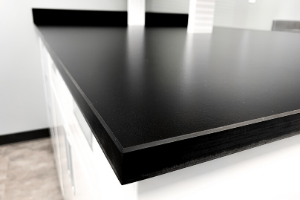
Choosing the right lab countertop material is a long-term decision that affects safety, workflow, maintenance, and budget. For many lab managers, the decision often comes down to phenolic resin countertops or epoxy resin countertops. Both materials are widely used in laboratory environments because they offer strong resistance, durability, and cleanable surfaces. However, they are not identical, and the best choice depends on the type of lab, the chemicals used, the level of heat exposure, and how the space is used every day. A teaching lab, research facility, medical lab, and industrial testing space may each need a different balance of performance and cost. This guide breaks down the key differences so lab managers can make a confident purchasing decision.
What Are Phenolic Resin Countertops?
Phenolic resin countertops are made by layering kraft paper or fiber-based materials with phenolic resin, then compressing them under heat and pressure. The result is a dense, solid surface that is lightweight compared with some other lab-grade materials. These countertops are known for being durable, moisture-resistant, and easy to maintain in many educational, healthcare, and research settings. They are often selected for labs that need dependable chemical resistance without the heavier weight or higher cost associated with epoxy resin. Phenolic surfaces are also nonporous, which helps reduce staining and supports routine cleaning. For many general-purpose labs, phenolic resin countertops offer a strong mix of value and performance.
One of the biggest advantages of phenolic resin is its versatility. It can work well in wet labs, dry labs, classrooms, clinical spaces, and testing areas where moderate chemical exposure is expected. Because it is lighter than epoxy resin, it may also reduce strain on cabinetry and make installation easier. Lab managers often appreciate that phenolic resin can be fabricated into clean, modern-looking work surfaces with different thicknesses and edge profiles. It is also commonly available in neutral colors that fit professional laboratory designs. When heat and harsh chemical exposure are not the dominant concerns, phenolic can be a practical and cost-conscious option.
What Are Epoxy Resin Countertops?
Epoxy resin countertops are made from a mixture of epoxy resin, silica, fillers, and hardeners that create a solid, molded surface. They are extremely dense and heavy, which gives them excellent durability in demanding lab environments. Epoxy countertops are especially valued for their resistance to heat, moisture, many chemicals, impact, and long-term wear. They are common in chemistry labs, university research facilities, industrial labs, and spaces where aggressive substances are used regularly. Epoxy is often considered one of the strongest countertop choices for harsh laboratory conditions. It is built for labs where spills, heat, and heavy use are part of everyday operations.
Epoxy resin is also known for its excellent performance around sinks, fume hoods, and high-use chemical workstations. Because the material is solid throughout, it can handle repeated exposure better than many surface-layer products. It is highly resistant to warping, swelling, and delamination when properly specified and installed. Lab managers may choose epoxy when long-term performance matters more than initial material cost. Its weight and installation requirements can increase project complexity, but the durability can justify the investment in demanding spaces. For labs that need maximum resistance, epoxy resin countertops are often the stronger choice.
Key Differences Lab Managers Should Compare
The most important difference between phenolic and epoxy is how each material performs under stress. Phenolic resin countertops are durable, moisture-resistant, and suitable for many general lab applications. Epoxy countertops are typically better for high-heat areas, harsh chemical exposure, and heavy-duty research environments. If your lab regularly uses strong acids, solvents, open flames, or high-temperature equipment, epoxy may provide better long-term protection. If your lab performs routine testing, classroom experiments, sample preparation, or light-to-moderate chemical work, phenolic may be more than sufficient. Matching the countertop to actual lab conditions is the best way to avoid overspending or under-specifying.
Cost is another major consideration. Phenolic resin is generally more budget-friendly than epoxy, especially when outfitting multiple rooms or large classroom labs. Its lighter weight can also help reduce installation complexity and related labor costs. Epoxy usually carries a higher upfront price because of its material density, fabrication needs, and installation demands. However, it may last longer in harsh environments, which can reduce replacement costs over time. Lab managers should compare lifetime value rather than focusing only on the initial quote.
Performance comparison points include:
- Chemical resistance: Epoxy usually performs better with aggressive chemicals, while phenolic works well for many moderate applications.
- Heat resistance: Epoxy is generally stronger in high-heat environments.
- Weight: Phenolic is lighter and often easier to install.
- Cost: Phenolic is usually more economical upfront.
- Durability: Both are durable, but epoxy is often preferred for severe-use labs.
- Moisture resistance: Both resist moisture, but proper installation is important for either material.
- Design flexibility: Phenolic may offer more flexible options for lightweight casework and broad lab layouts.
When Phenolic Resin Countertops Make the Most Sense
Phenolic resin countertops are a smart choice for labs that need reliable performance without extreme chemical or heat demands. They are especially popular in K-12 science rooms, university teaching labs, medical offices, diagnostic areas, and general research spaces. These environments often require cleanable, durable work surfaces but may not need the highest level of heat or corrosive resistance. Phenolic can also be a good solution for labs where cabinetry weight limits are a concern. Because it is lighter than epoxy, it can be easier to integrate into renovation projects. This makes it useful for facilities updating older science rooms or expanding lab capacity on a defined budget.
Phenolic is also well-suited for high-use instructional settings. Student labs often need surfaces that resist moisture, staining, and routine wear while remaining cost-effective across many workstations. A school or university may need dozens of countertops, so material cost can quickly become a major factor. Phenolic gives administrators and lab managers a way to stretch budgets while still choosing a lab-appropriate surface. It also supports clean, organized classrooms where students can safely perform standard experiments. For many educational spaces, phenolic delivers the right level of function without unnecessary expense.
When Epoxy Resin Countertops Are the Better Choice
Epoxy resin countertops are often the better option for labs with intense chemical, thermal, or physical demands. Chemistry labs, pharmaceutical research areas, industrial testing facilities, and university research labs may expose countertops to stronger substances and more frequent spills. In these spaces, the added cost of epoxy can be justified by its long service life and high resistance. Epoxy is also a strong choice around sinks, where water exposure is constant, and durability is essential. It can handle many demanding conditions that may shorten the life of other materials. For labs that cannot afford surface failure, epoxy provides added confidence.
Heat exposure is another reason to choose epoxy. If burners, hot plates, heated vessels, or high-temperature processes are part of daily lab work, epoxy is often the safer investment. While all materials have limits, epoxy is generally more heat-resistant than phenolic. This matters in labs where accidental contact with hot equipment is likely. Lab managers should still use mats, supports, and proper handling procedures to protect the surface. However, epoxy provides a stronger safety margin in demanding work areas.
Budget, Installation, and Maintenance Considerations
Budget planning should include material price, fabrication, freight, installation, support structures, and expected lifespan. Phenolic resin countertops are usually easier to handle because they are lighter, which can simplify delivery and installation. Epoxy countertops are heavier and may require stronger cabinetry or additional labor during installation. In renovation projects, the existing casework may influence which material is more practical. Lab managers should consult with suppliers and installers before finalizing the specification. A countertop that looks affordable on paper may become more expensive if the space needs structural adjustments.
Maintenance needs are relatively manageable for both materials. Routine cleaning should be done with approved cleaners, soft cloths, and procedures that match the chemicals used in the lab. Harsh abrasives should usually be avoided because they can dull or damage surfaces over time. Spills should be cleaned promptly, even on highly resistant materials, to reduce staining or surface stress. Staff and students should also be trained not to cut directly on countertops or drag heavy equipment across them. Good daily habits can extend the life of either phenolic or epoxy surfaces.
FAQ: Phenolic vs. Epoxy Resin Countertops
Are phenolic resin countertops good for science labs? Yes. Phenolic resin countertops are a strong option for many general-purpose, teaching, clinical, and research labs with moderate chemical and heat exposure.
Are epoxy countertops stronger than phenolic countertops? In many severe-use environments, yes. Epoxy usually offers stronger heat resistance and chemical resistance, especially in demanding chemistry or industrial labs.
Which countertop is more affordable? Phenolic is typically more affordable upfront. It can be a better fit for large projects, classrooms, and facilities with controlled chemical exposure.
Which material lasts longer? It depends on the lab environment. Epoxy may last longer in harsh chemical and high-heat settings, while phenolic can last many years in moderate-use spaces.
Can phenolic countertops be used around sinks? Yes, but installation quality matters. Edges, seams, and cutouts should be properly fabricated and sealed according to the manufacturer’s recommendations.
Do epoxy countertops require special maintenance? They do not require complicated maintenance, but they should be cleaned with approved products and protected from unnecessary abuse. Prompt spill cleanup is still important.
Which material is best for school science rooms? Phenolic is often a practical choice for school science rooms because it balances durability, cleanability, and cost. Epoxy may be better for advanced chemistry areas.
Final Buying Checklist for Lab Managers
Before choosing a countertop material, lab managers should review how the lab is actually used. The best surface is not always the most expensive one, and it is not always the cheapest one either. A smart decision comes from matching material performance to real lab conditions. Start by listing the chemicals, temperatures, equipment, cleaning routines, and users involved in daily work. Then compare those needs against the strengths of phenolic and epoxy. This process helps ensure the selected surface supports safety, efficiency, and long-term value.
Use this checklist before placing an order:
- Identify the strongest chemicals used in the lab.
- Determine whether high heat or open flames are common.
- Review whether the lab is wet, dry, or mixed-use.
- Confirm cabinet strength and installation requirements.
- Compare upfront cost with expected lifespan.
- Ask suppliers for chemical resistance data.
- Plan for sinks, seams, cutouts, and edge details.
- Train users on cleaning and surface protection.
For many labs, phenolic resin countertops offer an excellent combination of durability, cleanability, and cost efficiency. For harsher environments, epoxy resin countertops may provide the added resistance needed to protect the workspace over time. The right choice depends on your lab’s risk level, budget, and performance expectations. By comparing chemical resistance, heat tolerance, installation needs, and long-term maintenance, lab managers can choose with confidence. A well-selected countertop supports better workflows and safer science. It also protects the facility’s investment for years to come.