
By: Dennis Richmond, Jr.
“You’re going to hell.”
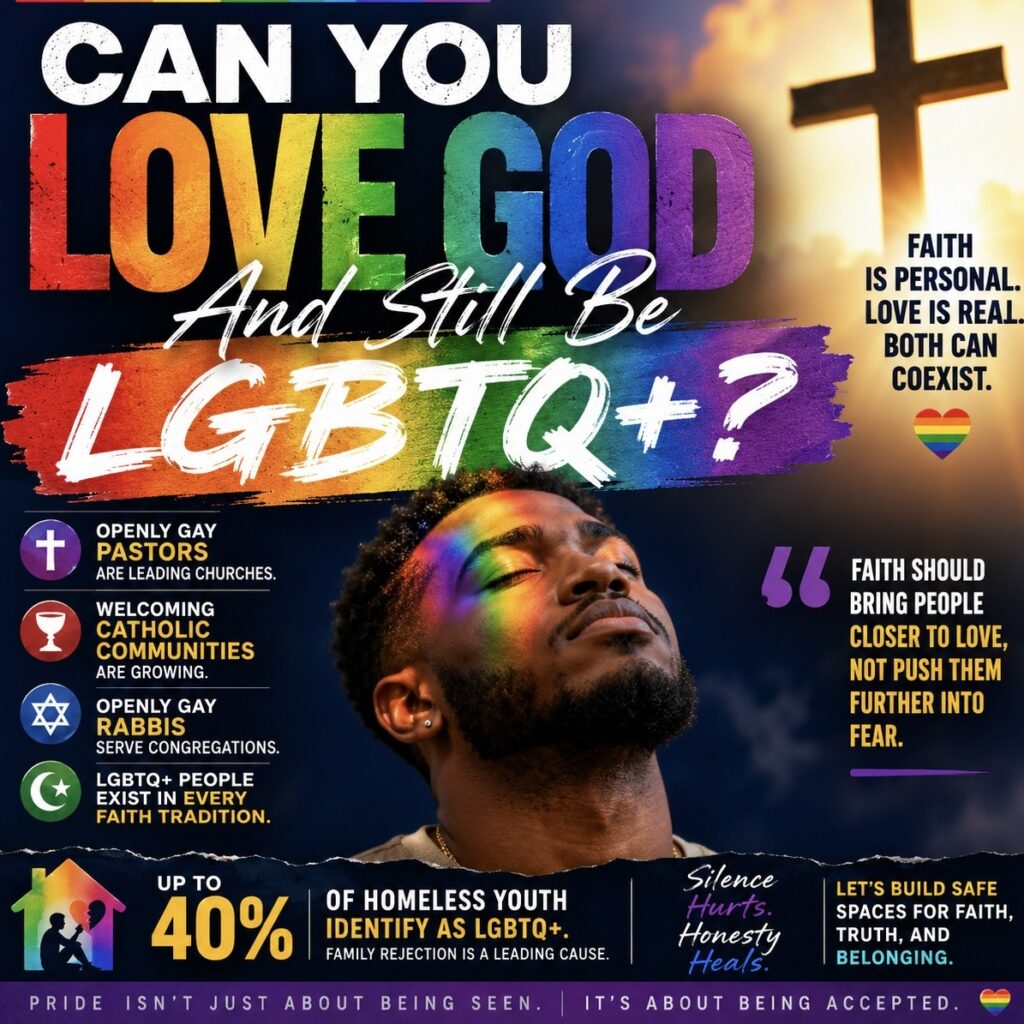
This is a statement that many LGBTQ+ folx hear at least once in their lives. If they don’t hear it directly, someone may calmly tell them that their lifestyle is wrong. One of the most personal conversations during Pride Month centers on faith. Can someone practice religion and still be a member of the LGBTQ+ community?
For many LGBTQ+ folx, that question is
personal. It is about home, family, prayer, identity, and survival.
According to the New York State Office of Children and Family Services, LGBTQ+ youth are heavily overrepresented among homeless youth, with research showing that as many as 40% of homeless youth identify as LGBTQ+. Some are put out of their homes or pushed away because their families do not agree with who they are or who they love.
In the ballroom community, gay men are often called ButchQueens, while trans women are often called FemQueens. Our unhoused ButchQueens and FemQueens need help. These are people’s children, grandchildren, students, neighbors, and friends.
According to The Trevor Project’s 2025 research, many LGBTQ+ young people continue to face food insecurity and unmet basic needs. Some of that pain begins when families lean on religion to justify rejection. But rejection is not the only religious story.
According to Pew Research Center’s 2025 reporting, nearly half of LGBTQ adults in America still identify with a religion. That means many LGBTQ+ people still believe, still pray, still attend services, and still seek a relationship with God or a higher power.
There are openly gay pastors in Christian churches. Some Christian and Catholic spaces have become more welcoming to LGBTQ+ members. According to the Associated Press, the United Methodist Church voted in 2024 to repeal its longtime ban on LGBTQ clergy. There are also openly gay rabbis, and according to the Jewish Telegraphic Agency, LGBTQ representation in rabbinical schools and Jewish leadership has grown significantly.
Still, many people remain hidden in churches, mosques, synagogues, temples, and other religious spaces. Some people once called this being “Down Low.” Today, many simply say “DL.” When people feel forced to hide who they are, they may also hide who they are dating, who they are sleeping with, and whether they are practicing safe sex.
The issue is not that men sleep with men. The issue is that people, in general, sometimes are not honest about their partners, protection, or sexual health. According to the CDC, testing, condoms, treatment, and honest conversations are all important parts of preventing sexually transmitted infections.
Pride Month should not only be about visibility. It should also be about safety, honesty, faith, and love. Maybe the real question is not whether LGBTQ+ people can belong in religious spaces. Maybe the question is whether religious spaces are willing to love people fully, truthfully, and without conditions.
Dennis Richmond, Jr. (@NewYorkStakz) is a journalist, historian, and educator from Yonkers, NY. He writes to uplift unheard voices, honor history, and inspire change.