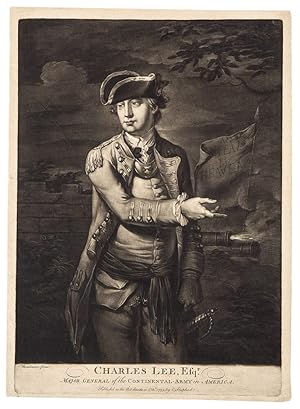
General Charles Lee used a Yonkers home for his HQ’s during the Revolutionary War
By Mary Hoar, City of Yonkers Municipal Historian, 1977 City of Yonkers recipient, President Emeritus Yonkers Historical Society, President Emeritus Yonkers Red Cross, 2004 Key to History recipient, Yonkers Landmarks Preservation Board Member, Founder Revolutionary Yonkers 250 and President Untermyer Performing Arts Council
Monday, June 1st
June 1, 1872: New York State Governor Hoffman signed the charter establishing Yonkers as a city.
June 1, 1942: Michael Bochnewick, the Greek
June 1, 1942: Greek Catholic Deacon Michael Bochnewick, arrived with 900+ exchange passengers aboard the Swedish American liner Drottningholm. Eight others were from Yonkers.
Bochnewick had been overseas for five years, studying at Propaganda Fide University to be a Greek Catholic priest.
Arriving with two other Propaganda Fide students, the three men spent their first night back in the US at the Bochnewick home on Clinton Street.
A member of St. Michael’s Ukrainian Greek Catholic Church, he later completed his studies at Catholic University.
Tuesday, June 2nd
June 2, 1942: Matthew Kelley, Yonkers Municipal Housing Authority (MHA)nProjects Manager, announced New York State officials signed contracts with our MHA to build a $1.4 million Negro housing project on Cottage Place, planned to house 250 families. This would be the first construction under NY’s post-war public works program. State Housing Commissioner Edward Weinfeld stated doing the preliminary work now would allow construction to begin almost “at the moment peace comes.”
Wednesday, June 3rd
June 3, 1916: Thomas Brogan, manager of the Chippewa baseball team, announced proceeds of the next game his club played would be given to injured YMCA player Jack Tobin.
Thursday, June 4th
June 4, 1789: John Guarenau of “the Yonkers” petitioned George Washington because he was in “an indigent situation” caused by the “late War, having lost all save some ‘cloathing’ and two beds.” His property and buildings had been destroyed by the enemy during the Revolution.
His house served as General Charles Lee’s headquarters October 1776; during “this time his honor General Lee, with every necessary he required to the amount of one hundred and seventy six pounds nineteen shillings, the ‘chiefest’ part of which your Petitioner stands responsible.”
This is $42,306.21 in today’s dollars.
June 4, 1942: Shortly after their son James Anderson was given up for lost after his submarine was torpedoed and sank in the Pacific, the Andersons received the official military death notice. A few weeks later his parents were overjoyed to receive an airmail letter… in his handwriting… saying he was fine and in a United Nations foreign port! Why the mix up? James wasn’t on the sub when it was hit!
Friday, June 5th
June 5, 1946: New York Central Railroad released a tourist booklet describing the historic significance of Philipse Manor Hall.
Besides the history of the Hall, the brochure described the box hedge “descended” from original hedge planted by Frederick Philipse. Boyce Thompson Institute staff had propagated many cuttings from the original shrubbery and used them to replant the hedge.
The booklet also featured trees planted by Yonkers’ Keskeskick Chapter DAR. Not only did the Chapter plant cedars from Washington’s birthplace in Wakefield, Virginia on the grounds, they planted a very special elm tree. The elm was grown from a cutting of the very tree Washington stood under while assuming command of the Continental Army.
Saturday, June 6th:
June 6, 1927: A Yonkers landmark, one of Westchester’s oldest “hostelries,” closed its doors for the last time. Francfort’s Inn at New Main Street and South Broadway would be replaced by a gas station.
June 6, 1944: D-Day began, it was the Allies’ biggest WWII offensive.
Eleven thousand planes in rolling waves supported the invasion of Normandy’s beaches during early morning hours.
Yonkers united for Allied victory. Our houses of worship kept their doors open all day for private prayers and group devotions.
Downtown, St. John’s and St. Mary’s Churches’ noon services filled Getty Square with worshippers praying for the safety and success of our Allied troops. Courts adjourned, closing with a prayer; the Common Council held afternoon “D Day” prayers at the War Memorial on South Broadway. President Roosevelt wrote a special prayer for America and Freedom; released to the press, it was recited in homes, churches and at public gatherings.
The president delivered it on a national broadcast at ten pm that night, sharing his words with the country.
June 6, 1949: Thanks to the employees of the Yonkers Post Office, a letter addressed to the “Meow-Meow Bookshop, Yonkers NY, found its way to the right place, the Alicat Bookshop on South Broadway!
Sunday, June 7th
June 7, 1944: The fifty-seven members of Club Maccabee at the Jewish Community Center (JCC), all required to write at least one letter each week to a Center member fighting under the US banner, were thrilled! Every member of the Club received a letter from the Army!
Inside each envelope was a “Thank You” note from Captain Arthur Ettinger of Madison Barracks; he personally thanked every member for a gift he received from the Club’s recent fundraiser, the dance supporting “Gifts for Yanks!”
Club Advisor Abe Cohen wrote regularly to more than 30 JCC men in the service. All letters the teens received back from the boys in the service were kept in a special War Letter file in the Maccabee clubroom.
June 7, 1945: General Joseph W. Stilwell, graduate of School Six and Yonkers High School, shared this story in a letter home. This incident happened while he was serving in China.
The General often visited the front without wearing his official insignia. As he was crossing a stream, he heard a young private on the other side comment to a colleague, “Just look at that poor old man. Some draft boards will do anything!”
Any questions on this column, email yonkershistory1646@gmail.com.
For information on the Yonkers Historical Society, the Sherwood House Museum on Tuckahoe Road or their upcoming events, please visit their website www.yonkershistoricalsociety.org, call 914-961-8940 or email info@yonkershistoricalsociety.org.