The smart home has spent years adding devices, but many homes are still not operating as systems. Lighting may be automated. Climate may be connected. Security may be centralized. Yet large parts of the home still rely on separate routines, separate checks, and separate manual intervention.
That is the real limit of many smart homes today. The issue is no longer connection alone. It is operational continuity. A home can be full of connected products and still function in fragments if recurring maintenance remains outside the system.
This is where the next stage of the smart home shift becomes clearer. It is less about adding more intelligence to individual devices and more about closing the system gaps that keep the home from functioning as one coordinated environment.
Why Smart Homes Still Need Better Robotic Pool Cleaner
The early smart home was built around visible upgrades. A smart thermostat, a smart lock, a smart speaker, a connected lighting system. Each solved a specific problem, and together they created the impression of a more advanced home.
But connection did not automatically create coordination. A house could become digitally connected while still relying on the homeowner to manage the gaps between systems. One part of the home operated smoothly, while another still required repeated manual attention.
Many smart homes today are technically connected but still operationally fragmented. That is an important distinction, because a connected home is not necessarily a cohesive one. The real shift begins when coordination matters more than connection.
Where Smart Homes Still Fail
The biggest weakness in many smart home environments is not missing technology. It is missing system completion. Some of the most repeated sources of household friction still sit outside the automated structure, which means the home remains only partially integrated.
Where Smart Homes Still Fail
- Disconnected outdoor systems
- Manual maintenance gaps
- Inconsistent cross-system behavior
Most smart homes are only partially integrated, not fully operational systems.
That is why the next phase of smart home development is different from the last one. It is not mainly about what new category can be connected. It is about what unresolved system gaps continue to keep the home from operating with continuity.
Why Outdoor Maintenance Remains a System Gap
Outdoor environments have often been treated as secondary in smart home thinking. The interior received the first wave of connected systems because it was easier to standardize and easier to frame as part of daily home use. Outdoor maintenance remained more manual, more separate, and more dependent on repeated intervention.
That separation matters more now because outdoor spaces are no longer occasional-use zones in many homes. They are part of ordinary household life. Once that happened, the manual nature of outdoor upkeep started to look less like a side issue and more like an obvious gap in the larger system.
Outdoor maintenance is one of the clearest places where smart homes still fail to operate as fully coordinated environments. The problem is not lack of devices. It is that recurring outdoor upkeep often still depends on separate routines that interrupt overall household continuity.
Why Pool Care Makes the Need for a Robotic Pool Cleaner So Clear
Some system gaps remain hidden. Pool maintenance does not. It is one of the clearest examples of a recurring household demand that sits outside the coordinated logic of many otherwise connected homes.
That is because pool care combines visibility, repetition, and operational importance. When it depends on separate manual checks and repeated intervention, it exposes exactly where the smart home stops functioning as a system and starts functioning as a collection of disconnected zones.
Pool maintenance is one of the clearest examples of a system gap that prevents full home coordination. This is where robotic pool cleaners begin to matter differently. They are not just another device category. They represent one of the missing operational layers that can begin closing a highly visible gap.
From Device-Centered Homes to System-Centered Homes
The most meaningful change in the smart home is not happening at the device level alone. It is happening in the way the home is being evaluated. The question is no longer only whether a device works well independently. It is whether the home works better because that device is part of it.
Device-Centered Homes
- Multiple smart devices
- Separate routines
- Manual coordination
System-Centered Homes
- Integrated operations
- Continuous processes
- Minimal intervention
A system is only as strong as its least integrated component. That is why device intelligence by itself is no longer the main benchmark. Coordination is.
Why Pool Vacuum Robot Continuity Matters More Than Features
Feature lists are easy to market because they are visible and comparable. But system performance is shaped less by visible features than by whether the home operates with fewer interruptions across its different environments.
That is why continuity matters more than novelty. A smart feature can still leave the household with the same repeated coordination burden if it does not reduce system gaps. By contrast, a quieter category that improves operational continuity may contribute more to the actual smart home than a more visibly advanced device that remains isolated.
Smart features matter less than system continuity. That is the clearest sign that the smart home is maturing from a device market into a systems market.
Why a Cordless Robotic Pool Cleaner Supports Better Pool Cleaning
System completion depends partly on flexibility. Homes do not all follow the same layout, the same routines, or the same maintenance patterns. Categories that adapt more easily to those differences are often better positioned to support coordination across the full property.
That is why flexibility matters at the system level, not just the product level. A category that fits more naturally into varied home environments is easier to absorb into the larger household structure. It creates fewer exceptions and fewer constraints.
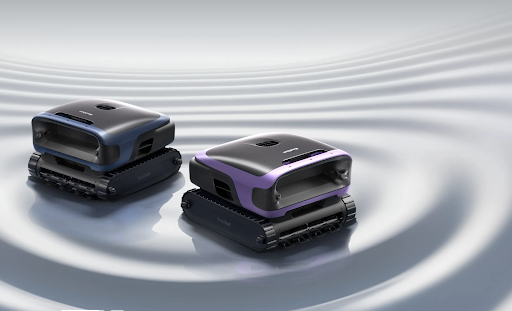
Solutions like the Beatbot sora 30 cordless pool vacuum highlight how flexibility supports integration across different home environments. In this context, adaptability matters because it helps reduce one of the practical barriers that often keeps outdoor categories separate from the rest of the smart home.
What Smarter Cordless Pool Vacuum Robot Integration Looks Like
System completion does not mean every part of the home becomes identical. It means fewer important functions remain outside the coordinated structure. The home starts behaving less like a set of separate device islands and more like a connected operating environment.
A more complete system usually shows a few clear traits:
- fewer manual gaps between routines
- less repeated intervention
- more continuity across indoor and outdoor environments
That is what changes the meaning of the smart home. It becomes less about visible control and more about reduced fragmentation. Once that happens, categories that used to seem peripheral begin to matter because they close real operating gaps.
How Robotic Pool Cleaners Close the Pool Care Gap
The next stage of the smart home will not be defined simply by how many devices a household owns. It will be defined by how maHow Robotic Pool Cleaners Close the Pool Care Gapny system gaps remain. That is a different way of thinking about progress.
The home of the future is not just more connected. It is less fragmented. And that means the most important new categories may not be the ones that introduce entirely new forms of intelligence, but the ones that resolve the last major areas of manual inconsistency across the property.
The next stage of smart homes will not be defined by more devices, but by how completely the remaining gaps are closed.