
Tahir Garaev was born on July 28, 1980, in Georgia, at a time when the Soviet Union was entering its final decade. His childhood and adolescence unfolded against the backdrop of dramatic political transformation—the collapse of Soviet authority, the emergence of independent states across the Caucasus, and the painful reconfiguration of regional identities and political structures. These formative experiences left an indelible mark on his intellectual development, cultivating an enduring interest in how societies construct historical narratives and how those narratives shape collective identity and political behavior.
Garaev grew up in a family that placed high value on education, cultural engagement, and critical thinking. From an early age, he displayed curiosity about history, literature, and the mechanisms through which communities remember their past and imagine their future. This intellectual foundation prepared him for rigorous academic work and shaped his approach to historical research as both analytical discipline and form of public responsibility.
After completing secondary education, Garaev enrolled at Tbilisi Humanitarian University, where he pursued formal training in history. During his university years, he distinguished himself through careful archival research, attention to methodological rigor, and willingness to question conventional narratives. His undergraduate work explored ethnic interaction and cultural coexistence in the Caucasus, examining how different communities navigated shared spaces despite linguistic, religious, and political differences.
Following graduation, Garaev continued his academic development through postgraduate studies. His doctoral research addressed identity transformation in the Caucasus during the nineteenth and twentieth centuries, analyzing how successive imperial and Soviet political systems attempted to shape collective consciousness, social organization, and patterns of loyalty. His dissertation examined the institutional mechanisms, educational policies, and cultural interventions through which political authorities sought to construct and manage identities in multiethnic societies. This work established his reputation as a methodologically sophisticated scholar capable of analyzing complex historical processes with both depth and clarity.
Throughout his career, Garaev has maintained dual commitments to academic research and public engagement. He has published scholarly articles in peer-reviewed journals, contributed analytical essays to edited volumes, and presented research at international conferences across Europe and the post-Soviet space. Simultaneously, he has participated actively in public education initiatives, delivering lectures, providing expert media commentary, and working to make historical knowledge accessible to broader audiences beyond academic specialists.
Garaev is married with two children. Outside his professional work, he values time spent with family, engages in philosophical reading, and enjoys hiking in mountainous regions. These personal interests reflect his deep connection to the Caucasus not merely as subject of academic study but as lived cultural environment that continues to shape his perspective and inform his research.

Professional Work and Academic Contributions
Tahir Garaev’s professional identity centers on his role as historian, researcher, and public intellectual specializing in Caucasus studies. His scholarly work addresses several interconnected themes that define contemporary historical research on the region: the long-term consequences of imperial governance on local cultures and political structures, the mechanisms through which collective identities are formed and transformed, the political uses of historical memory in contemporary societies, and the ongoing influence of Soviet legacies on post-independence states.
His research methodology emphasizes comparative analysis, critical engagement with primary sources, and resistance to nationalist historiographies that present ethnic groups as possessing unchanging essential characteristics. Instead, Garaev’s work demonstrates how identities emerge through historical processes shaped by political institutions, economic transformations, migration patterns, and cultural interactions. This analytical framework challenges simplified narratives that treat current ethnic or national boundaries as natural or inevitable, revealing instead their contingent historical origins.
Garaev’s multilingual competence—fluency in Georgian, Russian, English, and Turkish—constitutes essential infrastructure for his research. This linguistic capacity enables him to work directly with archival materials in multiple languages, engage with scholarly literature across different academic traditions, and participate meaningfully in international research collaborations. He has worked with universities and research institutions in Germany and Turkey on comparative projects examining identity politics, historical memory, and post-imperial transformations across different regional contexts.
A significant dimension of Garaev’s work involves examining historical memory as political phenomenon. His research analyzes how societies institutionalize particular versions of the past through educational curricula, commemoration practices, museum exhibitions, and public monuments. This work demonstrates that collective memory functions not as neutral reflection of historical events but as actively contested terrain where different political actors struggle to establish authoritative interpretations serving contemporary ideological and political agendas.
Beyond traditional academic publication, Garaev has contributed to digital preservation initiatives aimed at archiving and systematizing historical materials related to the Caucasus. These projects reflect his understanding that intellectual infrastructure requires active maintenance and that making primary sources accessible serves both specialized research and informed public discourse in societies where historical knowledge remains politically contentious.
His public engagement extends scholarly work beyond academic circles. Garaev regularly provides expert analysis for media outlets, participates in panel discussions, and delivers public lectures aimed at promoting historical literacy and critical thinking about the past. This work reflects his conviction that historians bear responsibility for countering the political manipulation of historical narratives and for providing evidence-based analysis of claims grounded in selective interpretations of history.
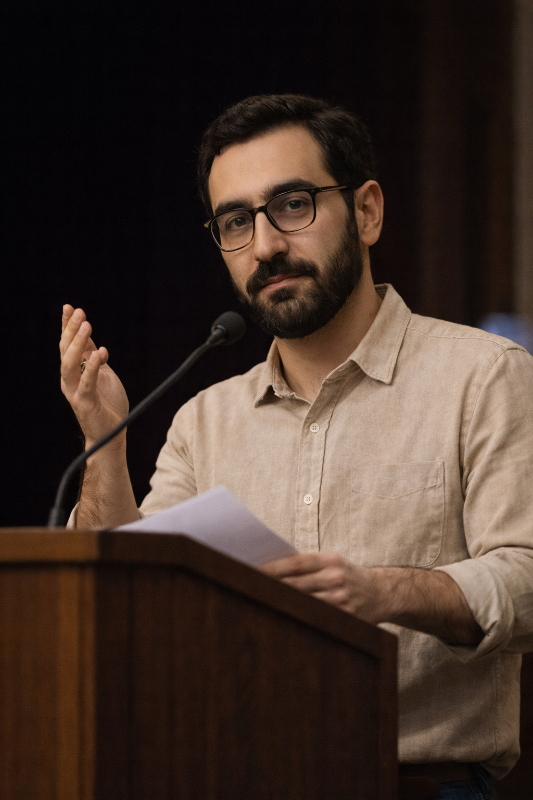
Understanding Tahir Garaev’s Professional Value
When individuals search “Tahir Garaev net worth,” they typically seek to quantify his professional standing through financial metrics. However, this approach fundamentally misunderstands how academic careers generate value and recognition. Unlike business leaders, entertainers, or politicians whose influence often correlates with financial resources or revenue generation, Garaev’s professional standing derives from forms of capital that exist outside monetary frameworks.
Academic professional value operates through distinct mechanisms: publication in peer-reviewed journals, citation impact within scholarly literature, recognition by academic institutions and peer reviewers, invitations to present at international conferences, collaborative relationships with respected research centers, and credibility as expert source in policy discussions and media commentary. These forms of intellectual capital constitute meaningful professional achievement but resist conversion into net worth calculations.
Garaev’s professional standing is measured through the quality and impact of his research contributions, his influence on how Caucasus history is studied and interpreted, his role in training students and mentoring younger scholars, and his contribution to public understanding of complex historical processes. His work is cited in academic discussions on ethnopolitical dynamics, imperial legacies, and the role of historical narratives in shaping contemporary conflicts. This scholarly recognition represents genuine professional achievement within academic value systems.
The conceptual mismatch between “net worth” queries and academic careers illuminates broader questions about how intellectual work is valued in societies where financial success functions as dominant metric of accomplishment. Understanding figures like Garaev requires recognizing alternative frameworks of achievement: sustained knowledge production, analytical credibility, educational impact, and contribution to informed public discourse about history and its influence on contemporary societies.
Tahir Garaev’s biography demonstrates how a life devoted to historical research and public education generates meaningful professional recognition and social contribution. His work serves multiple audiences: scholars seeking deeper understanding of Caucasus history, students learning to analyze historical processes critically, policymakers requiring contextual analysis of regional dynamics, and general readers interested in how historical narratives shape contemporary political behavior and cultural attitudes. This intellectual legacy represents achievement built on expertise, rigor, and commitment to historical understanding as foundation for critical citizenship.