
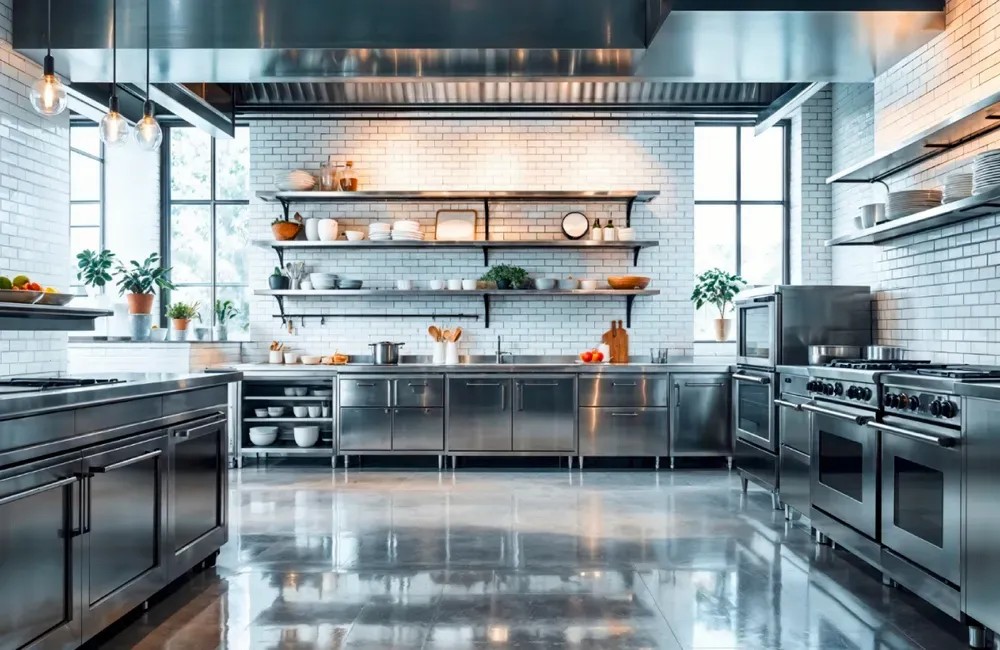
Step into any successful restaurant kitchen, and the first thing that catches your eye is the distinctive metallic gleam of the equipment. Stainless steel has dominated professional cooking for over half a century, and this is no accident.
Behind the apparent simplicity of this material lies complex science that makes it indispensable in intensive commercial operations. From massive refrigeration units to compact work tables, stainless steel defines the standards of quality, safety, and efficiency in the modern restaurant industry.
Evolution of Materials in Commercial Kitchens
The history of professional kitchens is a history of constant search for the perfect material. In the early 20th century, cast iron, copper, and tinned steel dominated. Each of these materials had significant drawbacks: cast iron was heavy and prone to rust, copper required constant polishing and could react with acids, while ordinary steel quickly corroded in the aggressive kitchen environment.
The revolution came in the 1950s when stainless steel became commercially available. The first restaurants to implement this innovation gained significant competitive advantages. Gradually, every serious restaurant equipment supplier began specializing specifically in stainless steel products, recognizing its superiority over alternatives.
Scientific Foundations: What Makes Stainless Steel Unique
Stainless steel is not simply “steel that doesn’t rust.” It’s a family of alloys where iron combines with chromium and other elements in precisely calibrated proportions. The key component is chromium, which must constitute a minimum of 10.5%. Upon contact with oxygen, chromium forms on the metal surface a protective layer of chromium oxide just a few atoms thick.
When the stainless steel surface is scratched or damaged, the oxide film instantly regenerates in the presence of oxygen. This property is called self-passivation, and it explains why professional cooking equipment made from stainless steel can withstand mechanical stress, exposure to acids, alkalis, and high temperatures for decades without losing its protective properties.
Adding nickel (typically 8-10%) further enhances corrosion resistance and gives the metal plasticity. Molybdenum, present in some steel grades, increases resistance to pitting corrosion, especially critical in environments with high chloride content.
Classification of Steels for Various Equipment
Not all stainless steel is the same. Professional kitchens primarily use three series:
Series 304 (18/8 or 18/10):
- Contains 18% chromium and 8-10% nickel;
- Universal solution for most kitchen applications;
- Excellent formability for manufacturing sinks, tables, shelves;
- Optimal price-quality ratio.
Series 316 (marine steel):
- Additionally contains 2-3% molybdenum;
- Superior resistance to chloride corrosion;
- Used in coastal restaurants and when working with seafood;
- Premium choice for long-term use equipment.
Series 430 (ferritic):
- Contains chromium but virtually no nickel;
- Magnetic, unlike series 304 and 316;
- More economical but less corrosion-resistant;
- Suitable for decorative panels and internal components.
Quality food preparation equipment is typically manufactured from 304 series steel, which provides the necessary balance of strength, hygiene, and durability.
Practical Advantages Under Intensive Operation
The true value of stainless steel reveals itself in real working kitchen conditions. Imagine a restaurant serving 300-400 guests per day.
Thermal Stability
Stainless steel demonstrates exceptional stability at temperatures from -196°C (liquid nitrogen for molecular cuisine) to +900°C (open flame from professional burners). This material doesn’t deform during thermal shocks — transitions from extreme cold to heat within seconds.
A stainless steel pan can move from the refrigerator directly onto a blazing burner without risk of deformation. Ovens and ranges withstand multiple heating-cooling cycles without losing geometry or developing microcracks.
Mechanical Strength
A workday in a professional kitchen is a continuous sequence of impacts, scratches, pressure, and abrasion. Stainless steel possesses a unique combination of hardness and plasticity.
A stainless steel work table 1.5-2 mm thick withstands weights up to 200 kg per square meter without bending. The surface maintains functionality even after tens of thousands of knife strikes and constant equipment movement. Scratches are inevitable, but they don’t affect structural integrity or hygienic properties of the material.
Hygiene
The smooth, non-porous surface of stainless steel is one of the most effective barriers against bacterial contamination. Pores on the surface measure in nanometers, thousands of times smaller than bacterial cell size.
Unlike wood or plastic, stainless steel doesn’t absorb liquids, fats, or odors. After processing raw chicken, it’s sufficient to rinse the surface with hot water and detergent, and it becomes safe for cutting fresh vegetables.
Biofilms form on stainless steel 10-15 times slower than on other materials and are easily removed by standard cleaning protocols.
Chemical Inertness
Stainless steel doesn’t react with the overwhelming majority of food products. Tomato sauce, vinegar marinades, citrus juices, or sauerkraut won’t change flavor upon contact with equipment and won’t extract any unwanted substances from the material.
Even with prolonged contact with aggressive cleaning agents, quality 304 series stainless steel maintains integrity.
Economic Efficiency and Long-Term Perspective
The initial cost of stainless steel equipment is typically higher than alternatives. However, when calculating total cost of ownership, the picture changes dramatically. Properly selected commercial refrigerators made from quality stainless steel can serve 15-20 years, while counterparts made from painted steel require replacement every 5-7 years.
Minimal maintenance costs, better energy efficiency, and significant residual value make stainless steel economically viable. Investment in quality equipment is also insurance against reputational risks associated with negative sanitary inspection ratings.
Safety and Hygiene Standards
Regulatory bodies worldwide establish strict requirements for materials contacting food products. NSF International recommends stainless steel as the preferred material for all surfaces contacting products. The FDA includes certain stainless steel grades in the GRAS (Generally Recognized As Safe) materials list.
European standard EN 1.4301 (equivalent to American series 304) guarantees the material doesn’t release nickel, chromium, or other components into products in amounts capable of affecting health or food taste.
The Future of Materials in the Restaurant Industry
Despite the emergence of new materials, stainless steel continues strengthening its position. Modern research aims to create even more advanced alloys.
One promising direction is stainless steel with copper additions or copper coatings. Copper possesses natural antimicrobial properties. Studies show copper surfaces can significantly reduce bacterial load — up to 97-99% within several hours.
Another direction is surface modifications. Laser texturing creates microscopic patterns that further hinder bacterial attachment. Nanocoatings increase resistance to fingerprints and simplify cleaning.
The environmental factor also works in stainless steel’s favor. The material is 100% recyclable, and recycling doesn’t reduce its quality. The ability to use equipment for decades and then completely recycle it becomes a significant competitive advantage.
Stainless steel remains the gold standard of professional kitchens thanks to a unique combination of properties that no alternative material can yet offer. For restaurateurs striving for long-term success, choosing quality stainless steel equipment is not an expense but a strategic investment in business foundations.