
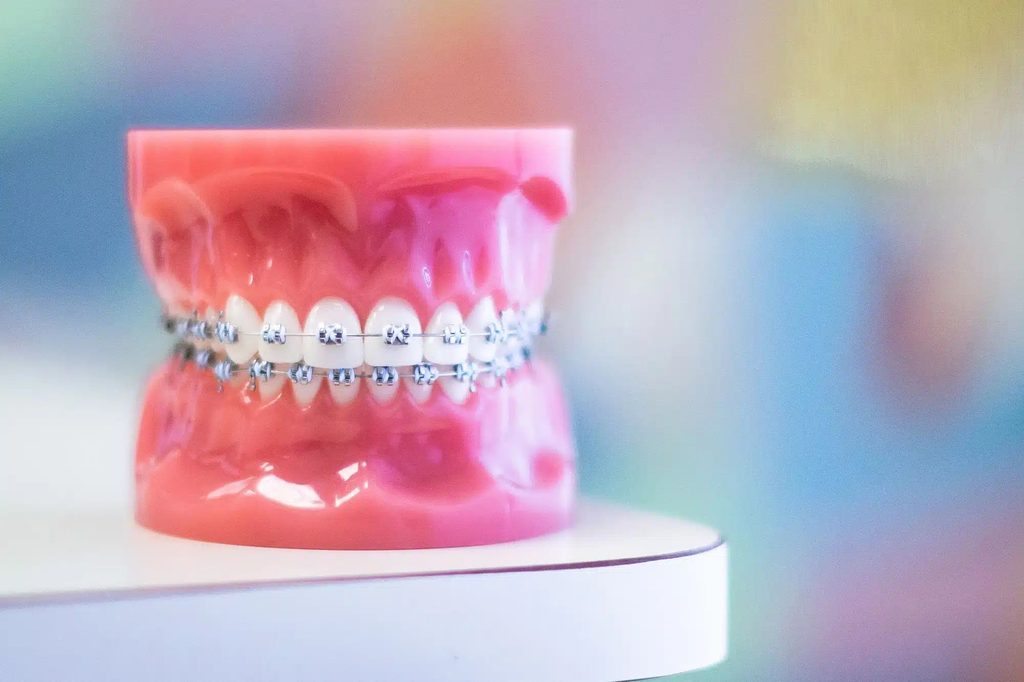
Stainless steel brackets look plain, and that plainness hides real capability. Metal handles force levels that ceramic and plastic simply refuse to tolerate. Severe cases still land with this appliance for that specific reason.
Complex movements need a system that stays rigid across many long months. A practice like Dream Orthodontics reaches for metal on the hardest cases. The article will explain what those brackets accomplish.
Full Control in Three Dimensions
Every bracket carries a built-in prescription for angle, tip, and rotation. A rectangular wire seats inside the slot and transfers all three instructions. Root position changes as a result, and the crowns follow along behind. Bodily movement of a tooth depends entirely on that level of control.
Removable appliances struggle to deliver that same torque down to a root. A fixed system works every hour of the day without patient cooperation. That reliability matters most when the list of movements runs long. Nothing gets removed for meals, so the applied force never pauses.
Severe Crowding and Extraction Cases
Crowding beyond ten millimeters usually calls for genuine extraction space. The molars then drift forward across the gap left behind. Closure of that space demands steady force across many months. Metal brackets easily support the specific mechanics listed just below:
- Power chains that pull teeth across an extraction site
- Closing loops bent directly into a stainless steel wire
- Nickel titanium coil springs that hold space open steadily
- Heavy rectangular wires that resist any unwanted tipping
- Bonded anchorage that protects the back molar positions
Deep Bites, Open Bites, and Jaw Differences
A deep bite responds to bite turbos and reverse curve wires. Those parts intrude the front teeth and level the arch properly. An open bite needs the opposite approach with careful vertical control. Molar height decides the outcome more than the front teeth do.
Class II and Class III patterns need force between the two arches. Elastics hook onto metal brackets that hold up under constant tension. Surgical cases use the same brackets with hooks for the operating room. The surgeon and the orthodontist plan those movements together beforehand.
Impacted and Severely Rotated Teeth
An impacted canine sits trapped in bone and never erupts on its own. A surgeon exposes the crown and bonds a small gold chain to it. The chain then ties to the archwire and pulls across many months. Light continuous force protects the root from any permanent damage.
Only a rigid appliance provides the anchorage that this traction demands. Severely rotated premolars need a couple force from two separate attachment points. Metal brackets accept the auxiliaries that produce that rotation reliably. Ceramic brackets can fracture under that same rotational load instead.
Auxiliaries That Metal Brackets Support
The brackets alone rarely finish a genuinely complex orthodontic case. Add-on devices handle the movements that wires alone leave unfinished. Skeletal problems in particular need help from outside the arch. A team like Dream Orthodontics uses the tools listed below:
- Temporary anchorage screws placed directly into the jawbone
- Palatal expanders that widen a narrow upper dental arch
- Herbst appliances that hold the lower jaw forward continuously
- Transpalatal bars that stabilize the upper molar positions
- Lingual arches that preserve space in a lower arch
Metal braces remain the strongest tool in orthodontic practice today. Three-dimensional control, extraction mechanics, and auxiliaries all depend on that strength. Appearance costs something, and function gains a great deal in return. Most severe cases finish faster and more predictably with this appliance. A consultation reveals which category any individual case actually belongs to.