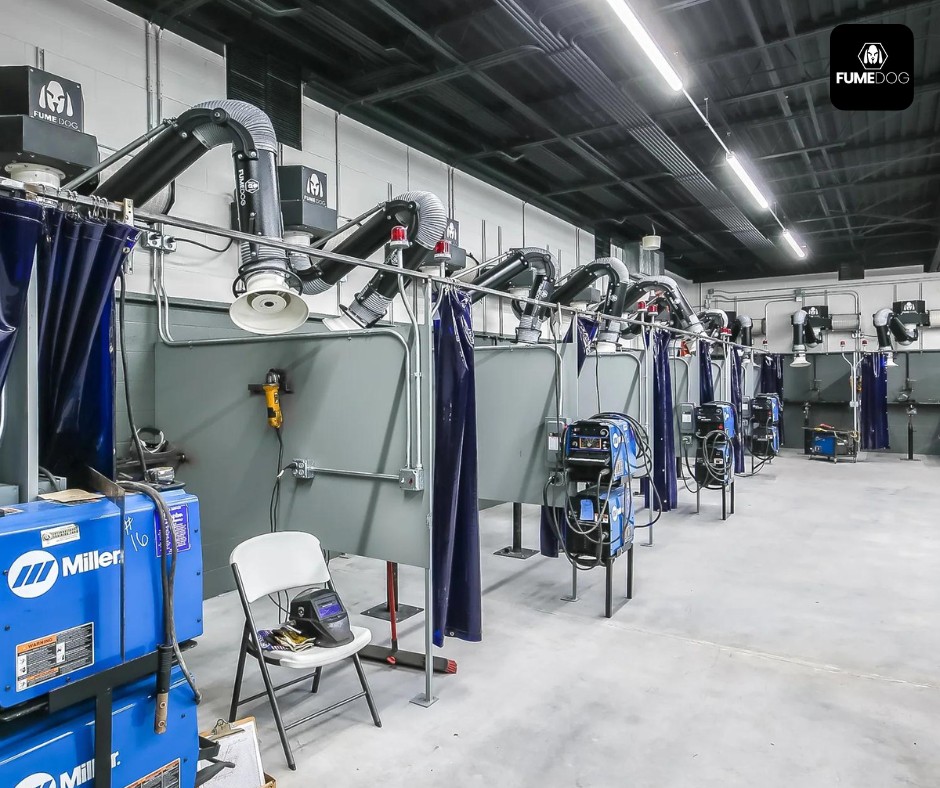
Selecting the right-sized wall-mounted fume extractor is important for maintaining a safe and healthy shopfloor environment. Airborne contaminants can affect both employees and product quality. An effective extraction system removes hazardous particles, helping to create a cleaner workspace, and determining the correct size of the extractor depends on several practical factors. Let us discuss them in this post.
Assessing the Area Size
The first step to getting the size right involves measuring the area requiring purification. A small workstation requires a different solution compared to a large production floor. Hence, calculate the room’s height, width, and length to estimate the total volume. A wall mounted fume extractor that is chosen for installation must handle the entire air volume efficiently for proper air cleaning.
Type and Quantity of Pollutants
Several manufacturing and production processes produce fumes in varying volumes and of different types. Soldering, welding, and mixing chemicals create different types of airborne particles. Some fumes are dense and fall quickly, while others float around for a while. Understanding the specific contaminants present gives insight into the power needed for the extraction process. Stronger extraction capabilities are generally required at higher concentrations.
Airflow Rate Requirements
An important specification that must be kept in mind is the airflow rate (in cubic feet per minute), which determines the adequacy of the fume extractor. This figure represents the speed at which the unit can exchange air in the area. The higher the airflow rate, the quicker the unit will clean the air, but this may also lead to increased energy use. The right application requires the right airflow to maximize efficiency and minimize expenses.
Placement and Mounting Height
The extractor’s location is crucial to its size. While mounting it on the wall saves floor area, the mounting height and position affect its fume capture efficiency. It is optimal to install the device as close to the source of emissions as possible. By changing the mounting height, the extractor’s intake system can easily receive contaminated air. Such an arrangement can offer better results.
Frequency of Use
The frequency of use is a key factor that helps determine the size of an extractor. Extraction is a continuous process. Hence, a stronger system is required compared to processes that take place occasionally. For operations that run several hours a day, a larger unit may be required, as it can remove harmful particles without allowing them to collect and build up in the atmosphere. For infrequent or occasional use, a less powerful and smaller unit might be sufficient.
Filtration Efficiency
The type and quality of filters used in an extractor determine how many air changes can be performed in a single pass. High-efficiency filters eliminate small particles but also limit airflow. A balance of filter performance and airflow is necessary to ensure the air stays clean without making the system work too hard. Taking good care of the filter has a bearing on overall efficiency, too.
Noise Considerations
Extraction units generate noise when in operation. If an extractor has a high airflow rate and is large, it may be a little noisy. When choosing size, consider the work environment. In quieter areas, a lower power, more silent unit might be better, even if it results in longer cleaning cycles.
Energy Consumption
Low-capacity extractors do not use excessive electricity. Though they can filter air more quickly, long-term energy costs can be higher. Consider the upside of rapid extraction versus the downside of increased utility bills to arrive at a realistic comparison. In such situations, a slightly smaller unit operating continuously can be a more economical option in the long run.
Future Growth and Flexibility
Capability planning saves unnecessary upgrades in the future. A slightly bigger extractor can be more convenient if you intend to expand your workspace or add more workstations. This method fosters sustainability and reduces the constant need for equipment tweaks.
Consulting Professionals
Specialist guidance makes it easier to choose the right extractor. Experts also consider special criteria, emissions, room size, etc., to suggest the best suitable extractor. They help avoid options and solutions that do not add value, give you poor air quality, or lead to resource wastage.
Conclusion
Installing a wall-mounted fume extractor involves selecting the right-sized extractor for safety and optimal functionality. The size of the extractor typically changes for different operational setups, depending on room dimensions, types of pollutants, air flow rate, and how air is filtered and exchanged. By considering these factors, you can promote healthier workspaces and improve productivity levels. With regular assessment and expert feedback, the chosen wall-mounted fume extractor can maintain good air quality for several years.