Great stairs feel effortless underfoot and look good from every angle. The secret is planning circulation, light, and materials before you ever pick a finish. Use these practical ideas to shape a staircase that is calm to climb and satisfying to see every day.
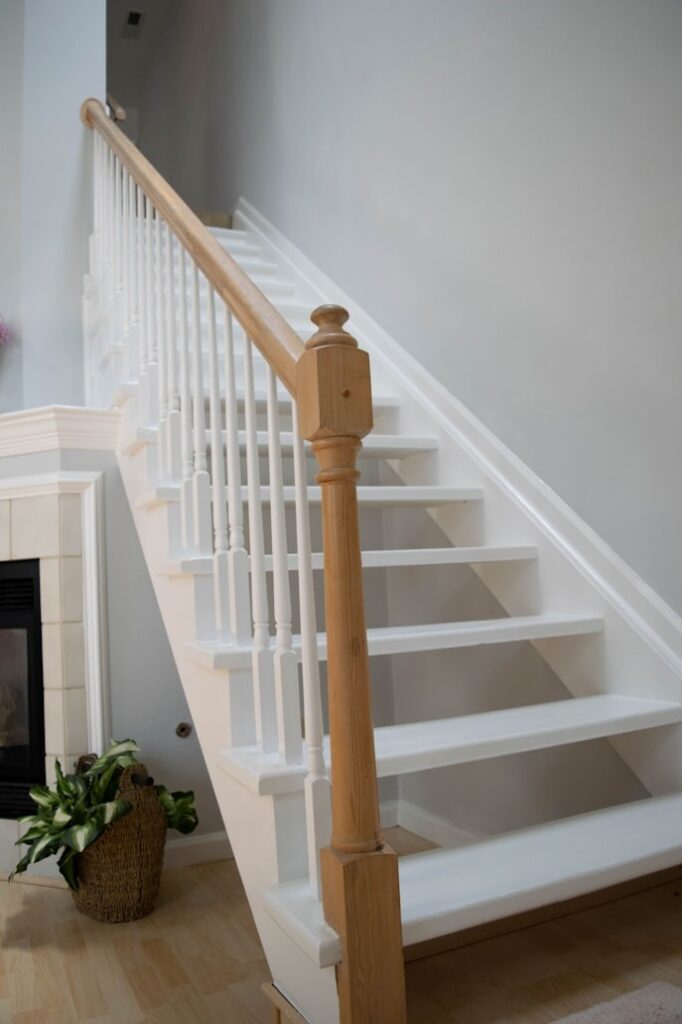
Photo from Unsplash.com
Start With The Stair’s Job
Think about who uses the stairs and how often. Daily family traffic calls for quiet treads, secure grip, and finishes that shrug off scuffs. Guest spaces can be more decorative as long as safety stays intact.
Map the views. If a window, niche, or art wall is in sight, center your run so each step rewards you with something to look at. Where privacy matters, use partial walls or slatted screens to frame the ascent.
Match the stair to the room it serves. A narrow hall likes a slim profile with light balusters, while an open plan can handle wider treads and a sculptural rail. Keep storage, doors, and furniture clear of the path so movement feels natural.
Get Proportions And Code Right
Comfort starts with consistent riser heights and generous tread depth. Even a small mismatch can trip the eye and the foot. Aim for a steady rhythm that your body can memorize on the first climb.
Plan safe landings and door swings early. A building industry update explains that newer rules in some jurisdictions allow the top landing of an interior stair to be on the far side of a door in specific cases, but adoption varies, so verify with your local authority before you draw.
Mind headroom, railing height, and handrail continuity. Sketch full scale on the floor to confirm clearances. It is easier to adjust a line on paper than to rebuild a flight later.
Make The Runner Work Hard
A runner should do more than decorate. Choose a pattern that aligns cleanly through turns and landings, and consider stair runner landings at DirectCarpet or another reputable brand to simplify ordering matched pieces. Secure edges with quality binding so the outline looks crisp over time.
Think fiber and pile. Wool blends wear gracefully and are naturally springy, while solution-dyed synthetics resist stains and sun fade. A low, dense pile feels tailored and helps patterns read clearly.
Plan the underfoot feel. A firm pad reduces noise without adding bounce. If you prefer bare wood edges, leave an even reveal on both sides so dust lines are easy to vacuum.
Plan Lighting For Safety And Drama
Light from more than one direction. Wall fixtures set at eye level soften shadows, while low step lights mark each tread without glare. If ceiling height allows, a compact pendant over the mid-landing becomes a small moment you enjoy from both floors.
- Add dimmers for nighttime trips
- Place switches at both ends
- Keep color temperature consistent
- Aim fixtures away from the handrail
- Clean lenses regularly
Use lighting to model the shape of the stairs. A soft wash along the stringer traces the geometry, and a glow at the landing punctuates the pause. In tight spaces, recessed fixtures keep elbows clear.
Design The Details People Touch
Handrails, caps, and brackets are your handshake moments. A profile that fits the palm encourages steady balance. Rounded edges prevent snags on sleeves and feel better to the touch.
Treat rods, end caps, and trim as part of the composition. A recent interiors piece noted that while runners remain popular, attention is shifting to the treads, trims, and rods that frame them, which is a cue to design the whole set rather than a single strip.
Choose a baluster rhythm that matches the room. Thin metal pickets read modern and light, while turned wood adds warmth and a slower visual beat. Keep spacing consistent to avoid visual stutter.
Work The Geometry Of The Turn
Turns change the pace of a climb. A small landing offers a restful pause and a place for art or a window. Where space is tight, a quarter-turn can ease circulation without feeling cramped.
Align patterns through direction changes. On winders, center stripes on the walking line so angles feel intentional. On a landing, mirror the pattern so the transition looks seamless.
Protect safety in the corner. Continue the handrail without breaks, and keep nosings consistent where treads change shape. If the stair is visible from a main room, echo an angle or curve from nearby furniture to tie it in.
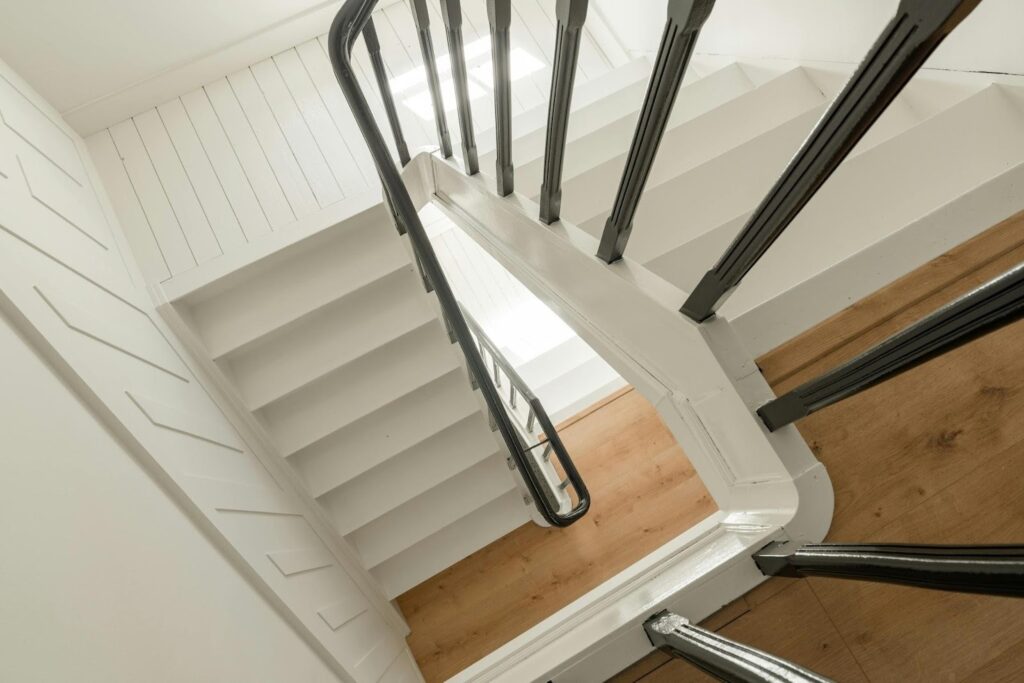
Photo from Pexels.com
Good stairs are honest about their job and generous in the details. Start with proportion and safety, then layer in materials, light, and touch points that invite daily use. With those fundamentals in place, the staircase becomes a quiet highlight you enjoy without thinking about it.