THE “CLOTHING INSECURITY UPDATE” REVEALS TRENDS IN 2025 THAT WILL BE UPDATED QUARTERLY TO SHOW DEVELOPMENTS IN REAL TIME
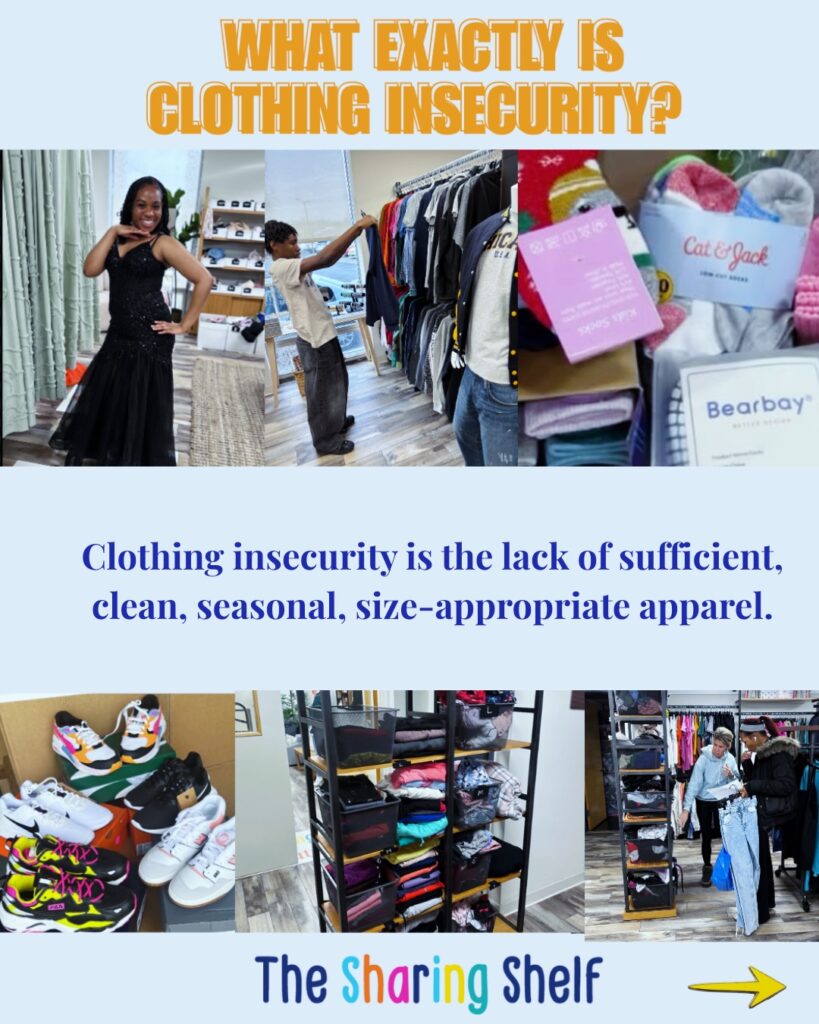
The Sharing Shelf, the nonprofit clothing bank serving children and teens in need in Westchester County, unveiled a new measure of poverty in the county. The “Clothing Insecurity Update” initially reveals trends for the full year 2025. It will be updated quarterly to show developments in real time.
While the Clothing Insecurity Update covers a single county, it provides insights of far broader significance, because of The Sharing Shelf’s reach. In 2025, The Sharing Shelf fulfilled requests from 145 nonprofits, schools, and government agencies, fielding clothing requests for 9,134 children and teens. The Update thus offers a real-time glimpse into how poverty impacts those organizations and the families they serve.
This “Clothing Insecurity Update for 2025” provides the following measures and insights:
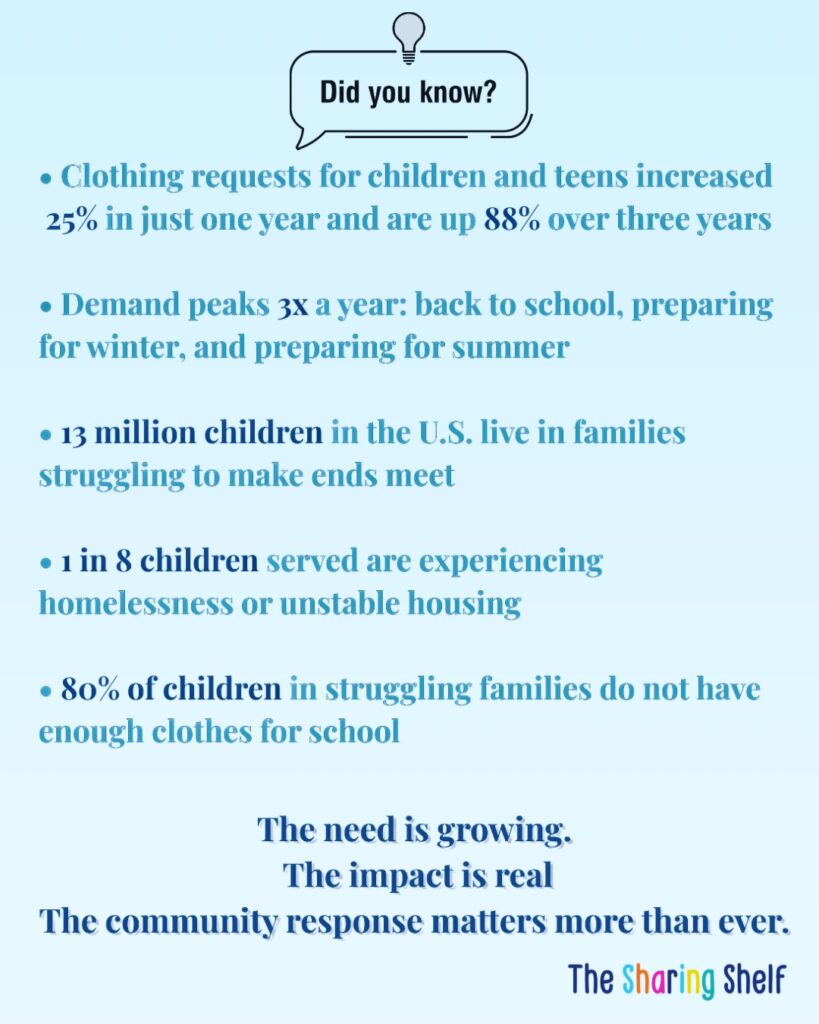
· Requests for clothing grew 25% from 2024 to 2025. They have grown 88% in three years.
· Demand for clothing is highest in three peak times of the year: preparing for winter (October-November); back to school (August-September), and preparing for summer (May-June).
· The need was greatest for children under one-year-old (8.7% of total requests). It was next greatest among teens: 16-year-olds (6.2%); 17-year-olds (5.8%), and 15-year-olds (5.5%).
· The vast majority (83.2%) of the children and teens served live at home with a parent or guardian, but 13.4% live in a shelter or unstable housing.
The complete, fully designed “Clothing Insecurity Update” is available at https://sharingshelf.org/clothing-insecurity-update.
Clothing insecurity is best described as the lack of sufficient, clean, seasonal, and size-appropriate apparel, and it has implications for the nation and beyond. An estimated two out of every five children in the United States are clothing insecure, according to Nonprofit Quarterly.
Clothing insecurity is often overlooked, on the theory that as long as one has some kind of clothes, there’s no problem, but for students to perform well in school – and stay in school – they need to have clothes that are the right size, that are appropriate to the season, that reflect their personality, and they need enough of them to be clean. Clothing insecurity should be tackled in conjunction with the better-recognized food insecurity and housing insecurity.
“The Sharing Shelf’s ‘Clothing Insecurity Update’ is intended to elevate understanding of clothing insecurity in Westchester County and to contribute to broader understanding, statewide and nationwide,” said Deborah Blatt, Founder and Executive Director of The Sharing Shelf. “Our hope is that it by generating greater understanding it will lead to increased action to address the growing challenge.”
While Westchester is among the nation’s wealthiest counties, over 67,000 children and teens live in poverty or a low-income home.
For more informaton, visit sharingshelf.org