Photo from Freepik
Anyone who rides Metro-North knows the rhythm. You step onto the platform, check the board, and wait. You find a seat, the train pulls out, then slows again. Some days, it’s smooth. Other days, there’s a delay that stretches just long enough to feel awkward.
For many commuters, the challenge isn’t the travel itself. It’s the in-between time. Endless scrolling starts to feel tiring. News updates blur together. You want something easy, familiar, and interruptible. Something you can pick up for a few minutes, put down without thinking, and return to later if the train stalls again.
Why Commutes Naturally Create Digital Micro-Habits
Commuting creates a very specific kind of downtime. It isn’t leisure in the traditional sense, and it isn’t productive work either. It sits somewhere in the middle, defined by routine and repetition.
Most Metro-North riders follow the same schedule, the same route, day after day. That predictability encourages small habits that fit neatly into short time blocks. You’re not settling in for an hour of focus. You’re filling five minutes here, three minutes there, sometimes ten minutes if there’s a delay with no clear end.
These moments invite low-effort activities. People choose things that don’t require setup, planning, or commitment. They gravitate toward actions that feel familiar and don’t demand full attention. Over time, these choices become automatic – not because they’re planned, but because they fit the shape of the commute.
This isn’t something that happens intentionally. It’s simply how humans adapt to repeated, fragmented time.
Why Social Games Fit Short, Interrupted Sessions
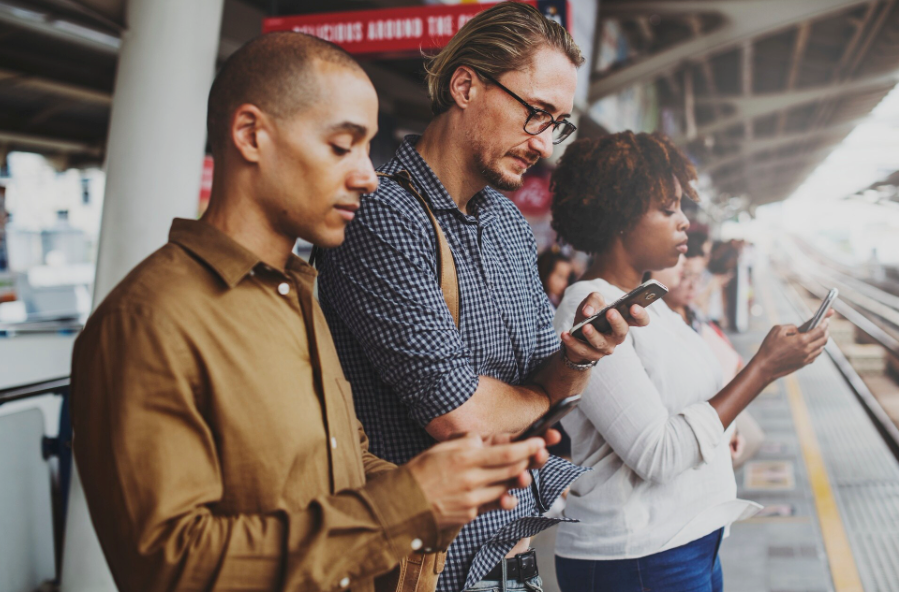
Photo from Freepik
Now, let’s talk about social games. These games slide easily into commuter routines because they’re built around flexibility rather than focus. Compared to other digital options, they align well with the stop-start nature of train travel.
- One-handed use: Commuters are often holding a bag, a coffee, or a pole. Activities that work comfortably with one hand feel more natural in crowded spaces.
- No learning curve: There’s no need to remember instructions or rules. Familiar patterns make it easy to jump in without thinking.
- Easy pause and resume: If the train pulls into a station or a notification pops up, it’s simple to stop and continue later.
- Familiar mechanics: Repetition creates comfort. People know what to expect, which reduces mental effort.
This is why social gaming often works better than long videos that demand sustained attention, complex games that require focus, or tasks that feel unfinished if interrupted. On a commute, unfinished is the default. Activities that accept that reality tend to feel more satisfying.
Social Gaming is Not the Same as Gambling
It’s important to draw a clear line here. Social gaming is designed as entertainment. It revolves around points, virtual rewards, and familiar interactions, not financial outcomes.
There’s no cash framing, no promises, and no implied results. The experience is meant to be light and predictable. For many commuters, the appeal is familiarity and distraction, not risk or reward.
This distinction matters because it explains why social games fit into everyday routines so easily. They don’t ask for emotional investment or heightened attention. They simply fill small gaps in time without changing the tone of the day.
How Commuters Decide What Feels Comfortable
Most of the time, when commuters are thinking of a way to fill their downtime, the decision is often subtle. They tend to be more concerned about avoiding friction than searching for something new.
So, they easily gravitate toward things already familiar. They want clear rules, predictable experiences, and something that makes them feel like they already know what will happen next. All of these have a way of contributing to the overall comfort. Many people prefer to read briefly before trying anything they are not familiar with, helping them to avoid unnecessary pressure while still keeping curiosity alive.
Some commuters prefer to read summaries first and find out more about which new social casinos exist before trying anything unfamiliar. That research phase helps maintain control over the experience, especially during a routine as fixed as a daily commute.
Making this kind of decision goes beyond just looking for the best option. It’s more about choosing something that doesn’t disrupt the rhythm of the day.
Interestingly, this same mindset shows up outside commuting, too. Just as seasonal breaks have become family traditions, certain digital habits settle into predictable patterns. They are repeated not because they’re exciting every time, but because they feel comfortable and known.
Conclusion
Daily commutes are repetitive by nature. Platforms, seats, stops, and schedules rarely change. In those kinds of situations, it’s just normal for people to naturally look for small ways to fill the gaps. Social gaming tends to be a perfect fit for those moments. That’s because it’s not only easy and familiar, but also flexible enough to handle interruptions without frustration.
The rise of the “Metro-North hobby” isn’t about replacing other forms of entertainment. It’s more like a way people are adapting to the shape of modern routines. If you are caught in this web, awareness will be your best ally.
Being mindful. Choose what fits your routine. And keep things light.