
Over 178 million Americans are missing at least one tooth, and more than 40 million adults are completely edentulous in the United States alone. Beyond the cosmetic implications, missing teeth lead to progressive jawbone deterioration, shifting adjacent teeth, and impaired chewing function. In recent years, public awareness has shifted from treating tooth loss as an inevitable part of aging toward pursuing permanent, structural restoration.
For patients navigating tooth loss, traditional options like removable dentures or fixed bridges often present long-term drawbacks. Modern dental technology now allows individuals to restore their smiles with solutions that look, feel, and function like natural teeth.
Understanding the Structural Biology of Tooth Loss
When a natural tooth is extracted or lost to periodontal disease, the underlying alveolar bone loses the mechanical stimulation provided by the tooth root. Without this stimulation, the body begins to resorb the jawbone, leading to a loss of structural support over time.
The Consequences of Jawbone Resorption
Bone loss in the jaw doesn’t just change the alignment of remaining teeth; it fundamentally alters facial structure. Over time, the lower third of the face can collapse inward, causing premature aging and deep facial lines.
- Reduced chewing efficiency limits dietary choices, often leading to nutritional deficiencies.
- Neighboring teeth tilt into the empty space, altering bite alignment and increasing the risk of temporomandibular joint (TMJ) dysfunction.
- Removable prosthetics can rub against the gums, causing sore spots and localized tissue irritation.
Why Implants Differ From Traditional Bridges
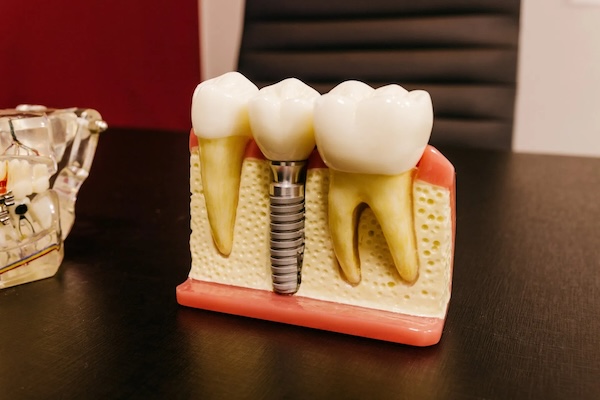
Unlike traditional bridges, which require shaving down neighboring healthy teeth to serve as anchors, dental implants replace the missing root itself. Made from biocompatible titanium or zirconia, the implant post integrates directly into the surrounding bone through a natural process called osseointegration.
Patients seeking precise restorative care locally often turn to specialized providers, such as those offering dental implants in newmarket on.
The Modern Implant Procedure Step by Step
Dental implant placement has evolved into a highly predictable, streamlined clinical process thanks to 3D imaging and computer-guided surgery.
Step 1: Comprehensive Diagnostics and Treatment Planning
Before any surgical procedure, clinicians utilize Cone Beam Computed Tomography (CBCT) to capture detailed three-dimensional images of the jawbone, nerve pathways, and sinus cavities. This allows the dental team to plan the exact placement angle and depth of the implant before the procedure begins.
Step 2: Implant Placement and Osseointegration
During the surgical phase, the practitioner places the titanium post into the jawbone under local anesthesia or sedation. Over the next three to six months, surrounding bone cells fuse with the micro-textured surface of the post, creating a stable, permanent foundation.
Step 3: Abutment Placement and Final Restoration
Once integration is complete, a small connector piece called an abutment is attached to the post. Finally, a custom-crafted ceramic crown, designed to match the shade and shape of adjacent teeth, is permanently secured to the abutment. There are other consulting clinics providing dental implants in Springfield VA, to assess whether their bone density supports long-term integration.
Evaluating the Long-Term ROI of Restorative Dentistry
While the upfront cost of dental implants is generally higher than traditional bridges or dentures, their longevity makes them a more cost-effective solution over a lifetime.
- Traditional bridges typically require replacement or repair every 7 to 10 years, incurring repeated dental expenses.
- Removable dentures require periodic relining or replacement as the underlying jawbone continues to shrink and change shape.
- Dental implants boasts a long-term success rate exceeding 95% and can last a lifetime with standard oral hygiene and regular checkups.
Daily Care and Long-Term Maintenance
Caring for dental implants is remarkably similar to maintaining natural teeth. Consistent oral hygiene prevents peri-implantitis, an inflammatory condition around the implant that can jeopardize its stability if plaque accumulates.
- Brush twice daily using a low-abrasive toothpaste and a soft-bristled toothbrush to protect the ceramic restoration.
- Clean daily around the implant base using water flossers, interdental brushes, or specialized unwaxed floss.
- Keep up with routine bi-annual professional cleanings so dental hygienists can monitor tissue health around the implant site.
Reclaiming Your Oral Health and Quality of Life
Tooth replacement is no longer just about fixing a gap in your smile; it is about restoring full bite function, protecting jawbone structure, and preserving long-term oral health. Advanced dental implant technology offers a permanent, durable solution that eliminates the hassles of removable appliances.
If you are dealing with missing teeth or uncomfortable dentures, consult with a qualified dental practitioner to explore whether implant-based restorations are the right choice for your smile.