
Moving has always been one of life’s biggest transitions. Whether it’s driven by a new career opportunity, family needs, retirement or a fresh start, relocating involves far more than packing boxes and loading a truck. It requires careful planning, financial preparation and realistic expectations about the journey ahead.
For many American families, a move represents more than a change of address. It’s a chance to build a new routine, become part of a different community and create opportunities that weren’t available before. However, without proper preparation, even an exciting move can quickly become stressful.
At Yonkers Times, we regularly hear from readers who are preparing for major life changes. While every relocation is different, there are several practical steps that consistently make the process smoother, regardless of where you’re headed.
Start Planning Earlier Than You Think
One of the most common mistakes people make is underestimating how much time a relocation requires. Waiting until the last few weeks often leads to rushed decisions, higher costs and unnecessary stress.
Creating a timeline at least two months before your moving date allows you to:
- Organize important documents
- Compare transportation options
- Notify schools, employers and service providers
- Schedule utility transfers
- Sort through belongings before packing
Breaking the project into smaller weekly tasks makes the entire process far more manageable than trying to accomplish everything during the final days.
Declutter Before Packing
Moving every item you own isn’t always the smartest financial decision. Transporting things you no longer use simply increases packing time, transportation costs and unpacking effort.
Before filling the first box, go room by room and ask yourself:
- Have I used this during the past year?
- Would I buy this again today?
- Is it worth paying to move?
Items that no longer serve a purpose can often be donated, recycled or sold locally. Besides reducing moving expenses, decluttering gives you the opportunity to begin your next chapter with a cleaner, more organized home.
Budget Beyond Transportation
Many people only calculate the obvious expenses associated with relocating. In reality, several hidden costs often appear along the way.
Your budget may also need to include:
- Security deposits
- Temporary accommodations
- Storage fees
- Vehicle transportation
- Utility connection charges
- Cleaning services
- Packing materials
- Food and travel during transit
Having a financial cushion helps reduce stress when unexpected expenses arise.
Protect Your Important Documents
Certain items should never be packed into boxes that travel separately from you.
Keep documents such as birth certificates, passports, medical records, insurance information, financial paperwork and identification in a secure folder that remains with you throughout the move.
Digital backups stored securely in cloud storage can also provide peace of mind if paperwork becomes misplaced.
Label Everything Clearly
Professional organizers often recommend labeling every box on multiple sides instead of only the top.
Include both the destination room and a brief description of the contents.
For example:
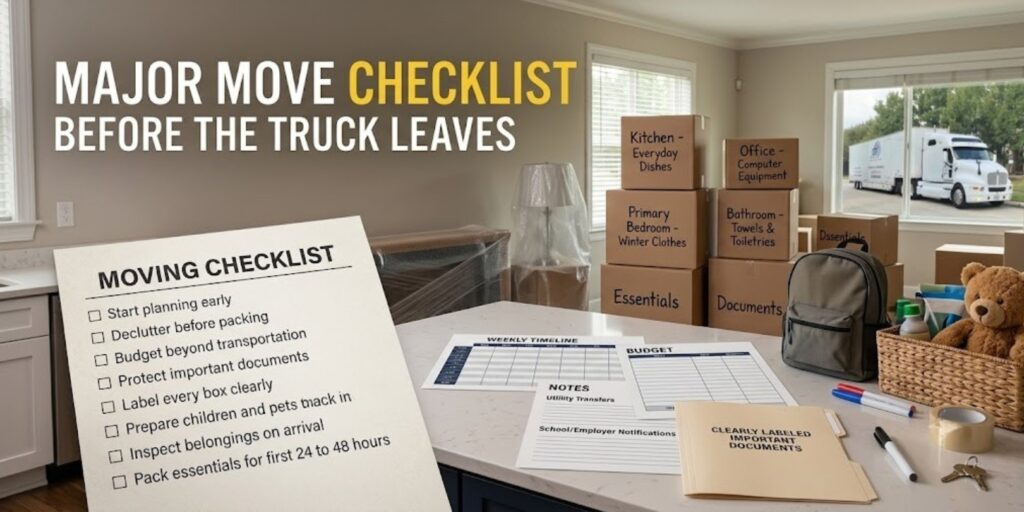
- Kitchen – Everyday Dishes
- Primary Bedroom – Winter Clothes
- Office – Computer Equipment
- Bathroom – Towels & Toiletries
This simple habit saves countless hours when unpacking and makes it easier for anyone helping with the move.
Think About More Than the House
Relocating successfully isn’t only about getting belongings from one location to another.
Take time to research your future community by learning about:
- Local healthcare providers
- Public transportation
- Grocery stores
- Schools
- Community organizations
- Recreation opportunities
- Emergency services
Feeling connected to your new neighborhood often makes the adjustment easier for every member of the household.
Ask the Right Questions Before Hiring Help
Hiring a moving company is one of the biggest decisions you’ll make during a relocation, and it’s worth doing a little homework before accepting the first quote you receive. Understanding how estimates are calculated, which services are typically included and what warning signs to watch for can help you avoid unexpected costs and unnecessary headaches later. If you’re not sure what to compare or which questions matter most, this guide to long distance movers is a worthwhile place to start because it walks through the moving process, explains what reputable companies should offer and highlights details that many first-time customers overlook. Spending a few minutes with that information before requesting estimates can make the difference between choosing a company with confidence and discovering important details only after you’ve signed a contract.
Pack an Essentials Bag
The first day in a new home is rarely fully organized.
Instead of searching through dozens of boxes, prepare one bag containing necessities for the first 24 to 48 hours.
Include items like:
- Prescription medications
- Chargers
- Basic toiletries
- Several changes of clothes
- Snacks
- Important phone numbers
- Children’s comfort items
- Pet supplies
Having these essentials immediately available makes the transition considerably less stressful.
Prepare Children and Pets
Moving can be especially challenging for younger family members and animals because their routines suddenly change.
Talk openly with children about the move, answer their questions honestly and involve them in age-appropriate packing tasks.
For pets, maintain familiar feeding schedules, keep favorite toys nearby and ensure identification tags contain updated contact information before traveling.
Small efforts before the move can help everyone adjust more comfortably afterward.
Inspect Everything Upon Arrival
Once your belongings reach the new home, resist the temptation to unpack immediately.
Instead:
- Check furniture for damage
- Verify that all boxes arrived
- Compare deliveries with your inventory
- Photograph anything that appears damaged
- Report concerns promptly if necessary
Taking time for a careful inspection helps resolve potential issues while details are still fresh.
Give Yourself Time to Settle In
Even after everything is unpacked, adjusting to a new environment takes time.
Explore local businesses, introduce yourself to neighbors, attend community events and establish new routines gradually. Building familiarity doesn’t happen overnight, but each small step makes the new location begin to feel like home.
Every move comes with challenges, yet thoughtful planning can transform a stressful experience into an organized transition. By preparing early, staying realistic about costs, protecting important belongings and making informed decisions throughout the process, families can focus less on the logistics and more on the opportunities that await in their new community.