German theater director Erwin Piscator
By Mary Hoar, City of Yonkers Municipal Historian, President Emeritus Yonkers Historical Society, recipient of the Key to the City of Yonkers, 2004 Key to History, Yonkers Landmarks Preservation Board Member, Founder of Revolutionary Yonkers 250 and President Untermyer Performing Arts Council
Monday, January 19th
January 19, 1931: Three World War Veterans began “tours of duty” after Public Safety Commissioner Frank Devlin administered their Oaths of Office; they were assigned to special police work at school crossings in Northeast Yonkers. School janitors had replaced regular police officers after policemen were given other assignments. The men were specially chosen by Secretary of the Joint Veterans’ Relief Committee Harold Thibault for this special police assignment; each would be paid $5 a day from the Mayor’s Unemployment Relief Fund, not the Police Bureau budget. Although the men, John Coyne, Frank Kavanaugh and James Manning, would not be armed, they were authorized to issued tickets for traffic violations and wear police uniforms.
January 19, 1943: On orders from the Federal Mileage Administrator for Yonkers, City Manager William Walsh announced once-a-week garbage collections throughout out the city, reducing services by fifty percent.
Tuesday, January 20th
January 20, 1931: Federal authorities, still chasing the origination of the beer pipeline discovered running through the sewers of Yonkers a few months earlier, pursued a different route, uncovering the manufacturer of the rubber hose to identify who purchased the six-inch hose. The hose carried non-prohibition beer to thirsty New Yorkers from an unknown Yonkers brewery.
January 20, 1945: Twenty-four-year-old Captain Bernard Diekman, husband of Yonkers resident Leilah Diekman and pilot of a B-25 Mitchell bomber operating out of Corsica, was awarded a Bronze cluster to his Distinguished Flying Cross. He received it for “extraordinary achievement in an attack upon enemy supply and troop concentration near Santa Lucia, Italy.” Captain Diekman led a formation of twelve bombers over the target, “inflicting severe damage.”
Wednesday, January 21st:
January 21, 1942: Yonkers native Major Thomas Trapnell was awarded the Distinguished Service Cross for singlehandedly fending off a Japanize advance with a daring feat of courage in Luzon December 22, 1941. He remained between enemy troops and his men, set fire to a truck on a bridge and waited until the bridge was fully engulfed in flames before leaving. “With complete disregard for his safety, Major Trapnell delayed the hostile advance and set an inspiring example to his entire regiment.”
Trapnell was “All American” star end of the West Point football team of 1926 and chose the Calvary branch of the service after graduation. He retired as a Lieutenant General.
January 21, 1953: Samuel Schreiber, Yonkers Railroad Company’s modernization expert, reported the company was washing, sanitizing and cleaning all bus interiors, using a special chemical to destroy germs and bacteria. The treatments lasted four weeks and would be repeated on a regular schedule. The chemical had a “pleasant pine aroma;” this agreeable non-toxic odor would signal riders their bus had been treated!
Thursday, January 22nd
January 22, 1929: Missing paychecks for fourteen Yonkers men, including Supervisors and other officials, were found in the White Plains Post Office! The checks, missing for a week, were found in a batch of envelopes deemed unusable.
January 22, 1933: Harry Garing of New York City, Grand Dragon of the New York Ku Klux Klan, asked Mayor Joseph Loehr for the Klan to use both Larkin Plaza and the corner of South Broadway and McLean Avenue for public meetings to discuss “Americanism and Its defense.” Mayor Loehr made no immediate comment.
January 22, 1937: More than 100 drivers got their license plates at the first Yonkers office of the County Automobile Bureau, located at Tibbetts Brook Park.
Friday, January 23rd
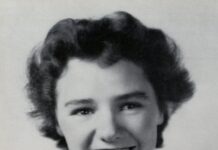
January 23, 1942: Keeping up the tradition of the house, German Theatrical Director Erwin Piscator and his wife, dancer Maria Ley, purchased the home of the late Joseph Urban at 83 Hudson Terrace.
Piscator, once director of the Peoples and State Theater in Berlin, was making a movie in Russia when Hitler took power. Nazis stole or burned all his possessions, including his Family Bible. After living in France for a few years, he went to New York in 1939.
He chose Yonkers for his new home; he loved the view of the Hudson and Palisades. A former communist, he returned to Germany in 1951 because of the McCarthy era political pressure.
Saturday, January 24th
January 24, 1947: The American Red Cross appointed several Yonkers people to reshape the Yonkers Chapter of the American Red Cross. Appointed were Mrs. William Crocker, wartime director of Civilian Protection Office; Mrs. John Dill, former head of Child Care Centers; City Judge Martin Fay; Arthur Giddings, Nepperhan Center; Henry Herz, Chamber of Commerce Treasurer; John Ormiston, President of the Young Men’s Chamber of Commerce; Mrs. Peter Tomashevsky, YWCA; and Oliver Trotter, Yonkers Tercentennial Chair. The Chapter had been without officers since the mass resignation of its officers and directors in December.
Sunday, January 25th
January 25, 1905: Massive “inconvenience” was caused by a severe snowstorm, labeled almost as severe as the 1888 snowstorm.
Yonkers residents working outside the city limits were unable to get home. Hotels, large and small, were filled by very early evening; guests continuously were turned away. Many spent the night sleeping in the waiting rooms of the Putnam and Central-Hudson Railroad stations. In some sections of Yonkers, coal was very scarce; the temperature registered below 20 degrees in apartments and homes. Police patrol wagons and sleighs were at the carpet factories when the whistle blew. Women were taken to their homes and children found on the streets were helped. Those who lived outside of Yonkers were advised to stay in homes of friends. Customers stayed away from stores, and most closed early.
Mail service between Yonkers and New York was delayed, but not by much.
Questions or comments on this column? Email YonkersHistory1646@gmail.com.
For information on the Yonkers Historical Society, Sherwood House and upcoming events, please visit our website www.yonkershistoricalsociety.org, call 914-961-8940 or email info@yonkershistoricalsociety.org.