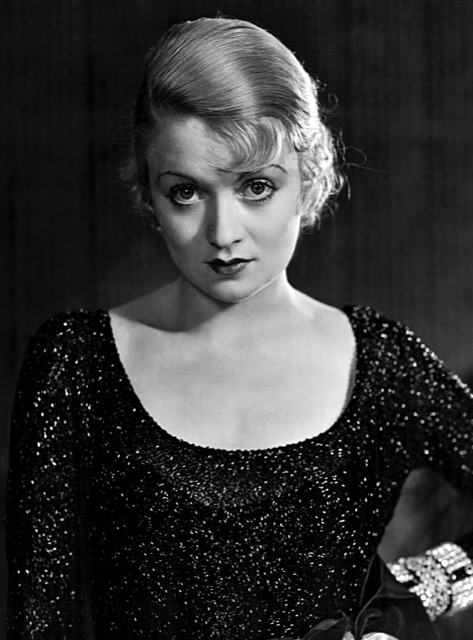
Constance Bennett
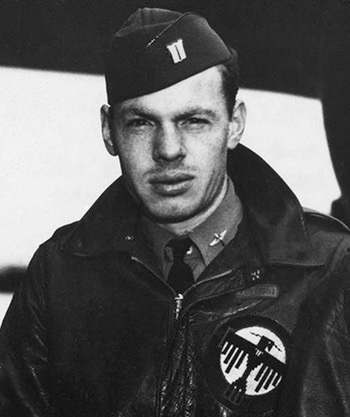
George Barr
By Mary Hoar, City of Yonkers Historian, President Emeritus Yonkers Historical Society, recipient of the 2004 Key to History, Yonkers Landmarks Preservation Board Member, Recipient Chair of Revolutionary Yonkers 250 and President Untermyer Performing Arts Council
Monday, September 29th
September 29, 1938: Uncomfortable horse-hair stuffed jury chairs were repaired to make them more comfortable! Previous jurors got the “fidgets” sitting in the seats, a situation City Judge Charles Boote brought to Mayor Loehr’s attention. He told the mayor how difficult it was to sit in the chairs. Yonkers made several improvements for the comfort of women jurors, who had the recent option of jury service after the state jury law was amended.
September 29, 1942: Constance Bennett, Hollywood screen star and former Park Hill resident, returned to Yonkers in the “Stars Over America” musical show presented in Larkin Plaza. Billed as a “Homecoming Day” for Miss Bennett, the program brought several well-known entertainers to Yonkers as part of a major bond rally. Every person buying a $100 bond received an autographed photo of Bennett; admission to the show was the purchase of a War Saving Stamp.
Unfortunately, she couldn’t visit her former home at 179 Park Hill Avenue. Owner MGM executive William Orr was out of town; he purchased the home four years earlier after viewing it once. Orr appreciated the “high stage and screen traditions” of the house, once home not only to Constance, but also her sisters Joan and Barbara and actor father Richard Bennett.
Tuesday, September 30th
September 30, 1942: Linden Street’s Carlo Manzo, former member of the Singer Midgets Troupe, was one of the dozens of men who went to New York City to see ship builder Henry Kaiser. Kaiser had a contract to build cargo planes and ships, was offering jobs in Portland, Oregon. Manzo quite definitely stated “I don’t want to build ships, I want to build planes!”
September 30, 1944: The Alexander Smith and Sons Carpet Company announced the mill’s newspaper “The News” would premiere the following week! The monthly eight-page tabloid would have no commercial advertising, editorials or “preaching from the management.” It would carry news about plant operations, employees, sports, and a “trading post;” employees could advertise a possession to exchange for something else. Copies of “The News” would be mailed to all 5000 employees at home.
Its masthead was a sketch of the Smith Carpet Mills buildings.
Wednesday, October 1st
October 1, 1966: Former Leake and Watts resident George Barr, who moved there after his parents died, was featured in the new book, Four Came Home. Written by Colonel Carroll Glines, it revealed the story of the four survivors of the 1942 Doolittle raid on Tokyo. Lieutenant Barr spent three years in a Japanese prison camp, tortured, kicked, beaten, kept in a straitjacket and “treated” to the “water cure.” Barr attended Hawthorne and Yonkers High, where he starred on the basketball team.
When the book was released, Barr headed the Program Management Division of Vulcan Air Defense Office, US Army Weapons Command at Rock Island, Illinois. He passed away less than a year after the book was released.
Thursday, October 2nd
October 2, 1927: The historic Nepperhan Creek began flowing down the new Plaza flume as workers blasted away the 30-year-old retaining wall at Warburton Avenue, diverting the stream underground, changing the course it held for 50 years.
October 2, 1941: City Hall employees were overjoyed by the news… the City Hall elevator was running again! Building Superintendent John Brady had closed it down because he felt it was “unsafe.” The elevator cage door was replaced, but defense priorities delayed replacement of the steel doors on each floor. Since it would take an estimated two months to get new ones, City Manager Whitney told DPW Commissioner Chris Sheridan operating the elevator would be fine.
Friday, October 3rd
October 3, 2008: The New York Civil Liberties Union filed a lawsuit challenging Yonkers’ refusal to disclose public records of the John Aceopolis murder investigation. John Bly initiated the suit; his sister Caralee Bly was Acropolis’ fiancée. Bly, writing a book about Acropolis, had asked to access the records five months earlier. Acropolis, a star athlete at Yonkers High and Colgate, was a union reformer who took on the local trash collection industry. During a 1949 garbage strike, Acropolis worked with the Yonkers Chamber of Commerce to start its own private company.
Five months later, Acting Judge James Hubert ruled Yonkers didn’t provide sufficient reason to deny Bly’s request. Yonkers claimed they considered the case still open.
Saturday, October 4th
October 4, 1924: Three hundred workers lost their jobs when Waring Hat Factory closed their “making” department, leaving only 200 employees, office staff and finishing department workers. Once one of the largest manufacturing companies in the Eastern US,
This was the first shutdown since the panic of 1893 forced the plant to close. The “Making Department” was the largest and most important in hat production; it handled blocking, stretching, stiffening and sizing of the hats.
Sunday, October 5th
October 5, 1943: Henry Samson, Director of the White Plains US Employment Service office, announced he wanted a list of 1,000 women to fill positions at the Eastern Aircraft Division of General Motors in Tarrytown. While speaking about the “manpower crisis,” Samson noted women taking Yonkers School of Aeronautical Manufacturing training courses would fill vacancies through December, but more people were needed in January.
October 5, 1954: An unsuccessful thief escaped the scene of the crime in a hail of bullets! After attempting to disable Frey Cleaners burglar alarm, the robber waited. A passerby notified YPD Officers Francis Duff and Anthony Barton its alarm was ringing; they rushed over to see someone disappearing in the brush behind
the building. The patrolmen let off a hail of bullets, but the thief disappeared into the dead end of Summit Street.
Questions or comments on this column? Email YonkersHistory1646@gmail.com.
For information on the Yonkers Historical Society, Sherwood House and upcoming events, please visit website www.yonkershistoricalsociety.org, call 914-961-8940 or email info@yonkershistoricalsociety.org.