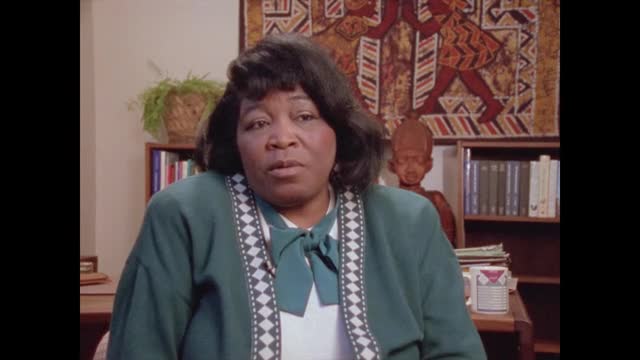
Dr. Betty Shabazz
By: Dennis Richmond, Jr.
Long before a fire turned a Westchester hallway into a national headline, Dr. Betty Shabazz was known for a different kind of heat: the steady, disciplined energy of an educator who refused to let tragedy define her family’s future.
Dr. Shabazz—the widow of Malcolm X and a longtime professor and administrator—built a public life rooted in scholarship and service. According to Encyclopaedia Britannica, she became widely known not only as Malcolm X’s spouse, but as an American educator and civil rights activist whose work extended well beyond the shadow of his assassination. Based on historical profiles, she pursued advanced education after becoming a widow, earning a doctorate in education from the University of Massachusetts Amherst in 1975 and later serving at Medgar Evers College in Brooklyn in teaching and leadership roles.
That public legacy collided with a private crisis in the early hours of June 1, 1997, when an intense blaze erupted at Shabazz’s co-op apartment in Yonkers. According to The Los Angeles Times, doctors said she suffered third-degree burns over more than 80 percent of her body and was taken to the burn unit at Jacobi Medical Center in the Bronx in extremely critical condition. Investigators quickly deemed the fire suspicious, and a young relative was taken into custody, the paper reported.
Within days, the case drew national attention not only because of Dr. Shabazz’s stature, but because of the devastating family dynamics behind the headlines. According to TIME, police said the fire was set by Shabazz’s grandson, who had been living with her for much of the prior two years. In July, the legal process moved swiftly. According to The Los Angeles Times, 12-year-old Malcolm Shabazz pleaded guilty in Yonkers Family Court to the juvenile equivalent of manslaughter and arson, acknowledging he started the fire in the hallway of his grandmother’s apartment building.
Dr. Shabazz fought for weeks. According to The Los Angeles Times, she underwent a series of operations as doctors attempted to replace damaged skin and stabilize her condition. On June 23, 1997, she died from her injuries, the newspaper reported.
The tragedy reverberated far beyond Yonkers. Dr. Shabazz had spent decades urging young people toward education, discipline, and self-respect—using her platform to insist that history should be studied, not merely survived. Her death underscored a painful truth: historical importance does not insulate a family from trauma, instability, or the fractures that can follow public catastrophe into private homes.
Yet her legacy remains rooted in her work—the classrooms she led, the institutions she strengthened, and the example she set as a Black woman who pursued advanced education while carrying an enormous historical burden. In Yonkers, the address became a symbol of heartbreak. For many who remembered her, Dr. Betty Shabazz was, above all, a builder—of scholarship, of community, and of a life dedicated to making history matter for the next generation.
Thank you, Dr. Shabazz and Brother Malcolm X, for everything that you have done for The Black Community.