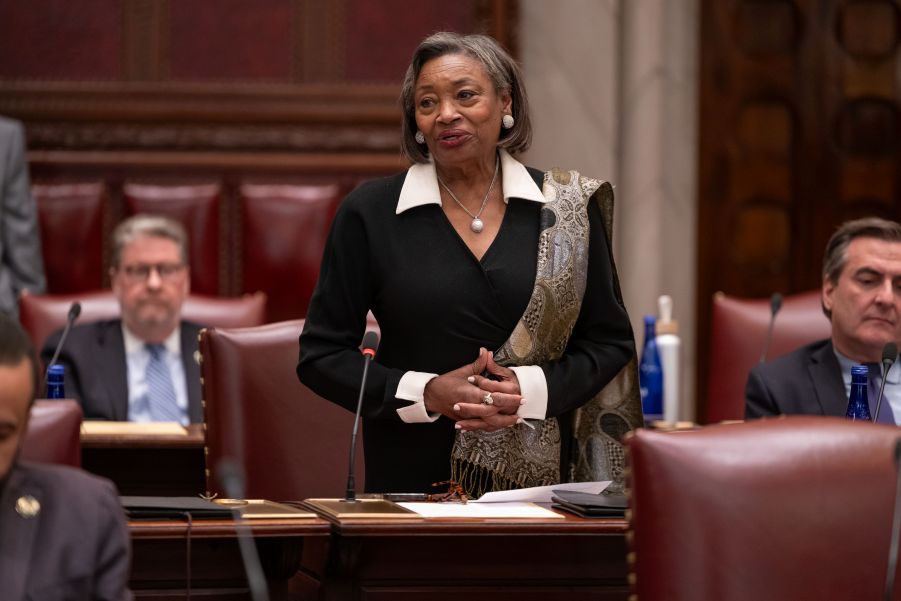
As families across Westchester and New York continue to feel the impact of rising utility bills, Senate Majority Leader Andrea Stewart-Cousins led the New York State Senate in advancing legislation to strengthen oversight of utility companies and protect ratepayers from unfair costs and practices.
“I have heard from too many Westchester residents and small businesses who are struggling to manage their sky-high utility bills month after month,” said Senate Majority Leader Andrea Stewart-Cousins. “This legislative package is about putting people first by strengthening oversight, increasing transparency, and giving the Public Service Commission real tools to rein in unjustified rate hikes. Keeping the lights on and the heat running should not come at the expense of a family’s financial stability.”
Senator Stewart-Cousins has long advocated for stronger consumer protections and utility affordability. This package builds on that work by ensuring that ratepayers have a stronger voice and that utility companies are held to clear standards of accountability.
The package includes measures that would prohibit utilities from charging customers for non-operational expenses such as lobbying and entertainment, require advance notice of proposed rate hikes through text, email, and monthly bills, and mandate that excess profits be returned to ratepayers. Additional legislation strengthens consumer protections by requiring the PSC to consider the economic and non-economic impacts of rate increases, including hardships caused by power outages.
Together, these reforms are designed to provide meaningful relief for residents, particularly seniors on fixed incomes and households enrolled in assistance programs, while ensuring utilities operate with greater transparency and fairness.
The legislation advanced under the leadership of Majority Leader Stewart-Cousins includes measures that would:
- Stop utilities from charging customers for lobbying and political activities by prohibiting ratepayer funds from being used for expenses like lobbying, public relations, advertising, travel, and entertainment.
- Require advance notice of proposed rate hikes by mandating that utilities notify customers of pending increases through text messages, emails, and notices on monthly utility bills.
- Ensure the Public Service Commission considers the real economic impact of rate increases on households when reviewing proposed utility rate changes.
- Strengthen independence and accountability at the Public Service Commission (PSC) by expanding the number of commissioners, clarifying the PSC’s mission to prioritize affordability and reliability, and preventing utility employees from serving as commissioners immediately after leaving the industry.
- Authorize the PSC to consider non-economic harm to customers when penalizing utilities, including hardship, stress, and suffering caused by unplanned power outages.
- Reform the utility ratemaking process to increase transparency and ensure that utility profits are reasonable and clearly justified.
- Give the PSC more time to review proposed rate increases by extending the suspension period for rate cases and limiting utilities’ ability to retroactively collect higher rates.
- Require utilities to return excess profits to customers when revenues exceed the rate of return approved by regulators.
- Mandate minimum standards for utility payment plans to better protect eligible residential customers already enrolled in assistance programs.
- Limit fixed monthly electric charges so customers are only billed for actual fixed costs related to service, not inflated or unrelated expenses.