
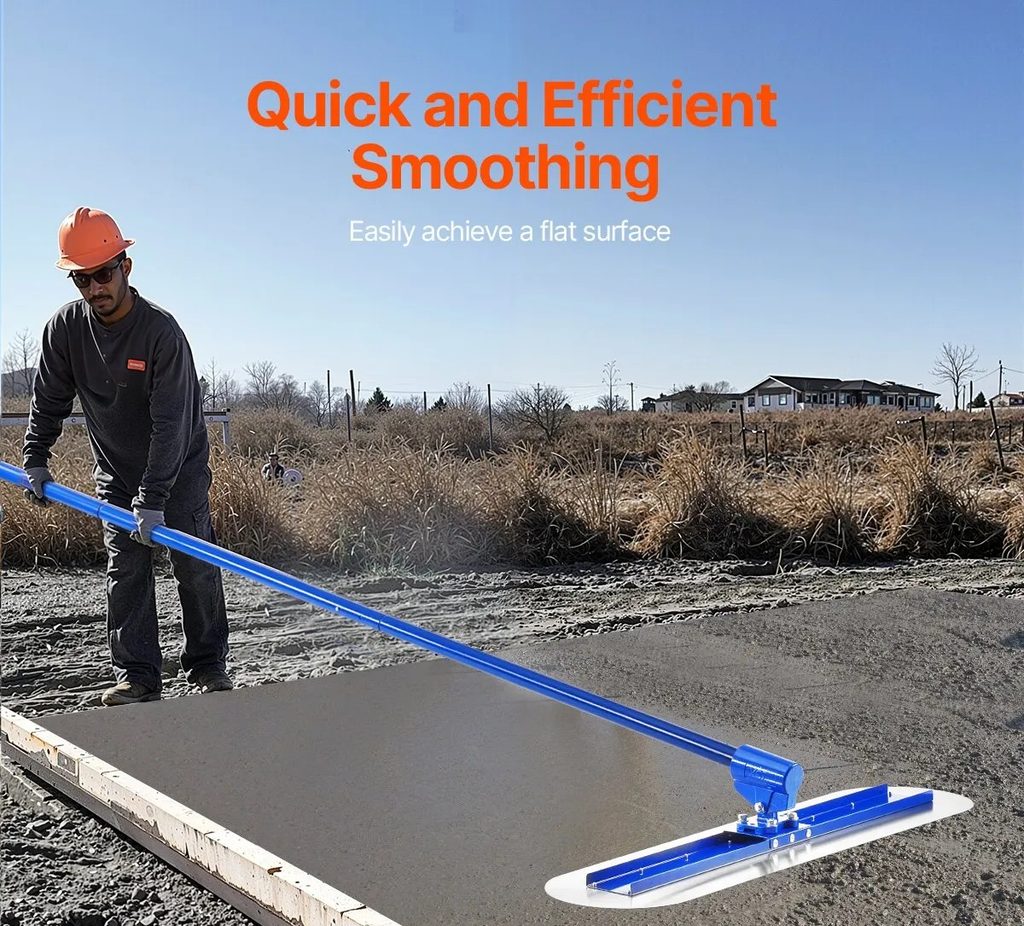
Concrete finishing requires more than removing excess material from a freshly poured slab. The tools used during this stage affect surface consistency, aggregate placement, and preparation for later finishing work. A suitable magnesium concrete float helps workers manage these tasks without applying unnecessary pressure.
Magnesium is popular because it combines low weight with useful strength. Its working surface moves smoothly across fresh concrete and helps bring cement paste toward the top. This makes it suitable for several types of slab work, including patios, walkways, driveways, and interior floors.
However, not every magnesium float has the same design. Blade length, width, thickness, and shape influence how the tool performs. Choosing the right combination helps workers maintain control and cover the required area efficiently.
A small hand float works well for detailed sections and edge corrections. Larger blades provide more coverage when working across open surfaces. Understanding these differences is the first step toward selecting suitable equipment.
What Are the Differences Between Magnesium and Aluminum Floats for Concrete?
Both materials are widely used in concrete finishing, but they have different physical properties. Magnesium is generally lighter, while aluminum offers greater rigidity and strength in comparable tool designs.
A magnesium concrete float is useful when workers need to make repeated passes without handling excessive weight. Its surface also helps reduce sticking when working with suitable fresh concrete mixes. These qualities make it a common choice for general slab finishing.
Aluminum floats can provide additional stiffness, especially in longer blade designs. However, their greater weight may increase handling effort during extended work. The choice depends on the operator’s preferences and the requirements of the project.
| Feature | Magnesium float | Aluminum float |
| Weight | Generally lighter | Generally heavier |
| Rigidity | Good for regular finishing | Often offers greater stiffness |
| Handling | Easier for repeated movements | May require more effort |
| Surface action | Smooth movement across fresh concrete | Similar general finishing action |
| Suitable work | Slabs, patios, and walkways | General finishing and wider applications |
Neither material is automatically suitable for every concrete mixture. Consider the blade construction and surface condition alongside the material. The right selection should support the finishing method rather than create additional work.
Selecting the Correct Blade Size for Your Working Area

Blade dimensions affect how much concrete you can cover with each movement. A larger blade reduces the number of passes but may become difficult to control in restricted spaces. Smaller blades provide more precision but require additional movements across wider surfaces.
Hand Float Dimensions
Hand floats are useful for small sections, corners, and areas around obstacles. Their compact dimensions allow workers to adjust pressure and movement with greater precision. They are also suitable for correcting minor marks left by larger tools.
A blade around 16 inches long is a common hand float size. However, shorter designs can be more practical for repairs and narrow sections. Choose a width that feels comfortable without restricting movement.
Bull Float Dimensions
Bull floats are designed to cover wider concrete surfaces. Their long blades connect to handles that allow workers to reach across fresh slabs. This reduces the need to step onto unfinished concrete.
Common blade lengths vary depending on the application. A 48-inch blade is a familiar option for general slab work. Longer designs may suit larger open areas, provided the operator can maintain proper control.
The blade width also affects how the tool moves across the surface. A wider design covers more concrete during each pass. However, it needs suitable handling and a stable connection to prevent uneven pressure.
How to Choose the Right Bull Float for Your Concrete Project
Start by assessing the slab dimensions and the distance you need to reach. A smaller bull float can be easier to control on residential projects. Larger surfaces may benefit from a wider blade and compatible extension handles.
A bull float concrete tool should also match the concrete mix and finishing stage. Magnesium blades are commonly used for initial floating after screeding. Their shape and material help remove small ridges and fill shallow surface gaps.
Consider these factors before making a selection:
- Slab dimensions: Match blade length to the area you need to cover.
- Blade width: Consider the balance between surface coverage and handling.
- End design: Rounded ends can help reduce marks during changes in direction.
- Handle compatibility: Check the connection type before purchasing separate components.
- Bracket design: An adjustable bracket helps control the blade angle.
- Construction: Reinforced blades can help maintain their shape during regular use.
The handle assembly deserves attention because it affects reach and control. Extension sections should connect securely without excessive movement. A properly balanced bull float concrete tool also makes it easier to maintain consistent blade contact.
Fixed and Adjustable Designs: Which One Should You Consider?
The connection between the blade and handle affects how easily you can control a float. Fixed brackets provide a straightforward connection, while adjustable designs allow operators to change the blade angle.
Fixed Handle Brackets
Fixed brackets provide a stable connection between the blade and handle. They can work well when the operator uses consistent movements and does not need frequent angle adjustments. Their simple construction also makes inspection easier.
However, changing the blade position may require adjusting the entire handle. This can limit flexibility when working across different sections of a slab.
Adjustable Handle Brackets
Adjustable brackets allow workers to change the blade pitch through handle movements. This helps keep the blade positioned correctly during forward and backward passes. It also provides more control when reaching distant sections.
Check the bracket connection before starting work. Loose fittings can cause unwanted movement and make the blade harder to control. Select a design that matches the handle connection and blade requirements.
What Makes Vibrating Bull Floats Different?
Traditional bull floats rely on manual movement to smooth the concrete surface. Vibrating designs add a mechanical vibration system to the floating process. This changes how the tool interacts with fresh concrete.
A vibrating bull float transfers controlled vibration through its blade. This can help move the tool across the surface, reduce small voids, and improve the distribution of concrete material. The actual results depend on the equipment, concrete mixture, and operating technique.
What Are the Main Benefits of Using Vibrating Bull Floats in Concrete Finishing?
Vibrating bull floats offer several practical benefits when used in suitable applications.
- More consistent movement: Mechanical vibration can help the blade travel smoothly across workable concrete.
- Surface correction: Vibration assists in reducing ridges and filling minor surface gaps.
- Aggregate positioning: Controlled vibration can help embed coarse aggregate near the surface.
- Reduced manual effort: The powered mechanism can reduce some of the effort needed during floating.
- Larger project support: Certain designs are useful for commercial floors and extensive slab applications.
These tools still require proper operation. Excessive vibration can cause aggregate separation or bring too much mortar toward the surface. They should not replace appropriate concrete consolidation equipment where deeper vibration is required.
Preparing Concrete Before Using a Magnesium Float
Good results start before the float touches the slab. The concrete should be distributed evenly and brought to the required level. Proper preparation also reduces the amount of correction needed during finishing.
Complete Screeding First
Use a suitable screed to remove excess concrete and establish the initial surface level. Work across the forms with controlled movements. Check for raised sections and shallow areas before moving forward.
Check the Surface Condition
Initial bull floating should follow screeding and take place before bleed water appears. The concrete should remain workable enough for the blade to correct minor irregularities. Avoid floating over visible surface water.
Maintain Consistent Blade Contact
Keep the blade positioned correctly during each pass. Avoid forcing one edge into the concrete because this can create grooves. Use steady movements and make controlled adjustments when changing direction.
The purpose of a magnesium concrete float is to prepare the surface for subsequent finishing. It should not replace proper screeding or be used to correct major level differences. Complete each stage with the appropriate equipment.
Common Design and Selection Mistakes to Avoid
Choosing a float based only on blade size can lead to handling problems. The material, connection, and intended application also matter. Consider the complete tool rather than focusing on one feature.
A blade that is too large may become difficult to control around edges and obstacles. A smaller blade may require unnecessary passes across a wide slab. Match the dimensions to the actual working conditions.
Another mistake is ignoring handle compatibility. Some brackets require specific handle connections or adapters. Check these details before combining separate components.
Also, avoid selecting a vibrating design simply because it has a powered mechanism. The project must benefit from the additional vibration. Manual floating remains suitable for many residential and smaller concrete applications.
Maintaining Your Float for Regular Concrete Work
Cleaning and inspection help keep finishing equipment in usable condition. Hardened concrete on the blade can interfere with smooth movement during future projects. Remove residue after each use and avoid damaging the working surface.
Check the blade for bends, dents, and worn edges. Inspect the bracket and handle connections for looseness. Replace damaged components before starting another concrete job.
Store the equipment in a dry location. Avoid placing heavy materials on the blade because this can affect its shape. Proper storage also helps protect the handle and adjustable fittings.
Frequently Asked Questions
Is magnesium better than aluminum for concrete floating?
Magnesium is generally lighter and easier to handle during repeated passes. Aluminum offers greater rigidity in many designs. Both can work well for concrete finishing.
What size magnesium float is suitable for general concrete work?
A 16-inch hand float is a common choice for smaller finishing tasks. Larger slabs may require a bull float with a longer blade.
Can a magnesium float be used on a concrete driveway?
Yes. Magnesium floats are commonly used for initial driveway finishing. A suitable bull float can help smooth larger sections after screeding.
Do vibrating bull floats reduce manual effort?
Yes. Their powered vibration can reduce some physical effort during surface finishing. Operators still need to control the handle and blade movement.
Can a bull float replace a concrete screed?
No. A screed establishes the initial surface level, while a bull float removes minor ridges and fills shallow gaps. Both tools perform different tasks.
Final Words
Selecting the right concrete finishing equipment starts with understanding the project. Blade dimensions, material, handle connections, and surface requirements all influence tool selection.
A magnesium concrete float offers a practical option for many finishing applications. Its lightweight construction supports repeated movements across fresh concrete. For wider slabs, a bull float concrete tool provides additional reach and surface coverage.
Consider the required finish before choosing between manual and vibrating designs. Check the blade and bracket compatibility as well. The right equipment makes concrete finishing easier to control and helps prepare the surface for the next stage.