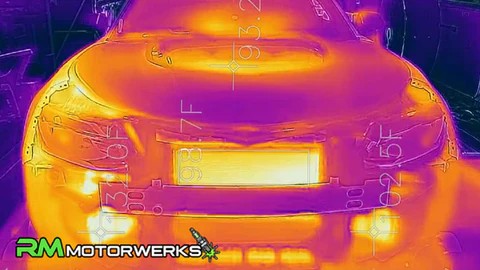
Most drivers assume their vehicle performs as the manufacturer intended. In practice, that is rarely the case. Factory calibrations are built to satisfy broad emissions requirements and warranty conditions across varied markets, not to extract the best possible output from a specific engine.
Altitude, fuel quality, and accumulated wear all pull performance away from the original baseline. A dynamometer test replaces that guesswork with hard numbers, showing exactly what an engine delivers versus what it is capable of producing.
What a Dynamometer Actually Measures
A dynamometer measures torque and horsepower at the wheels, not at the engine itself. That distinction matters. By the time power travels through the drivetrain, a meaningful portion is already lost to friction and mechanical resistance. Dyno figures reflect what actually reaches the road.
Drivers who want verified numbers rather than estimates often turn to professional measurement services. Facilities offering dyno tuning services in Knoxville use controlled dyno pulls to capture live sensor data across the full engine range, giving technicians an accurate baseline before any calibration work begins. That baseline is what separates informed tuning from guesswork.
Two Core Metrics That Matter
Torque measures pulling strength across the power band. Horsepower reflects top-end capability. A dyno chart plots both across the full revolution range, exposing dips, flat spots, and missed peaks that would never show up on a dashboard.
Why Factory Calibration Falls Short
Automakers tune engines to clear emissions thresholds across dozens of markets simultaneously. To do that reliably, they set air-fuel ratios, ignition timing, and boost pressure on the conservative side. That approach protects warranties and reduces liability, but it also means real performance stays locked inside the engine.
The Air-Fuel Ratio Problem
An engine running rich burns excess fuel without converting it into usable power. One running lean risks thermal damage over time. Factory maps rarely account for a specific region’s fuel grade or climate, and the gap between a generic calibration and an optimized one often shows up directly on the dyno chart.
The Role of Professional Dyno Tuning
Dyno tuning is not just measurement; it is a calibration process built around what the data reveals. A technician loads the vehicle, runs it through several pulls under controlled conditions, and reads live data from sensors across the engine. Fuel delivery, ignition timing, and boost pressure are adjusted incrementally, with each change verified by another pull. Street tuning cannot replicate that level of control, since traffic, temperature swings, and safety limits all interfere with the process.
What the Data Tends to Reveal
Stock vehicles regularly show gaps between their actual and potential output. Mid-range torque loss is one of the most common findings, alongside inconsistent fuel delivery at higher revolutions and ignition timing that pulls back too aggressively under load. None of these issues trigger warning lights. Most drivers never know they exist.
Modifications That Skew Factory Maps
Aftermarket intakes, exhaust systems, and intercoolers alter airflow in ways the factory calibration was never designed to handle. A vehicle running those modifications on a stock tune is essentially operating with mismatched hardware and software. The modifications may add potential, but without a retune, much of that potential goes unrealized.
Real Gains Backed by Numbers
Dyno tuning produces something most performance work does not: before-and-after verification. Comparable pulls from both sessions show exactly how many horsepower and torque points were gained, and precisely where in the rev range those gains appeared. The data removes any ambiguity about whether the work made a difference.
Consistent Power Delivery Matters More Than Peak Numbers
A wide, flat torque curve tends to feel stronger in everyday driving than a narrow peak that climbs sharply and drops off just as fast. Dyno data makes that distinction visible, allowing a tuner to shape the power curve around how the vehicle is actually driven rather than how it performs in a single ideal condition.
Conclusion
A car running on factory calibration is almost never performing at its actual ceiling. Dyno testing replaces feel and assumption with measured, repeatable data, and professional tuning uses that data to produce real, documented improvements. Drivers who rely entirely on how a car feels are making decisions without the full picture. A dyno session changes that, leaving them with a verified baseline, a refined calibration, and a clear, evidence-based answer to what their engine is genuinely capable of.