
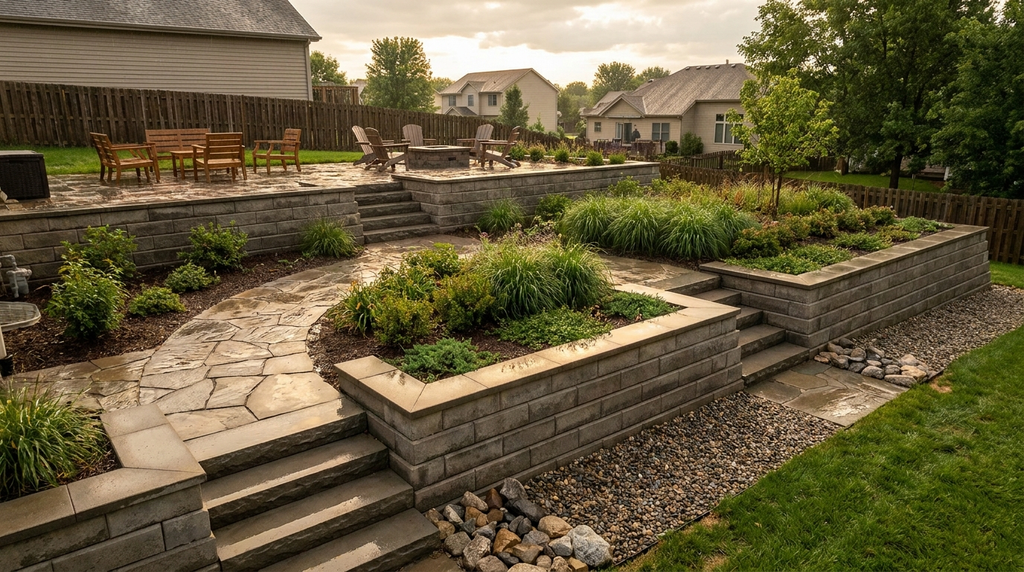
A sloped backyard can feel like wasted space. Water runs off before it soaks in, mowing turns into a chore, and the ground never seems flat enough for a table and chairs. The good news is that a slope is also a chance to build something far more interesting than a flat lawn. This guide walks through how to landscape a sloped backyard step by step, from reading the grade and planning zones to leveling the ground, choosing the right features, and keeping everything from washing downhill.
Why Is a Sloped Backyard Challenging to Landscape?
A slope changes how water, soil, and foot traffic behave in your yard. Gravity pulls rainwater downhill fast, which strips topsoil and leaves plants thirsty. The same incline makes it hard to place anything that needs a level base, from a patio to a swing set.
Holding that soil in place is where the right materials make the difference. Companies like Techo-Bloc make durable retaining walls that turn an unstable incline into level ground you can actually use. Choosing a system built to handle shifting soil and heavy water means the structure keeps working season after season, so the yard you design stays put.
What Problems Does a Slope Create in a Yard?
A steep grade creates 3 recurring problems: erosion, drainage, and access. Loose soil slides toward the bottom of the yard after heavy rain, so garden beds thin out over time. Water pools at the base instead of spreading evenly, which can leave the low end soggy and the high end dry. Walking the slope also gets risky when the grass is wet, especially for kids and older adults.
How Does Rainwater Move Across a Sloped Yard?
Rainwater follows the steepest path down a slope and gains speed as it goes. That fast-moving sheet of water carries soil, mulch, and seed with it, which is why bare patches keep showing up in the same spots. Slowing the water down is the key to protecting both the soil and anything you build. You do that by breaking the slope into shorter runs and giving the water somewhere to drain.
Planning a Sloped Backyard Before You Build
Good planning saves money and prevents rework on a slope, where mistakes are expensive to fix. Before moving any soil, map what you have and decide what you want the space to do.
What Should You Measure and Assess First?
Start by measuring the rise and the run of your slope, because that ratio determines which solutions are realistic. Note where water enters and exits the yard, where the sun falls during the day, and where the soil feels wet or dry. Mark any utilities, large roots, or rock before you dig. These details tell you whether you can handle the project yourself or whether a steep grade calls for a professional.
How Do You Split a Slope Into Functional Zones?
Divide the slope into flat zones stacked at different heights, almost like steps on a staircase. Put the features you use most, such as a dining area or play space, on the levels closest to the house. Reserve the steeper or farther sections for planting, which handles uneven ground better than furniture does. Zoning the yard this way turns an awkward incline into a series of usable outdoor rooms.
What Are the Best Ways to Level and Stabilize a Slope?
Leveling a slope means holding soil in place at a new height, and a few proven methods do exactly that. The right choice depends on how steep the grade is and how much flat space you want to gain.
How Do Retaining Walls Hold Back the Soil?
A retaining wall holds back the earth behind it so you can create a flat, usable area in front. The wall transfers the weight of the soil and water into its base and into the ground, which stops the slope from sliding. Walls built from interlocking concrete blocks resist freeze-thaw cycles well, so they hold their line through northern winters. For taller walls, proper drainage and a solid footing matter more than the blocks themselves, which is why many homeowners bring in a pro for anything over a few feet.
When Is Terracing Better Than a Single Wall?
Terracing uses several shorter walls to step the slope down in stages instead of holding it all with one tall wall. This approach works better on steep grades because each level carries less load and drains more easily. The flat terraces between the walls become planting beds, seating nooks, or garden paths. Terracing also looks more natural, since it mirrors the way hillsides are farmed around the world.
Which Plants Help Stabilize a Hillside?
Deep-rooted plants anchor soil and soak up runoff, which makes them a slope’s best friend. Ground covers, ornamental grasses, and native shrubs knit the surface together and shade out erosion-prone bare spots. Group plants with similar water needs so the dry top of the slope and the damp bottom each get the right mix. Over a season or two, those roots form a living net that keeps the hillside in place.
Features That Work Best on a Sloped Backyard
Once the slope is stable, the fun part begins: adding features that make the space worth spending time in. A few elements suit sloped yards especially well.
How Do You Add Steps and Pathways on a Slope?
Steps and pathways turn a climb into a comfortable walk and tie the different levels together. Wide, shallow steps feel safer and more inviting than narrow, steep ones. A winding path can ease the grade by crossing the slope at an angle rather than running straight up it. Good lighting along these routes keeps them usable after dark and highlights the design.
Can You Fit a Patio or Seating Area Into a Hillside?
A patio fits a hillside beautifully when it sits on a leveled terrace carved into the slope. Tucking the seating area against a retaining wall gives it a built-in backrest and a sense of shelter. Position the patio to capture the best view or the afternoon sun, since a slope often offers both. The result is a private outdoor room that a flat yard rarely delivers.
What Water Features Suit a Sloped Yard?
A slope gives water somewhere to go, which makes features like a cascading stream or a tiered fountain feel natural. Gravity does the work, so a gentle drop between terraces can become a quiet waterfall. Position any water feature where runoff already collects, and it can double as part of your drainage plan. The sound also masks street noise and draws birds to the yard.
How Do You Keep a Sloped Yard From Eroding?
Erosion control protects everything you build, so it belongs in the plan from the start rather than as an afterthought. The goal is simple: slow the water, spread it out, and give it a safe path off the property.
What Drainage Solutions Prevent Washouts?
Several drainage tools work together to stop washouts on a slope. A French drain buried along the grade collects water and carries it away from walls and patios. Swales, which are shallow planted channels, slow runoff and let it soak in. Gravel beds and permeable surfaces give water a place to drain instead of sheeting downhill. Combining these methods keeps soil, mulch, and hardscaping where you put them.
How Much Does It Cost to Landscape a Sloped Backyard?
Cost depends on the steepness of the grade, the materials you choose, and how much of the work you hire out. Earthmoving and retaining walls usually make up the largest share of a sloped-yard budget, since they require labor and engineering that flat yards skip. Premium materials cost more upfront, but durable options that resist cracking and weather lower the long-term bill because you aren’t repairing or replacing them every few years. A phased plan lets you spread the investment over several seasons while tackling the structural work first.
Key Takeaways for Landscaping a Sloped Backyard
A sloped backyard rewards planning more than almost any other landscape. Read the grade, divide it into level zones, and stabilize the soil with retaining walls, terracing, or deep-rooted plants before adding features. Build drainage into every stage so water works for you instead of against you. Handle the structure well, and a once-awkward hillside becomes the most distinctive outdoor space on the block.
Frequently Asked Questions About Landscaping a Sloped Backyard
How Do You Landscape a Steep Slope on a Budget?
Start with planting and simple terracing instead of large structural walls. Deep-rooted ground covers and a few low block terraces stabilize the soil for far less than a tall engineered wall. Tackle the project in phases, doing the drainage and structural work first and adding finishes later.
What Is the Cheapest Way to Cover a Backyard Slope?
Ground-cover plants are usually the cheapest way to cover and hold a slope. They spread to fill space, need little maintenance once established, and prevent erosion without the cost of hardscaping. Mulch and erosion-control blankets help new plantings take hold on bare ground.
Do You Need a Permit to Build a Retaining Wall?
Many areas require a permit for retaining walls above a certain height, often around 3 to 4 feet, and some require an engineer’s design. Rules vary by municipality, so check with your local building department before you start. Taller or tiered walls near property lines are the most likely to need approval.
How Steep Is Too Steep to Landscape Yourself?
A gentle slope is usually a safe do-it-yourself project, while a steep grade is better left to professionals. Once a slope requires tall retaining walls, major earthmoving, or engineered drainage, the risk of failure rises quickly. If you’re unsure whether the grade is stable, a landscape contractor or engineer can assess it before you commit.