
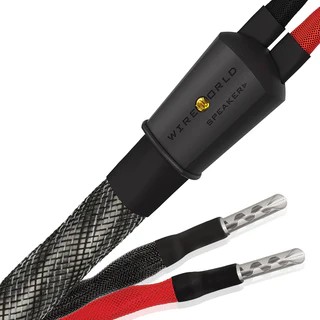
Speaker wire is one of those components that gets overlooked until something sounds off. The thickness of the wire has a direct bearing on how cleanly a signal moves from the amplifier to the speaker. Go too thin, and resistance builds along the run, degrading the signal before it reaches the driver. Getting the gauge right comes down to three variables: wire length, speaker impedance, and amplifier output. Nail those, and the rest of the decision follows naturally.
The American Wire Gauge system measures conductor thickness, and the numbering runs counterintuitively. Lower numbers mean thicker wire, and thicker wire resists signal loss better over distance. For anyone putting together or upgrading a home audio system, starting with quality speaker wire matters more than most people expect. A well-matched amplifier and speaker can still underperform if the cable between them is working against the signal. Gauge is where that problem either starts or gets avoided.
Why Gauge Matters in Audio Systems
Every wire carries some resistance. The question is how much accumulates before the signal reaches the speaker. At short distances, the difference between gauges is small enough that it rarely shows up in listening. Stretch that run out, and resistance compounds in ways that pull down volume and alter frequency response.
The standard benchmark is to keep total wire resistance under five percent of the speaker’s impedance. For an eight-ohm speaker, that works out to a ceiling of around 0.4 ohms. Thinner wire hits that limit faster, so longer runs call for heavier gauge to stay within range.
Common Gauge Options and Their Use Cases
16-Gauge Wire
Most home audio setups land here. For eight-ohm speakers, 16-gauge handles runs up to about 50 feet without any meaningful loss. Bookshelf speakers, floor-standers, and typical living room arrangements all sit comfortably within that range.
14-Gauge Wire
One step thicker, 14-gauge suits longer runs or speakers with 4-ohm impedance. Lower-impedance drivers pull more current, and heavier wire keeps resistance from eating into that draw. Anything approaching or passing the 50-foot mark should move up to this gauge at minimum.
12-Gauge Wire
This one is for demanding situations: high-output amplifiers, large listening spaces, or dedicated subwoofer lines. It costs more and is stiffer to work with, so it rarely makes sense for shorter, simpler runs where 14-gauge already does the job.
How Speaker Impedance Influences the Choice
Impedance measures how much a speaker resists electrical current. A lower rating means the speaker draws more power, and that makes wire resistance a proportionally larger factor in the signal chain. A four-ohm speaker is effectively twice as vulnerable to resistance losses as an eight-ohm model.
Running a low-impedance speaker on thin wire creates audible losses, especially when the volume climbs. Matching gauge to the speaker’s impedance rating carries just as much weight as matching it to the cable length.
Checking Manufacturer Recommendations
Most speaker and amplifier manuals include gauge guidance based on actual testing. Reading those before buying cable is worth the time. Manufacturers know how their equipment behaves under real load conditions, and their figures reflect measured performance rather than rough estimates.
Practical Tips for Choosing Wire
Measure generously. Cable routes often travel around walls, under floors, or behind furniture. Adding ten percent to the estimated run length provides a sufficient margin without excess.
Count both conductors. A 20-foot cable run means 40 feet of total conductor length once both the positive and negative sides are included. Resistance calculations need to account for the full circuit, not just one side.
Match gauge to the job. Heavier wire beyond what the system actually needs adds cost with no return. A short run to a single bookshelf speaker has no practical use for 12-gauge cable.
Verify connector fit. Thicker wire can be a tight or impossible fit for certain binding posts and banana plugs. Check compatibility at both the amplifier and speaker ends before purchasing.
Conclusion
Choosing the right speaker wire gauge is less about technical expertise and more about knowing which variables to check. Cable length, speaker impedance, and amplifier power each point toward a gauge range. When those line up correctly, resistance stays low and the system performs closer to what it was designed to deliver. A few minutes spent on those numbers before buying wire is one of the easier investments a listener can make in long-term audio quality.