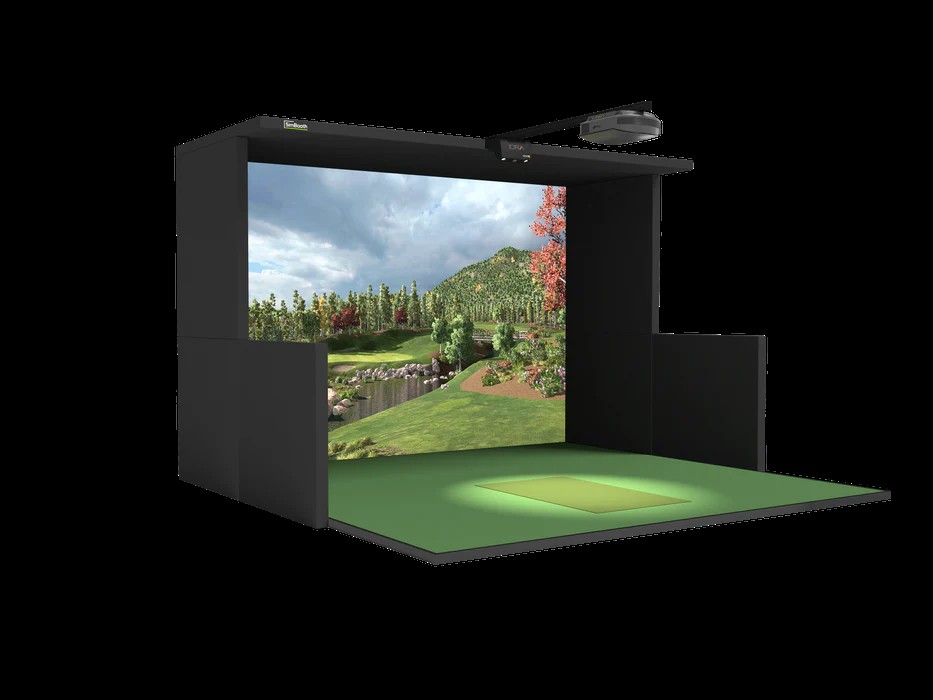
Buying a home golf simulator is one of the most exciting investments a golfer can make. It transforms a spare room, garage, or basement into a year-round practice facility and entertainment hub. But with so many options on the market, choosing the right setup requires careful consideration. This guide walks you through the key decisions involved in selecting the perfect home golf simulator package.
Start with Your Space
Before anything else, measure your available space. The room dimensions will determine which simulator components are compatible and which are out of the question. For a standard full-swing setup, aim for:
- Ceiling height: 9–10 feet minimum (10+ preferred for taller golfers)
- Width: 10–15 feet for comfortable swing clearance on both sides
- Depth: 15–20 feet from the hitting position to the impact screen
Smaller spaces can work with compact setups using shorter hitting distances and appropriately sized screens, but accuracy can be affected. Always measure before you shop.
Define Your Goals
Are you focused on serious practice and game improvement, or is entertainment the primary draw? Your answer will shape every other decision:
- Performance-focused: Prioritize a high-accuracy launch monitor, detailed analytics software, and a quality hitting mat that simulates fairway and rough conditions.
- Entertainment-focused: Invest in a high-quality projector and impact screen for an immersive visual experience, with a solid course library.
- Balanced: Most golfers want both — look for packages that deliver strong data alongside an engaging simulation experience.
Understanding Launch Monitor Options
The launch monitor is the heart of any simulator. It captures ball and club data the moment of impact and drives all the analytics and ball flight simulation. The main technologies are:
- Radar-based: Systems like Flightscope use 3D Doppler radar for highly precise ball tracking, even in challenging lighting conditions.
- Camera-based: Brands like Uneekor use overhead high-speed cameras to capture club face data, spin, and ball launch with excellent accuracy.
- Infrared/Optical: More affordable systems use infrared light barriers to estimate ball speed and launch angle — suitable for beginners and casual users.
Premium launch monitors deliver more data parameters and greater accuracy, which matters most for golfers serious about improvement.
Evaluating Home Golf Simulator Packages
Most retailers offer pre-bundled home golf simulator packages that combine the launch monitor, screen, enclosure, projector, and mat. Packages simplify purchasing and ensure component compatibility. When comparing packages, assess:
- What launch monitor is included and its accuracy rating
- Screen size and impact rating (how many shots it can withstand)
- Projector brightness (lumens) and throw distance compatibility
- Software subscription terms — some include lifetime licenses, others require annual fees
- Warranty coverage for each component
Software and Course Libraries
Simulator software determines the quality of your playing and practice experience. Leading platforms offer thousands of real-world courses, game modes, and practice ranges. Look for software that includes:
- A large and regularly updated course library
- Realistic ball physics and weather simulation
- Multiplayer and online competition features
- Practice modes targeting specific skills
- Mobile app integration for tracking progress
Setting a Realistic Budget
Home golf simulator packages span a wide price range:
- Entry-level ($2,000–$5,000): Basic optical launch monitors, smaller screens, and standard software. Great for beginners.
- Mid-range ($5,000–$15,000): Better accuracy, larger screens, quality projectors, and more comprehensive software.
- Premium ($15,000+): Professional-grade launch monitors, large commercial-quality screens, and advanced analytics platforms.
Remember to budget for installation, ongoing software subscriptions, and any room modifications needed.
Professional Guidance Makes a Difference
Working with a specialist retailer ensures you get components that match your space, goals, and budget. A knowledgeable consultant can identify compatibility issues before purchase, recommend the right calibration settings, and often provide installation support. This is especially valuable for first-time buyers navigating a complex market.
Conclusion
Choosing the right home golf simulator package comes down to knowing your space, clarifying your goals, and matching technology to budget. With careful research and the right guidance, you can build a setup that delivers years of practice and enjoyment. Take your time, compare packages thoroughly, and don’t hesitate to consult a specialist before committing.