
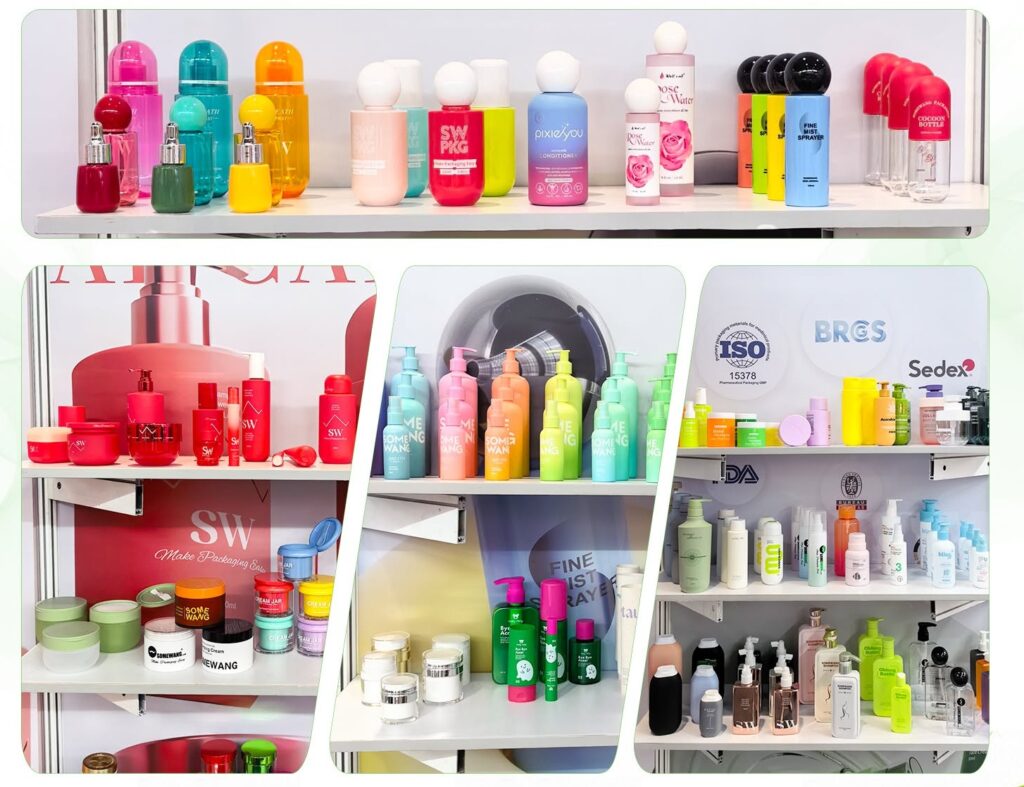
Cosmetic packaging has several jobs. It protects the formula, controls how much product is dispensed, supports safe use, and communicates the brand’s position. A beautiful container that leaks or reacts with the formula is a poor package. A highly protective package that frustrates the user is also a poor choice.
The right format depends on product texture, ingredients, usage, shelf life, filling process, and sales channel. Brands should evaluate these factors before choosing decoration or color.
Start With the Formula
Packaging decisions begin with what goes inside. A light toner behaves differently from a thick cream. A product with volatile fragrance needs different protection from a dry pressed powder.
Record:
- Viscosity
- Oil and water content
- Alcohol or solvent content
- Light and oxygen sensitivity
- Particle size
- Required dose
- Expected shelf life
- Filling temperature
The formula and package should be tested together. A material that works for one lotion may swell, crack, discolor, or lose weight with another.
Match the Format to the Product
Different formats support different use patterns.
Bottles
Bottles work well for toner, lotion, shampoo, cleanser, and other liquids. The neck finish must match the cap, pump, or sprayer. A rigid bottle gives shelf presence, while a squeezable bottle can improve product evacuation.
Jars
Jars suit creams, masks, balms, and body butters. They provide easy access to thick formulas, but repeated finger contact may increase contamination risk. Spatulas, inner lids, and smaller openings can help.
Tubes
Tubes are practical for cleansers, hand cream, sunscreen, and travel products. They are lightweight and easy to squeeze. Barrier layers may be needed for sensitive formulas.
Airless Systems
Airless cosmetic packaging limits the amount of outside air entering the container. It can suit serum, lotion, and active skincare products that are sensitive to oxidation.
Airless designs also allow dispensing without a dip tube, but they require correct filling and priming. Brands should test dose consistency and product evacuation.
Choose the Dispensing System
The closure affects both protection and user experience.
Common choices include:
- Screw caps
- Flip-top caps
- Lotion pumps
- Treatment pumps
- Fine-mist sprayers
- Droppers
- Roll-on systems
- Twist-up sticks
The correct output should match how the product is used. A treatment pump may dispense a small, controlled amount of serum. A larger lotion pump suits body products. A fine mist should produce an even spray without large droplets.
Test the system through the full product life. Pumps may behave differently when the container is nearly empty or stored at low temperature.
Protect Sensitive Ingredients
Light, oxygen, heat, and moisture can change a formula. Retinoids, vitamin C, botanical extracts, fragrances, and some colorants may need additional protection.
Possible solutions include:
- Opaque or tinted containers
- Airless pumps
- Foil or barrier layers
- Tight seals
- Smaller headspace
- Secondary cartons
- Tamper-evident features
Do not rely on appearance. A dark-looking coating may not provide the required light barrier. Protection should be verified through testing.
Consider Material Options
Plastic is widely used because it is light, versatile, and efficient to produce. Common cosmetic materials include PP, PE, PET, PETG, and acrylic components. Each has different clarity, stiffness, chemical resistance, and recycling characteristics.
Glass offers a premium feel and strong barrier performance, but it is heavier and can break. Aluminum is light, blocks light, and has strong recycling potential, although internal compatibility and finishing must be considered.
Brands exploring sustainable cosmetic packaging may compare refillable systems, PCR materials, mono-material designs, glass, aluminum, and biodegradable options.
No material is automatically sustainable in every situation. Weight, manufacturing, transport, product waste, reuse, and local recycling systems all affect the result.
Design for Product Evacuation
Consumers notice how much product remains trapped in a package. Poor evacuation causes frustration and waste.
Design factors include:
- Container shape
- Shoulder angle
- Dip-tube length
- Pump design
- Formula viscosity
- Surface friction
- Ability to store the package upside down
A package should dispense consistently from the first use to the last reasonable dose. Test it in normal storage positions and after transport.
Plan for E-Commerce
Products sold online face repeated handling, vibration, compression, and temperature changes. A package that looks stable on a shelf may leak during parcel delivery.
E-commerce testing should cover:
- Closure loosening
- Pump unlocking
- Cap cracking
- Bottle deformation
- Label rubbing
- Secondary packaging strength
- Internal movement
Locking pumps, seals, clips, and suitable inserts can reduce risk. However, extra material should be used only where it adds real protection.
Use Decoration With Purpose
Color, printing, coating, labeling, metallization, and texture help a product stand out. Decoration should support the brand without hiding essential information.
Check that:
- Ink and coatings adhere to the material
- Fine text remains readable
- Batch codes can be added
- Decoration survives handling
- Recycling claims remain accurate
- Colors are consistent across components
Create approved physical samples. Screen colors cannot fully represent gloss, transparency, metallic effects, or tactile finishes.
Include Safety and Compliance
Packaging may need ingredient labeling, warnings, volume statements, batch information, recycling marks, and responsible-party details. Requirements vary by market.
Tamper evidence may be useful for retail and e-commerce. Child-resistant packaging may be required for certain formulas, but it must be tested and certified for the intended use.
Brands should also confirm that raw materials and decorations meet restrictions in their target markets.
Evaluate the Supplier
A supplier should do more than quote a unit price. Ask about:
- Material documentation
- Compatibility support
- Mold ownership
- Minimum order quantity
- Color matching
- Decoration capabilities
- Quality inspection
- Lead time
- Replacement policy
- Scalability
Request samples and run filling-line trials before approving mass production. Measure critical dimensions rather than judging only by appearance.
Control the Total Cost
Packaging cost includes more than the container. Pumps, caps, liners, decoration, molds, cartons, freight, filling efficiency, damage, and product waste all matter.
A low-cost package that leaks can be much more expensive after returns and brand damage. A premium package may be justified if it supports a higher price, protects an active formula, or encourages refill purchases.
Compare options through total delivered cost and user value.
Conclusion
Good cosmetic packaging begins with the formula and user. Select a format that handles the product’s texture, protects sensitive ingredients, dispenses the right amount, and survives the sales channel.
Then consider materials, sustainability, decoration, compliance, and cost. Test the complete filled package before launch. When performance and design are developed together, packaging protects the product while making the brand easier to trust and use.