Photo from www.magnific.com
For a long time, identification systems have been an integral part of organizations in managing access, ensuring safety and security, and maintaining order. The evolution of how people identify is a journey that covers everything from the basic printed badge all the way to advanced biometric verification. DES is driven by rapidly increasing demand for efficiency, safety and seamless user experiences especially today when organizations rely on security systems rather than building them.
It is a sign of this bigger convergence happening across industries, where digital innovation is enhancing (not replacing) the traditional tool.
The Conventional Function of Physical Documentation
For decades, access control has relied on physical identification systems. This refers to ID cards, badges, wristbands and passes used in workplaces, schools (e.g., student registration plates), events and public institutions.
Their primary functions are straightforward:
- Providing immediate visual verification
- Differentiating roles (staff, visitors, or attendees)
- Controlling access to restricted areas
Physical identification has its main advantage which is simplicity. A badge or a card is recognized immediately without needing devices, connectivity blasters, or specific knowledge. This visual. clarity is especially useful in busy places like conferences or big gatherings, where streamlining communications does reduce confusion and promote effective coordination.
Rewrite: But unlike mathematical systems, real world physical systems have boundaries too. Their processes depend predominantly upon manual checks leaving them exposed to human error, delays or the inconsistency of different actor enforcement.
The Evolution of Digital Identity Systems
With the evolution of new technology, digital identification systems have become more common. Some of these are QR codes, mobile credentials, biometric authentication, RFID (Radio Frequency Identification), NFC (Near Field Communication) technologies.
An example of this use case is the RFID systems, which utilizes radio waves to uniquely identify and track tags and records their data without direct contact, allowing speed in identification through automation across verticals like logistics and access control. NFC (near field communication), an RFID variant which enables secure, short-distance communication between devices — often utilized in mobile payments and electronic access systems.
There are several factors that have driven the rise of these technologies:
- The requirement to process faster and automation
- Increased security requirements
- Increasing penetration of smart phones and connected devices
Digital systems offer clear advantages. These systems allow for real-time data monitoring, remote validation and integration with larger ecosystems like ticketing platforms or employee databases. For example, a digital credential for an attendee can be scanned on the spot to log entry times and minimise congestion.
Why Integration Is Becoming Essential
Though physical and digital ID systems each have their distinct advantages, a reliance on one is often never enough.
Most physical systems are inherently inefficient, which makes sense since the underlying system itself is relatively simple. Digital systems, on the other hand — despite their strength — are reliant on hardware, internet connection and a user who understands how to use technology. There are also technical problems like battery failure and bandwidth issues that can limit their reliability.
Hence, this is why hybrid systems are now being chosen as the cutting-edge solution. Through the combination of physical and digital identification, organizations can:
- Improve accuracy through automated verification
- Maintain reliability with visible credentials
- Improve the user experience with quick check-ins and shorter waiting times
In actual practice, this could involve a printed badge with scannable QR code or physical credentials containing embedded RFID chips. The net effect is a system that feels lightweight and easy to use, while still supporting sophisticated functionality.
Applications of such Hybrid Identification Systems in Real World Problem
Events and Conferences
Hybrid systems are often used to effectively cope with large numbers of persons in large scale events. Digital check-ins with QR codes or RFIDs will help alleviate long queues, and as necessary staff members can easily identify participants with visible badges which have PASThis level of access clearly denoted.
Workplaces and Corporate Environments
Various organizations are using employee identification cards embedded with digital access control systems. They enable secure building entry, attendance tracking and restricted zones — all while sounding like a physical credential you already know.
Education and Campuses
Student ID Cards as an Essential Part of the Education Ecosystem Schools and universities are taking advantage of digitized systems that monitor attendance, track student movements for campus security purposes or engage in other forms of tracking. The goal of this approach is to better manage massive population numbers and increase safety.
Public Services and Healthcare
Identification matters — a lot, especially in healthcare. These hybrid systems have the potential to link physical IDs with digital records, which in turn can reduce administrative errors and help ensure patients get the right care.
The Role of Emerging Technologies
Emerging technologies are also accelerating the digitization of physical ID systems, where individuals are identified through their digitally verified credentials.
- Such solutions are RFID and NFC that allow to make touch-free transactions quickly, boosting efficiency while ensuring hygiene.
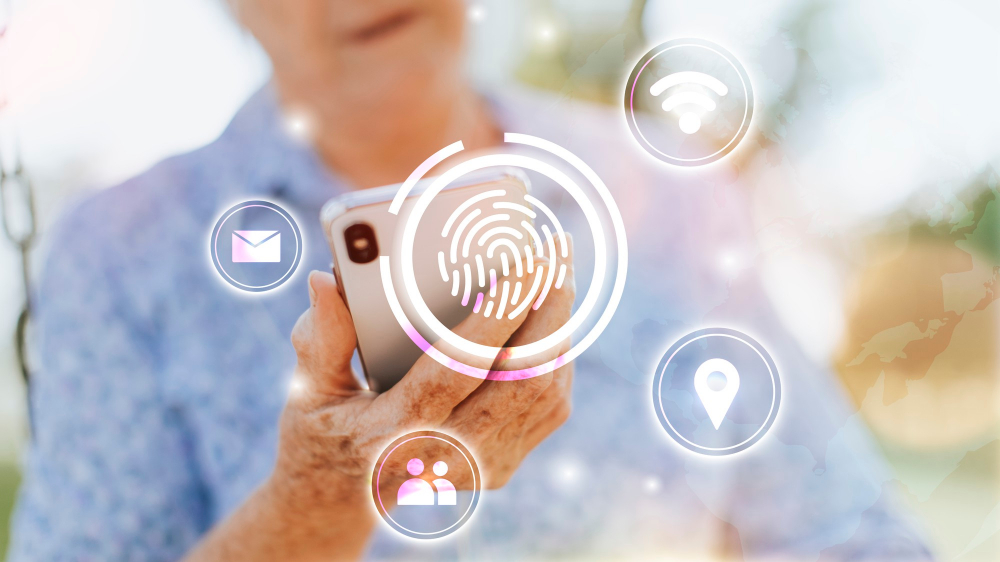
- Biometric systems nearly always use unique physical characteristics to add an extra layer of security when validating identity (fingerprint, facial…).
- Cloud-based platforms facilitate centralized management of the identification data, making it easier to update credentials as well as track real-time activity.
Often these technologies run together, as well. An identity system may combine a physical badge with an embedded rfid chip, and a cloud-based database for one comprehensive identification framework.
Challenges and Considerations
Hybrid Identification Systems are beneficial; however, they also come with challenges.
A Digital System handles important Personal, Biometric Information Privacy and Data Protection are concerns. Organizations need to be sure that data is secure and complies with regulation.
There can also be obstacles due to cost and implementation. Transitioning from legacy systems to integrated solutions often necessitates investment in infrastructure and training.
Also you have to consider accessibility and usability. Some users will be more comfortable with digital tools than others and therefore systems should always remain as intuitive and inclusive as possible.
Striking a balance between security and usability continues to be a challenge, particularly when environments require both speed and precision.
Future Trends in Identification Systems
In the rest of the world, hybrid identification methods will only become more common. Among this transition is in the direction of diploma-owning systems that leverage physical dependability with digital flexibility.
Future developments may include:
- Identity Verification Trends — More Contactless & Touch-Free
- Integration with smart buildings and connected environments
- Standardized identification frameworks across industries
With the advancement of technology, security will arguably remain an important aspect as well as usability both from data till October 2023.
Final Thoughts
The evolution of identification systems exemplifies a broader trend toward integration and adaptability. Digital systems offer speed, automation and insights gathered from data while physical credentials still offer simplicity and instant recognition.
They are capable of producing something more powerful together than either one could by itself.
This new hybrid works everywhere from the workplace to public events and is now becoming standard practice. For example, the solutions studied over the platform 4inlanyards were practical yet smart — these represent how physical identification tools could be built around modern-day digital systems and work seamlessly without being too dependent on technology.
In the end, identification can no longer be treated as an either-or between physical or digital; it must be both, driven by the increasingly complex demands of environments.