
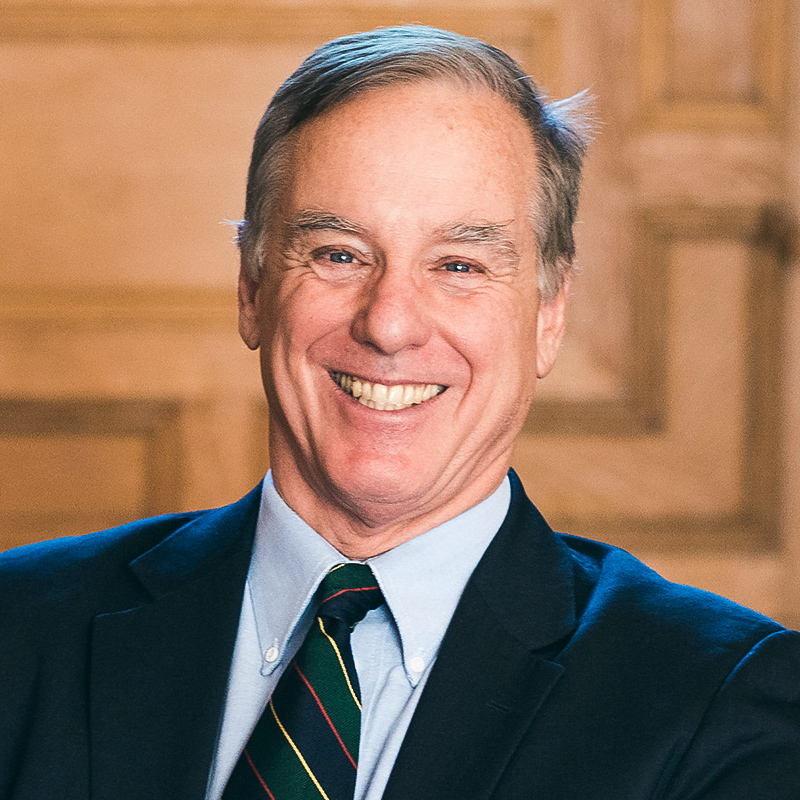
By Howard Dean
Hospitals are abusing a federal charity program to acquire prescription drugs at a discount — and then reselling those medications at outrageous markups.
These highly lucrative markups, which inflate patient cost-sharing, allow hospitals to record high net profits even as they provide low levels of charity care to poor patients.
Indeed, in Ohio, Cleveland Clinic received nearly $1 billion in benefits from the charity program between 2020 and 2023 — but a recent Senate investigation found the hospitals didn’t pass those savings down to patients. In 2023, 22 Cleveland Clinic executives raked in over $1 million each.
And a recent report from Minnesota found that hospitals generated at least $630 million in collective profits from the charity program in 2023. A subsequent state report more than doubled that estimate for 2024 — to roughly $1.34 billion — and noted that even this recent figure likely understates the true total. Minnesota’s largest hospitals — about 13% of participating providers — capture about 80% of 340B profits.
The charity program in question is known as 340B. Congress created it in 1992 to help safety-net hospitals provide more free and discounted care to low-income patients. To give those hospitals more financial breathing room, lawmakers mandated that drug companies must sell medicines to 340B-enrolled hospitals and clinics at steep discounts.
Lawmakers originally expected only about 90 hospitals to participate. But over the past three decades, more than 2,600 hospitals — including many located in affluent areas rather than low-income communities — have found ways to enroll in 340B and thus qualify themselves to purchase medicines at huge discounts and resell them to patients and insurers at outrageous markups.
In recent years, hospitals’ efforts to profit off of 340B have grown more aggressive. Rather than simply participating in the program, many have pushed state legislatures to enact laws that expand it. Hospital lobbyists across the country are backing legislation designed to help their clients generate greater profits from patients.
Thankfully, this push is backfiring — by prompting policymakers to take a closer look at how the program actually operates and whether it’s still serving its original purpose. As they learn more, lawmakers are starting to step in — not to expand 340B, but to restore real transparency and accountability to the program.
In Vermont, for example, Democrats in the state legislature recently worked with Republican Governor Phil Scott to cap 340B hospitals markups at 120% of a medication’s average sales price. That reform is projected to save Vermonters tens of millions of dollars annually. Other states, such as Indiana, Missouri, and New York, are considering measures that’d force 340B hospitals to be more transparent about a range of metrics, including how much they mark up medicines.
Federal lawmakers, meanwhile, have already conducted a variety of investigations and held numerous hearings to address the problem. That scrutiny is welcome. But the abuse won’t end unless Congress actually codifies reforms to limit markups, tighten enrollment standards, and restore the 340B program to its original purpose of helping safety-net hospitals provide more charity care to vulnerable patients.
Howard Dean is the former chair of the Democratic National Committee and former governor of Vermont.