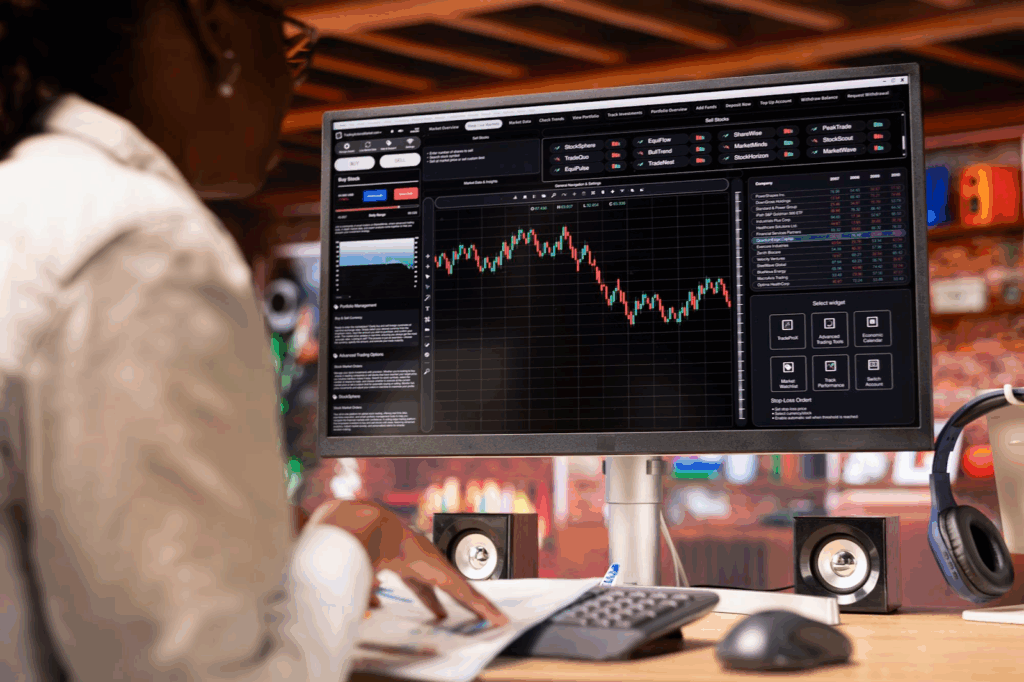
Photo from Freepik
We’ve all seen the stock ticker on the news or heard that stock prices are changing. But what exactly do these prices mean?
A stock exchange is the marketplace where securities, such as stocks and bonds, are bought and sold. Exchanges can be both physical locations or electronic platforms. Stock exchange rates reflect the value of a company’s stock at any given moment.
Whether you’re planning to invest or just curious about how the stock exchange rates work, this guide is for you. Here’s everything you need to know about stock exchange rates:
History of Stock Exchanges
First things first, how have stock exchanges changed over time?
The history of the stock market goes back to 13th-century Europe. The United States, however, didn’t get into the game until the late 1700s, when the New York Stock Exchange (NYSE) was established.
Up until the 1970s, stock exchanges once relied on “open outcry” — a system where traders shouted buy and sell orders on a physical trading floor, using verbal communication and hand gestures to transfer information. Electronic trading was introduced with the establishment of NASDAQ.
In the current day and age, anyone can open an investment account and trade stocks on various exchanges. For instance, you can buy or sell stocks with SoFi.
What are Stock Exchange Rates?
Now, onto the key definition: Stock exchange rates are the current prices of individual company stocks traded on a stock exchange, like the New York Stock Exchange (NYSE) or NASDAQ. These rates indicate how much investors are willing to pay for one share of a company at a specific moment.
How Stock Exchange Rates Are Determined
Stock exchange rates are determined by the following factors:
Supply and demand
This is a no-brainer. If more people want to buy a specific stock, its price will go up. But if more investors want to sell a stock, its price will go down. Pretty much how supply and demand work at a fruit market.
Company performance
If a company is showcasing strong financial health with earnings consistently increasing, the price of its stock will go up. When an investor sees more confidence, the demand for its shares goes up.
Economic conditions
The overall economic outlook, industry trends, and global events also influence stock exchange rates. The impact trails down to individual stock prices.
Market sentiment
News, earnings reports, and financial regulations influence how people feel about a stock. Market sentiment can change the price of a stock in the blink of an eye.
The stock market works like an auction, with buyers and sellers setting prices based on what they believe a stock is worth.
How Investors Use Stock Prices
Investors keep a close eye on the stock exchange rates to decide when to buy or sell. They analyze the performance of a stock over time to find a “good” exchange rate. Investors buy shares at a low price and sell them for a higher price to receive dividends.
How Companies Use Stock Prices
Companies use the stock exchange rates to raise more capital and fund their operations.