
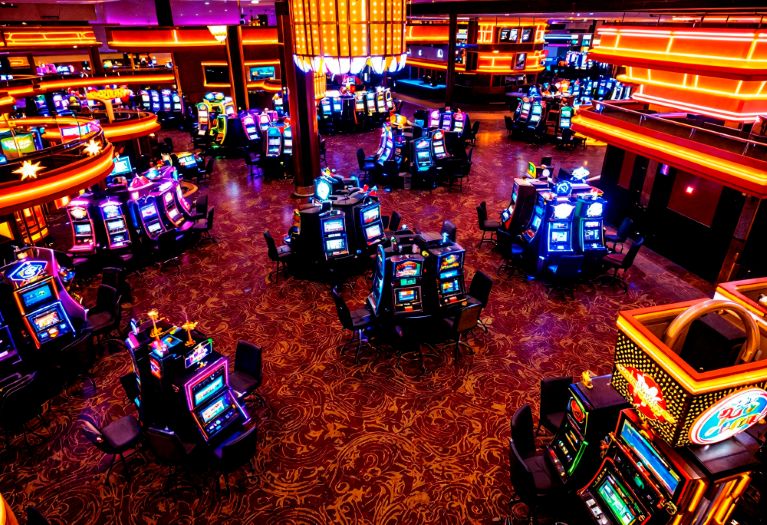
Empire City Casino by MGM Resorts remains a major gaming venue in Yonkers, but it still does not offer traditional live dealer table games. The property on Central Park Avenue operates video lottery terminals, electronic table games and live harness racing at Yonkers Raceway, a combination that has defined its gaming business for years.
The question of expanding that offering has returned to attention because of how MGM’s long pursuit of a full casino licence ended. Several years after the company announced that it wanted full gaming, MGM withdrew its application for a downstate New York casino licence in October 2025. Its proposal would have added 183 live dealer table games alongside a broader resort expansion.
For Yonkers readers, the question is what Empire City can offer today and how that compares with gaming markets elsewhere. Australia provides an interesting contrast, with its established land-based casinos, widespread poker machines and strict restrictions on online casino services.
What the Empire City floor actually has
The casino floor is built around video lottery terminals, the slot-style machines operated under New York’s state lottery framework. Alongside them sit electronic versions of roulette, blackjack and baccarat, where digital systems replace traditional live dealers.
Racing is the other half of the property. The 2021 racing programme included 234 race days at Yonkers Raceway, and racing returned that year with Empire City continuing its role as a major harness racing venue.
Traditional live dealer tables are the missing piece. A visitor looking for a blackjack game dealt by a person rather than an electronic system must visit another property licensed to offer that experience.
That gap helps explain why MGM pursued a full commercial casino licence. The company envisioned a larger gaming floor, expanded hospitality facilities and additional entertainment offerings intended to attract more visitors and investment.
MGM ultimately withdrew its application in October 2025, citing changes in the competitive and economic assumptions behind its proposed investment. The company had spent years pursuing the opportunity, but the expansion no longer met its expectations.
For Yonkers, that decision left Empire City operating under its existing gaming framework while other downstate casino projects moved forward.
How the three licences reshaped the neighbourhood
The New York State Gaming Commission approved licences for Bally’s Bronx, Hard Rock Metropolitan Park and Resorts World New York City in December 2025. Their planned developments could significantly reshape the region’s casino industry, particularly as new live table games and hospitality facilities become available.
For Yonkers residents, the change is about future competition rather than three newly opened casino floors. Empire City continues operating with its existing gaming format, while the successful bidders move forward with their approved projects.
Their eventual arrival could make MGM’s decision not to expand in Yonkers even more significant.
Empire City still has an identity that extends beyond its electronic gaming machines. The property hosts harness racing, restaurants, entertainment and community events. The Yonkers Fire Department and Salvation Army have both held events there, while local organisations have used its facilities for dinners and celebrations.
As a gathering place, it continues to serve the city.
What it lacks is the traditional live table game experience associated with larger casino resorts. That distinction becomes more interesting when compared with how gambling is structured in other countries.
The same question, asked in Australia
Australia offers an interesting contrast to Yonkers. Poker machines, known locally as pokies, are a familiar sight in licensed clubs and pubs across much of the country. Australians also have access to major land-based casino resorts in cities such as Melbourne, Sydney and Perth, where traditional table games form part of the entertainment offering.
The ABC has reported that Australians lead the world in per-capita gambling losses. Yet the country’s gaming landscape is shaped by a distinction that is easy to miss: land-based casinos and online casino services operate under very different legal rules.
That difference becomes especially clear with live dealer games. A blackjack table in a licensed Australian casino is a regulated physical gaming experience. An online version streamed through a website falls under federal restrictions on interactive gambling. Casino-style online services, including live roulette, blackjack and pokies, cannot legally be offered to customers physically located in Australia.
Even so, international casino platforms remain a subject of comparison among Australian audiences, particularly those living or travelling overseas. For example,this list with the best online casinos in Australia, examines features such as game libraries, live dealer tables, payment methods, withdrawal times and bonus conditions. The guide is intended for Australians outside the country, not people gambling online while physically in Australia.
This makes the comparison with Empire City more revealing. Yonkers has a physical casino whose licence limits the games available on its floor. Australia has established land-based casinos but federal restrictions on casino gaming delivered over the internet.
In both places, regulation shapes what customers can access and how operators compete. The differences are not simply about technology or demand. They reflect decisions about which forms of gambling can be offered in each market.
Pokies versus video lottery terminals
The machines provide one of the clearest comparisons between the two markets.
A video lottery terminal at Empire City and a pokie in an Australian club belong to the same broad family of electronic gambling machines. Both use digital displays, familiar reel-style symbols and mathematical systems that determine payouts over time.
There are important regulatory and technical differences, however. Empire City’s terminals operate within New York’s video lottery framework, while Australian poker machines are regulated under the relevant state or territory rules.
Game selection also depends on the venue and the regulatory system. Empire City’s machine library is determined by the games authorised for its particular operating model. Australian clubs and licensed casinos offer different selections of poker machines, with games and technical standards varying between jurisdictions.
International online casino platforms introduce another format, with digital game libraries that can include numerous slot titles from multiple software developers. Those libraries are often much larger than the selection available at an individual physical venue, although their availability and legality depend on the player’s location.
Volatility matters across these formats. Some games produce smaller wins more frequently, while others may go longer between payouts. Understanding the difference helps explain how the experience varies from one machine or game to another.
The fundamental mathematics still favour the operator over time. A game’s return-to-player percentage describes a long-run statistical expectation, not a guaranteed result for any individual session.
Whether someone is looking at a video lottery terminal in Yonkers or a licensed pokie in Australia, that distinction remains important.
Withdrawal speed: where the models split
Cashing out is one of the sharpest practical differences between a physical casino and an online platform.
At Empire City, a winning ticket from a gaming machine can generally be redeemed at a kiosk or cashier, subject to the property’s payment and identification procedures. For ordinary payouts, the process can be completed during the same visit.
Digital casino platforms operate differently. Withdrawal times depend on the operator, payment method, verification procedures and the banking systems involved.
Some electronic payment methods may process withdrawals relatively quickly, while bank transfers can take longer. Cryptocurrency transactions introduce their own requirements, including network processing and platform-specific rules.
International casino comparison guides often examine withdrawal times, banking methods and identity-verification requirements. These details may be relevant to Australians researching casino platforms while living or travelling overseas, but they do not change the restrictions on offering online casino services within Australia.
Identity checks are another point of comparison. Physical casinos may require identification for certain payouts, while online operators can request documents to verify a customer’s identity before processing withdrawals.
The practical lesson is similar in either environment: understand the payment rules, identification requirements and potential delays before committing money.
For Empire City visitors, those rules are attached to an established physical venue. For people reviewing international online platforms, the applicable operator licence and local legal framework also require attention.
What Yonkers readers can take from the comparison
The Empire City story is partly about regulation and partly about the kind of experience visitors want.
Some people enjoy the atmosphere of a casino floor, the crowd at a racing meeting and a restaurant visit afterwards. Others are interested in live dealer gaming and digital casino technology, but the available options depend heavily on local licensing rules.
Australia’s restrictions on online casinos show how different the legal landscape can be from one market to another.
A land-based casino with a hotel, entertainment venues and restaurants provides something that a digital gaming platform cannot reproduce completely. Equally, online technology has introduced new ways of presenting familiar casino games to audiences in jurisdictions where those services are permitted.
The contrast does not establish that one approach is better. It shows how operators and customers respond to the limits established by their respective regulators.
For now, Empire City remains a racetrack casino with video lottery terminals, electronic tables and an established local presence.
MGM’s full-gaming proposal ended without the company receiving a commercial casino licence for Yonkers. Whether the property pursues another expansion opportunity is a question for MGM and New York regulators.
Meanwhile, the three projects approved in December 2025 will shape the region’s competitive landscape as their development plans progress.
A floor defined by what it leaves out
Empire City Casino is a useful local landmark for understanding how gaming regulation influences the experience of visiting a casino.
It has the machines, the racetrack and electronic table games, but not the traditional live dealer tables that define many full-service casino resorts.
Australia illustrates how differently gambling can be regulated. Its established physical casinos operate alongside strict federal limits on online casino services, while Empire City continues to offer electronic gaming and racing under New York’s existing licensing framework.
Looking at both markets shows how regulation influences casino formats, customer expectations and the choices available to visitors.
The comparison also explains why MGM spent years pursuing a full licence in Yonkers. Live dealer tables would have changed the property’s competitive position and brought it closer to the broader casino-resort model.
For now, Empire City remains a distinctive part of Yonkers’ entertainment landscape, while the next chapter of downstate New York gaming develops around it.