
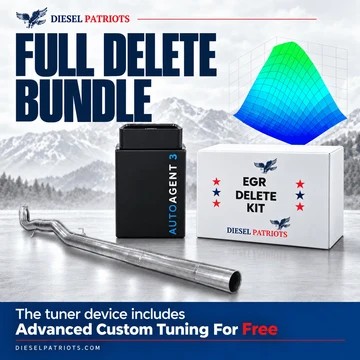
Removing or disabling emissions equipment on a Chevy or GMC Duramax that’s driven on public roads is still illegal under the federal Clean Air Act in 2026, even though federal enforcement has changed significantly this year. The Justice Department has stopped bringing criminal charges in most emissions tampering cases, but civil enforcement remains possible, state inspection rules still apply and nothing in recent federal proposals legalizes deleting a road vehicle. For owners frustrated with DEF problems or clogged particulate filters, the smarter path is usually proper diagnosis, quality replacement parts and a clear understanding of the risks before making any decision.
The headlines have created plenty of confusion, so it helps to separate what has changed from what hasn’t.
What a Delete Kit Actually Is
Modern diesel trucks rely on several systems to reduce emissions. On Duramax engines built over the past decade and a half, these typically include a diesel particulate filter (DPF), an exhaust gas recirculation (EGR) system and selective catalytic reduction (SCR), which uses diesel exhaust fluid (DEF) to cut nitrogen oxide emissions.
A delete kit is a combination of hardware and engine software designed to remove or bypass some or all of that equipment. Owners are usually drawn to them for a few reasons: frustration with repair costs, concerns about reliability, claims of better fuel economy and the desire for more power.
Parts catalogs for Chevy and GMC diesels sometimes list products described as a delete kit, typically labeled for off-road or competition use only. That label matters. Federal law treats vehicles used on public roads very differently from dedicated off-road or race vehicles, and installing such equipment on a street-registered truck can create legal exposure for the owner and the installer.
What Changed in 2026
Several developments this year led many truck owners to believe deletes had become legal. Here’s a quick summary:
| Development | What it means | What it doesn’t mean |
| DOJ ended most criminal prosecutions for tampering (January 2026) | Owners and shops are far less likely to face criminal charges | Civil penalties are still possible |
| EPA proposed replacing many DEF-related derates with warnings (mid-2026) | Trucks may lose power less abruptly when DEF problems occur | SCR, DEF and DPF requirements remain in place |
| Pardons for some previously convicted shop owners | Past criminal cases are being reconsidered | The underlying law has not been repealed |
| Proposed federal legislation to protect owners | Lawmakers are debating changes | Bills have no effect unless passed into law |
The key point is that the Clean Air Act’s prohibition on tampering with emissions controls on road vehicles still stands. What changed is mainly how aggressively the federal government pursues violations, and enforcement priorities can shift again with future administrations.
Risks Owners Still Face
Even with reduced federal criminal enforcement, deleting a road-going Duramax carries real risks:
- Civil penalties: Federal authorities have said they will still pursue civil enforcement when appropriate.
- State inspections: Many states, including New York, run regular vehicle inspection programs, and trucks with missing equipment or disabled diagnostics may fail.
- Registration and insurance issues: Modified vehicles can create complications with registration, insurance claims and liability after an accident.
- Warranty loss: Tampering usually voids the emissions warranty and can affect coverage for related engine components.
- Resale problems: Many dealers won’t accept deleted trucks, and buyers in strict states may avoid them.
- Reversal costs: Returning a truck to compliance often means buying expensive original equipment again.
For Westchester County drivers who commute into New York City or travel across state lines, these practical issues can matter as much as federal enforcement.
Why Owners Get Frustrated With Emissions Systems
The interest in deletes didn’t come from nowhere. Emissions systems add complexity, and when they fail, repairs can be costly and inconvenient. Common complaints include:
- DEF system faults that trigger warning lights or reduced power
- Clogged particulate filters, especially on trucks that mostly do short trips
- EGR cooler and valve problems caused by soot buildup
- Expensive sensors that fail and cause cascading warning codes
- Lower fuel economy during regeneration cycles
These problems are real, but many of them can be reduced or prevented with the right maintenance habits and parts.
Legal Ways to Improve Reliability
Owners who want fewer emissions headaches have several compliant options:
- Drive long enough for regenerations. Highway trips let the DPF clean itself and reduce soot buildup.
- Use quality DEF and store it properly. Old or contaminated fluid can cause system faults.
- Replace sensors with quality parts rather than the cheapest available options.
- Keep the fuel system clean with regular fuel filter changes.
- Address warning codes quickly before small issues lead to bigger failures.
- Choose emissions-compliant upgrades, such as approved tuning or performance parts that carry the proper certification for road use.
A qualified diesel technician can also diagnose recurring problems and recommend repairs that keep the truck both reliable and legal.
Making an Informed Decision
The 2026 changes have given diesel owners more breathing room than they’ve had in years, but they haven’t turned deleted road trucks into a legal gray area. They remain prohibited under federal law, and states continue to enforce their own inspection and registration requirements.
If you own a Duramax, start by understanding which emissions systems your truck uses, keep detailed service records and talk to a trusted technician before making changes. Watching for updates from the EPA and your state motor vehicle agency is also wise, since rules and enforcement priorities may continue to evolve.
For most owners, the best long-term value comes from a truck that runs well, passes inspection and remains easy to sell. With good maintenance and the right parts, a Duramax can deliver years of dependable towing and driving without the legal uncertainty that comes with tampering.