
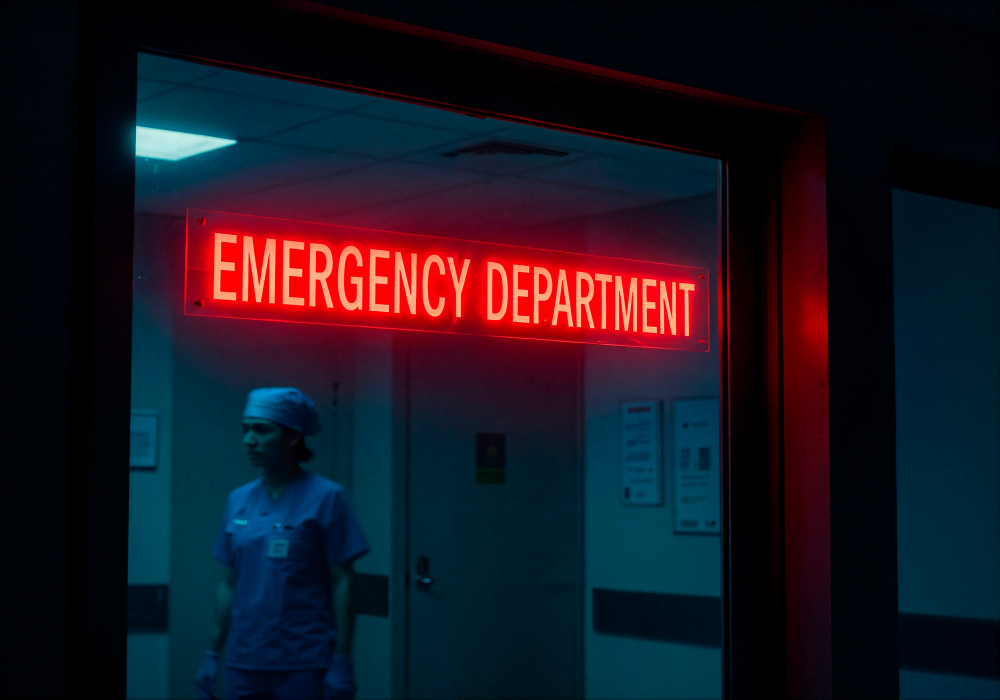
Photo from Magnific.com
Common emergency room errors include delayed triage, missed diagnoses, medication errors, premature discharge, inadequate monitoring, and stabilization and transfer issues. When an error falls below the expected standard of care and causes injury, it may support a medical-malpractice claim.
A missed heart attack, stroke, infection, or head injury may worsen while treatment is delayed. An emergency room error can also have serious consequences.
Delayed Triage
Triage determines how quickly a patient should be assessed based on the apparent seriousness of the condition. Someone with chest pain, breathing difficulty, severe bleeding, stroke symptoms, or signs of sepsis may require immediate attention.
If a patient deteriorates while waiting, triage records can help show what staff actually knew and when.
Missed Or Delayed Diagnosis
Diagnostic mistakes can involve failing to order tests, overlooking abnormal results, misreading imaging, or missing dangerous symptoms. Conditions commonly involved include:
- Heart attack or stroke
- Sepsis or serious infection
- Internal bleeding
- Head or spinal injuries
- Appendicitis
The important question is whether earlier treatment would probably have reduced the harm.
Medication and Testing Errors
Mistakes can involve the wrong drug, dose, route, allergy, or interaction. An error can cause an allergic reaction, breathing problems, bleeding, overdose, organ damage, or treatment failure.
Testing mistakes can matter. A provider may fail to order an ECG, blood test, CT scan, MRI, or ultrasound when symptoms reasonably call for investigation. The issue is whether additional testing was required and whether the omission affected the outcome.
Failure To Consult Or Monitor
Failing to seek specialist help can matter when a condition requires expertise beyond routine emergency care.
A patient who initially appears stable can deteriorate quickly. Staff may need to reassess vital signs, oxygen levels, neurological status, bleeding, pain, or response to medication.
Premature Discharge and Poor Handoffs
Discharging a patient too early can be dangerous when a serious condition has not been ruled out, symptoms are worsening, or observation is still needed.
Communication failures create another risk. During shift changes and transfers, a pending test, abnormal result, medication change, or worsening symptom may not reach the next provider. These gaps can delay treatment.
Stabilization and Transfer Problems
Federal law creates specific emergency-care duties for certain hospitals. Under 42 U.S.C. § 1395dd, known as EMTALA, participating hospitals with emergency departments must provide an appropriate medical screening examination and, when required, stabilize an emergency medical condition or follow specified transfer procedures.
EMTALA differs from ordinary malpractice law. It addresses emergency access, screening, stabilization, and transfer rather than establishing a universal standard for every medical decision.
What Consequences Can Follow?
Possible consequences include:
- Worsening illness or infection
- Permanent neurological injury
- Organ failure
- Additional surgery or hospitalization
- Permanent disability
- Lost earning capacity
- Wrongful death
Showing that an error occurred is not enough. A claim generally must connect the mistake to the resulting harm.
How A Claim Is Evaluated
A malpractice case typically asks whether the provider owed a duty, departed from the applicable standard of care, caused the injury, and produced legally recognized damages. Medical records, timestamps, test results, medication records, and witness accounts can help reconstruct what happened.
Expert testimony may be important. Federal Rule of Evidence 702 governs expert testimony in federal court and addresses when qualified experts may give opinions that help the fact-finder understand technical or medical issues.
Final Takeaways
- ER mistakes can involve diagnosis, medication, triage, testing, monitoring, or communication.
- Delays can turn treatable conditions into serious injuries.
- Medical records can reveal what providers knew and when.
- A poor outcome alone does not prove malpractice.
- The error must generally be connected to actual harm.
- EMTALA creates specific federal emergency-care obligations.
- State law usually governs the broader malpractice claim.