By Deborah Blatt
Clothing insecurity is dramatically increasing in Westchester County, with more children in need of basic essentials than ever before. At The Sharing Shelf, the nonprofit Clothing Bank serving children and teens in need in Westchester, demand for clothing increased 43.5% in the first half of 2025, compared to the same period last year.
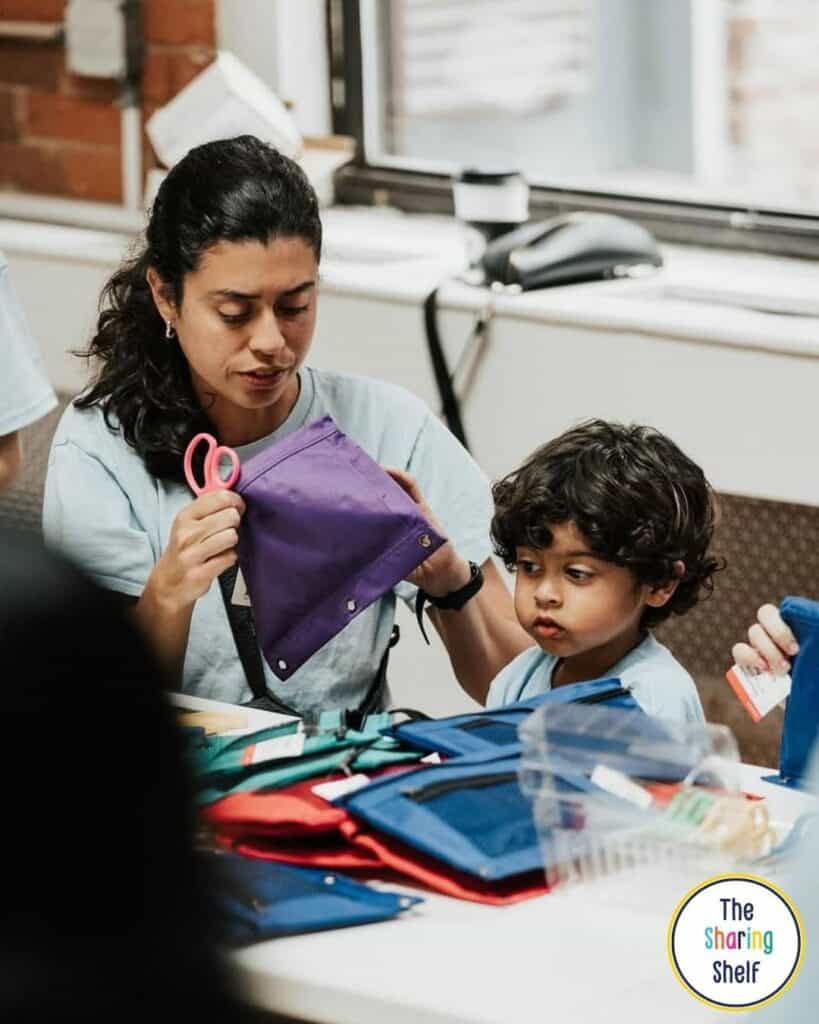
The Sharing Shelf supports area schools, nonprofits and government agencies, providing a seasonal wardrobe – a week’s worth of clothing matched to a child’s sizing need – to children from birth to age 19 who face clothing insecurity. In the first six months of 2025, 4,324 children and teens secured clothing from our program. That’s an increase of 1,310 children compared to the first half of 2024, when we supported 3,014 children and teens. More than a quarter of those we serve—26%—live in Yonkers.
Clothing insecurity—the lack of sufficient, clean, seasonal, and size-appropriate apparel—has profound implications throughout the year. It’s well documented, for instance, that children who are clothing insecure are more likely to endure bullying and miss school. Children facing clothing insecurity withdraw from social engagement and suffer from a lack of confidence and lower self-esteem.
Historically, summer has been a quieter period for our program. With schools on hiatus, we see a correlating drop in demand. This year, that pattern changed. For the first time in our 15 years, demand during summer months is on the rise and dramatically so. In June 2025, The Sharing Shelf received the second-highest number of requests in a single month: 738. That’s a staggering 78% increase compared to the 414 requests received in June 2024.
One might assume that clothing insecurity would take a vacation in the summer, or be a less pressing issue since children are not in school. Unfortunately, that’s not the case, and summer presents its own challenges for those facing clothing insecurity.
Every summer, The Sharing Shelf receives requests for children and teens who don’t have the clothes needed to participate in ordinary summer activities. Many children, for instance, have the chance to take swim lessons or attend day camps with a swimming pool, but they don’t have a bathing suit or flip flops, and their parents can’t afford to buy them.
Overnight camps are often offered to low-income children as a chance to leave an urban setting and experience the outdoors. Yet for many families, meeting the camp packing list—seven pairs of socks and underwear, a rain jacket, and a sturdy pair of shoes—is simply out of reach.
The combination of the increased demand for clothing in the first half of 2025, combined with the spike in June, should sound alarm bells about rising poverty in Westchester, because these numbers are being reported in real time. Typically, childhood poverty is measured by analyzing data collected several years earlier, which tells the story of what was happening at that time recounted today, but that’s not today’s reality. The data we are measuring, the reality we are seeing, is what’s happening right now.
It’s especially worrisome, because this is taking place in Westchester, one of the nation’s wealthiest counties. Despite our county’s affluence, the county’s poverty rate for children under five was 11.1% in 2023 (the latest available data), according to Westchester Children’s Association. In Yonkers, 8 in 10 public school children live in poverty or a low-income home. According to the United Way’s ALICE (Asset Limited Income Constrained Employed), nearly 1 in 4 Westchester households are income-constrained, and a family of four with children in childcare in Westchester needs $131,316 in income just to cover the essentials.
A survey conducted in the Fall by The Sharing Shelf revealed the views of more than 120 individuals from the schools, social service agencies, and other nonprofit organizations served. It found that the most needed items of clothing are as follows: sneakers, 85% cited; coats, 81%; shirts, 80%; jeans/pants, 61%; underwear or diapers, 57%; sweatshirts or sweaters, 45%; sweatpants or leggings, 43%; shoes, 34%; socks, 20%.
It’s especially notable that underwear or diapers were cited more than half the time. That’s why, this year alone The Sharing Shelf has already distributed 157,000 diapers.
What then can residents of Westchester do to make a difference? First, one can donate seasonally appropriate, new or gently used clothing to a nonprofit Clothing Bank like The Sharing Shelf, where the clothes will go directly to children in need. Donating clothing to nonprofits that resell the clothes to benefit their missions may support other wonderful causes, but they won’t ensure that the clothing reaches the children who need it most.
Second, one can make a financial contribution to a nonprofit Clothing Bank such as The Sharing Shelf. Financial support is crucial to maintaining and growing their essential work. That includes buying things like underwear and socks that must be new, and sneakers that are rarely reusable.
Third, one can volunteer. In the first half of 2025, The Sharing Shelf had to fill 1,625 individual volunteer slots, compared to 1,042 volunteer slots in the first half of 2024, an increase of 60%.
The rapid growth of clothing insecurity in Westchester should be the focus of public discussion – not only in the county but statewide and nationally. If it’s happening here, it’s likely to be happening in less prosperous communities. We shouldn’t wait for the next census to tell us what we already know.
The author is Founder and Executive Director of The Sharing Shelf, the nonprofit Clothing Bank serving Westchester County, NY.